‘WHAT IS SHE DOING WITH HER JAW?’ — Rachel Zegler’s Met Gala Appearance Spirals Into Online Chaos as Viewers Fixate on Unusual Facial Expressions
The 2026 Met Gala, themed “Costume Art” with a dress code of “Fashion is Art,” delivered its usual share of dramatic looks and high-fashion statements. Yet for one actress, the conversation veered sharply away from her elaborate gown and artistic concept. Rachel Zegler’s red carpet appearance quickly became one of the most talked-about — and memed — moments of the night, not for the elegance of her ensemble, but for a series of unusual jaw movements and exaggerated facial expressions that left social media users both confused and entertained.
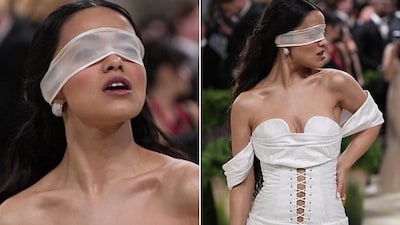
The 25-year-old Snow White star arrived at the Metropolitan Museum of Art in New York on May 4 wearing a striking custom white gown by Atelier Prabal Gurung. The look was inspired by Paul Delaroche’s 1833 painting The Execution of Lady Jane Grey, complete with a dramatic corset and a custom silk blindfold mask by Jennifer Behr. Zegler later explained the reference on social media, noting the tragic queen’s short reign and drawing a subtle parallel to her own experiences under public scrutiny. She described feeling beautiful despite the high-pressure environment of fashion’s biggest night.
However, as cameras flashed and Zegler posed blindfolded on the steps, viewers’ attention shifted dramatically. Clips circulating online captured her repeatedly jutting her jaw forward, grinding it side to side, and making sharp, pointed movements with her mouth while holding poses for photographers. The short video spread like wildfire across platforms, sparking a frenzy of reactions ranging from concern and confusion to outright mockery. Hashtags and phrases like “What is she doing with her jaw?” and “Rachel Zegler mouth” trended rapidly, overshadowing discussions about the dress itself.
Many online commentators expressed genuine bewilderment. Comments flooded in questioning if she was unwell, nervous, or experiencing discomfort from the restrictive costume. The blindfold, while artistically fitting, likely added to the physical challenge of posing gracefully under intense flashing lights and public pressure. Some observers suggested the movements could stem from nerves during what she herself admitted are particularly anxiety-inducing high-visibility events. Others speculated it was an intentional part of her performance-art approach to the theme, leaning into discomfort and theatricality.
The backlash was swift and often harsh. Memes proliferated, with users stitching the clip alongside everything from dance challenges to animal videos for comedic effect. Critics who already held negative views of Zegler — largely stemming from the turbulent promotion and reception of Disney’s live-action Snow White remake — seized the moment to amplify their criticism. For many, the viral footage became yet another chapter in the ongoing narrative surrounding the young star, whose casting, comments during promotion, and the film’s ultimate box-office struggles had made her a frequent target of online discourse.
Defenders quickly pushed back, arguing that the focus on her facial movements amounted to body-shaming or nitpicking a young woman navigating immense pressure. Supporters pointed out that red carpet posing is inherently unnatural and that the corset and blindfold could make relaxed expressions difficult. Some highlighted that Zegler has exhibited similar jaw movements in past appearances and interviews, suggesting it may simply be a habitual mannerism amplified by the spotlight and cameras. Others noted the unrealistic standards applied to celebrities, especially women, during live events where every micro-expression is scrutinized.
Zegler has been no stranger to controversy in recent years. Her portrayal of Snow White in the heavily criticized 2025 remake drew divided opinions long before release. Public comments about the character’s classic traits, diversity in casting, and updates to the story sparked heated debates that followed the project through production and into its theatrical run. The film faced significant backlash, contributing to her status as a polarizing figure in Hollywood. Stepping onto the Met Gala carpet — her third appearance at the event — placed her once again under the microscope at a time when many hoped she could enjoy a glamorous, less contentious moment.
The incident highlights the double-edged sword of modern celebrity culture. In an era of constant social media scrutiny and short attention spans, a single awkward clip can dominate the narrative far more than a carefully crafted artistic statement. While some praised the boldness of Zegler’s conceptual look and its historical reference, the viral focus on her jaw created a distraction that overshadowed the fashion and intent behind it. This phenomenon isn’t unique to Zegler — many stars have seen red carpet moments reduced to memes — but the intensity here reflects her particularly charged public image.
Beyond the immediate reactions, the event prompted broader conversations about mental health, public pressure on young actors, and the cruelty of online pile-ons. High-profile events like the Met Gala are as much performance as they are fashion showcases. Posing blindfolded in a tight corset while managing nerves, lighting, and crowds is no small feat. Zegler later shared candid reflections, admitting that such moments are more nerve-racking than she often lets on, while expressing gratitude for her team and the experience.
The 2026 Met Gala will be remembered for many stunning looks and creative interpretations of the theme. Yet for better or worse, Rachel Zegler’s appearance has cemented itself in the conversation through an unexpected lens. Whether viewed as a quirky mannerism, a sign of discomfort, an artistic choice, or simply human imperfection under pressure, the clip became a Rorschach test for how people already felt about the actress.
In the days following the event, the discourse continues to evolve. Some users have moved on to new topics, while others keep the memes alive. Zegler herself appears to be focusing forward, consistent with her history of resilience amid public noise. Her career trajectory — from breakout roles in West Side Story and The Hunger Games prequel to major Disney projects and stage work like Evita — demonstrates talent and ambition that extend far beyond any single viral moment.
Ultimately, the Met Gala serves as both celebration and spectacle. For Rachel Zegler, it became another reminder of how quickly public perception can shift from admiration of artistry to fixation on the smallest details. The dress may have been inspired by historical tragedy, but the real drama unfolded in real time on social media, where a few seconds of footage sparked endless debate.
As the internet continues its cycle of virality, one thing remains clear: in today’s media landscape, even the most intentional statements can be eclipsed by the most unexpected details. Whether this moment becomes a footnote in Zegler’s career or another chapter in her ongoing public narrative, it underscores the challenging balance young stars must strike between authenticity, performance, and relentless online judgment.
For now, the jaw movements have faded from the top trends, but the conversation they ignited lingers — a testament to both the power of viral media and the intense scrutiny faced by those living their careers in the spotlight.