In the humid haze of a Midwestern summer night, where laughter spills from downtown bars and the Mississippi River whispers secrets to the darkness, a young woman’s footsteps echoed into oblivion. Eliotte Heinz, a 22-year-old graduate student at Viterbo University, stepped out of Bronco’s Bar in La Crosse, Wisconsin, around 2:30 a.m. on July 20, 2024, her mind likely buzzing with the easy camaraderie of a Friday unwind. She was alone, her friends having scattered earlier, and the walk home—a familiar 15-minute stroll through the 500 block of Front Street South—seemed routine. But surveillance cameras caught her final moments: a solitary figure weaving south-southwest, phone in hand, until 3:39 a.m., when she veered toward the river’s embankment, the muddy bank blurring into the inky flow. By dawn, she was gone, vanished without a scream or a struggle, plunging her family, campus, and a tight-knit community into a five-month vortex of dread and desperate search. It wasn’t until December 9, 2025—nearly 17 months later—that the La Crosse County Medical Examiner’s Office delivered the crushing verdict: accidental drowning, fueled by acute alcohol intoxication. Eliotte’s blood-alcohol level clocked at 0.193%, more than double Wisconsin’s legal driving limit, with no drugs in her system. Toxicology cleared, yet questions lingered like fog over the water: How does a bright, driven young woman slip away so silently? And what does her story say about the invisible perils lurking in college towns wedged between revelry and risk?
Eliotte Marie Heinz wasn’t just another face in the lecture hall; she was a force, a 5-foot-6 whirlwind of empathy and ambition hailing from the apple orchards and quiet streets of Hortonville, a small village 150 miles northeast of La Crosse. At 22, she had already conquered a bachelor’s in social work from the University of Wisconsin-Oshkosh, where her professors remembered her as the one who lingered after class to brainstorm ways to bridge gaps for underserved kids. “Eliotte had this rare gift for seeing the whole person,” one former advisor told local reporters in the frantic days after her disappearance. “She wasn’t studying mental health counseling at Viterbo to check a box; she wanted to heal wounds she knew too well.” Her own battles—with anxiety that sometimes shadowed her smiles, and a family history of loss that forged her resilience—drove her toward a master’s program focused on trauma-informed care. Friends described her as the glue: organizing game nights in her off-campus apartment, volunteering at La Crosse’s domestic abuse shelter, and FaceTiming her parents, Mark and Lisa Heinz, every Sunday without fail. “She was our light,” Lisa would later say in a candlelit vigil, her voice cracking over the flicker of hundreds of flames. “Always planning the next adventure, but grounded in what mattered.”
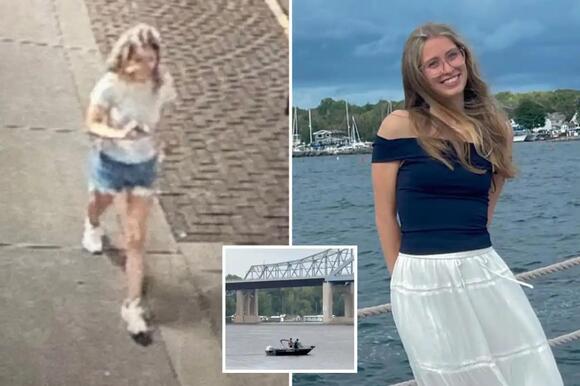
La Crosse, with its population of 52,000 nestled at the confluence of the Mississippi, Black, and La Crosse rivers, wears its dual soul on its sleeve. By day, it’s a haven for outdoor enthusiasts—kayakers slicing through currents, hikers tracing bluffs that rise like ancient guardians. Viterbo, a Catholic liberal arts school perched on the city’s east side, enrolls about 2,500 students in a campus alive with theater productions and service trips. But nights in the downtown district transform it into a rite-of-passage playground: dive bars like Bronco’s, with its neon signs and sticky floors, draw crowds of undergrads and grads chasing the fleeting high of youth. Front Street South, a narrow artery parallel to the river just two blocks away, is lined with brick facades and flickering streetlamps, its sidewalks often slick with summer dew. The embankment—a steep, unbarricaded drop of 10 to 15 feet to the water’s edge—has long been a whispered hazard, especially after dark when revelers spill out, judgment clouded by cheap pitchers and Jell-O shots. “It’s the perfect storm,” a local safety advocate noted in the aftermath. “Proximity to fun, proximity to danger, and no one thinking twice about the walk.”
That fateful Friday, July 19, 2024, started like so many others for Eliotte. Classes wrapped mid-afternoon, leaving room for a quick gym session and texts with roommates about dinner plans. By evening, she joined a group at Bronco’s—a low-key spot known for its $2 domestics and trivia nights—for what was meant to be casual decompression. Laughter flowed as freely as the drinks; Eliotte, not a stranger to unwinding after grueling seminars on attachment theory, sipped steadily. Witnesses later recalled her vibrant: trading stories about internship woes at a youth crisis center, her blue eyes sparkling under the bar’s low lights. Around 2 a.m., the group thinned—friends peeling off for rideshares or stumbles home. Eliotte, opting for the fresh air and exercise, waved goodbye. “I’ll text when I’m back,” she messaged one pal, her phone’s glow the last digital breadcrumb.
Surveillance footage, pieced together from a dozen downtown cameras, painted a poignant portrait. At 2:27 a.m., she emerges from Bronco’s alone, ponytail swinging, clad in black leggings, a gray tank top, and running shoes—attire screaming “practical post-bar trek.” No visible stagger, no frantic glances; she appears composed, chatting animatedly on her phone, perhaps with a friend or family back in Hortonville. The feeds track her steadily: crossing intersections, pausing to adjust her earbuds, heading south-southwest along Front Street. By 3:20 a.m., she’s in the 500 block, the river’s murmur growing louder, its surface a glassy void under moonlight. The final clip, timestamped 3:39 a.m. from a business overlooking the bank, shows her silhouette drifting eastward toward the main channel—a subtle pivot, maybe a shortcut in her mind, or a moment’s disorientation. Then, nothing. The embankment, overgrown with weeds and shadowed by overhanging trees, offers no guardrails, no warning signs. One misstep on the slippery incline, and the Mississippi claims its toll—currents swift at 2 to 3 miles per hour, depths plunging to 20 feet even in midsummer low water.
Dawn broke with silence. Eliotte’s roommates, stirring around 9 a.m., noticed her untouched bed and unanswered texts. By 10:30, panic set in; a welfare check call to La Crosse Police. Officers canvassed the apartment, the bar, the route—finding her phone, keys, and wallet safe inside, but no trace of her. The alert rippled fast: a Silver Alert issued by noon, blasting her description—5’6″, 130 pounds, auburn hair, last seen in gray and black—to every screen in Wisconsin. Campus buzzed; Viterbo’s president, Rick Artman, canceled orientations, his email a gut-punch: “Our hearts ache for Eliotte’s family and friends.” Hortonville, 150 miles away, ground to a halt—neighbors taping flyers to lampposts, her high school track coach leading prayer circles. “She was the girl who ran the 400-meter relay like it was a victory lap,” he choked out to reporters. Social media erupted: #FindEliotte trended locally, amassing 50,000 posts in 48 hours, from pleas for dashcam footage to theories veering into the macabre—abduction, foul play, a stalker in the shadows.
The search mobilized like a small army. La Crosse PD, bolstered by the Wisconsin Department of Natural Resources and FBI divers, scoured the riverbanks with drones, ATVs, and cadaver dogs. Kayakers from the local paddling club formed human chains, combing eddies where debris snags. Helicopters thumped overhead, their spotlights carving the night, while ground teams hacked through bluffs and checked abandoned buildings. Volunteers poured in—over 500 by week’s end, from Milwaukee transplants to Minnesota neighbors across the border. Eliotte’s family arrived that first evening, Mark and Lisa Heinz clutching a photo of her grinning at graduation, their faces etched with the terror only parents know. “She’s tough, she’s smart—please, just bring her home,” Lisa begged at a presser, her words broadcast on every affiliate from Madison to Minneapolis. Tips flooded in: a sighting at a gas station (false), a backpack by the bridge (unrelated), whispers of a suspicious van (debunked). The river, that relentless artery, yielded nothing at first, its bends mocking the efforts with tangled roots and false hopes.
July stretched into a cruel limbo. Heat waves baked the searchers; thunderstorms churned the waters, scattering teams. Eliotte’s 23rd birthday passed on the 25th—a ghost cake at the family farm, candles blown out to empty air. Viterbo held a memorial mass in the Fine Arts Center, students spilling onto lawns with sunflowers, her favorite. “She wanted to counsel the broken because she mended so many,” a sorority sister eulogized, voice trembling. Online sleuths dissected the footage frame by frame, speculating on her gait—was it the booze, or something sinister? Police Chief Shawn Kudron, a 25-year veteran with a gravelly calm, fielded the frenzy: “We’re leaving no stone unturned, but we need the public’s eyes.” No evidence of struggle, no witnesses to cries; toxicology pending, but early whispers pointed to alcohol’s role. The Heinz family, pillars of their Lutheran parish, leaned on faith—Mark, a high school counselor, organizing tip lines; Lisa, a nurse, fielding calls from distraught coeds. “Eliotte’s walk home is finished,” they’d later reflect in a statement. “Unfortunately, our family’s walk down this new hard path is just beginning.”
Breakthrough came on July 24, four days after vanishing—a kayaker’s eagle eye near Brownsville, Minnesota, 10 miles downstream. There, in a slackwater slough where the current eases, floated Eliotte’s body, snagged on overhanging branches. Divers confirmed it swiftly; the medical examiner’s van hummed down Highway 61 under a somber sky. La Crosse erupted in collective exhale and sob—vigils swelled, purple ribbons (her eye color) fluttering from porches. Chief Kudron’s update was terse: “This was not the outcome we had hoped for. Our thoughts are with Eliotte’s family, friends, and all who knew her.” The community, which had rallied with potlucks and prayer chains, now grappled with finality. But closure? Elusive. Autopsy dragged through summer into fall, toxicology labs backlogged in a state strained by opioid caseloads. Rumors festered: Was it suicide? Assault? The river’s curse?
December 9, 2025, shattered the suspense. The medical examiner’s report landed like a stone: accidental drowning, manner undetermined but leaning natural peril amplified by impairment. Blood-alcohol at 0.193%—equivalent to 10 to 12 standard drinks in her 130-pound frame—clouded coordination, judgment, the inner ear’s balance. No illicit substances, no trauma beyond submersion’s toll: lungs waterlogged, hypothermia setting in despite July’s warmth. The footage corroborated: her path to the bank, a fateful drift. “She likely slipped on the embankment, hit her head or simply tumbled,” investigators pieced, the river’s undertow doing the rest. No foul play; just a cocktail of circumstance—youth’s bravado, alcohol’s blur, a city’s unchecked edge.
The revelation rippled with relief and rage. For the Heinzes, it was a bittersweet anchor after 17 months adrift. “We held onto hope that defied logic,” Mark told the Milwaukee Journal Sentinel, his voice steady in a living room shrine of Eliotte’s photos. “Now we know, but the why haunts.” Lisa, channeling grief into advocacy, launched the Eliotte Heinz Foundation days later—funds for riverfront barriers, campus safety apps, bartender training on spotting over-serves. “She’d want us to prevent the next call no parent should get,” she said at a press conference, flanked by Viterbo brass and city councilors. La Crosse pledged $150,000 for fencing along Front Street, signage glowing with warnings, and shuttle pilots for late-night returns. Viterbo mandated alcohol education modules, weaving Eliotte’s story into freshman orientations.
Yet beneath the fixes, a deeper ache. Eliotte’s cohort, now seniors, toasts her in quiet moments—her laugh echoing in empty dorms. Hortonville renamed a trail in her honor, a loop through woods she once roamed as a kid. Nationally, her tale slots into a grim ledger: college students, alcohol, and water claim dozens yearly—drownings spiking 20% post-pandemic, per CDC whispers. “It’s the mundane that murders,” a prevention expert mused. “A shortcut, a sip too many, and the night swallows you.”
As winter grips the Mississippi, its surface sheened with ice, Eliotte’s spirit lingers—not in tragedy, but tenacity. Her family walks that hard path, one step at a time, turning loss into legacy. The girl who aimed to counsel the lost now guides from the beyond, a beacon against the dark. In La Crosse’s bars, glasses clink softer; on Front Street, shadows retreat under new lights. Eliotte’s mystery, solved in ink and autopsy, endures as caution: in the thrill of the now, the river waits, patient and unforgiving. For those she leaves, the walk home is forever altered—slower, safer, shadowed by a love that drowned but never fades.