UFO Abduction Fear: Missing General McCasland ‘Found Something’ After Decades Probing Extraterrestrial Secrets
The disappearance of retired U.S. Air Force Major General William Neil McCasland has ignited a wave of speculation, with some observers asking the provocative question: “Could a UFO have truly taken him away?” The 68-year-old former commander of key research facilities long tied to UFO lore vanished without a trace on February 27, 2026, in Albuquerque, New Mexico. After years of involvement in advanced aerospace programs and rumored connections to classified UFO-related inquiries, his sudden absence has fueled theories ranging from mundane explanations like a medical emergency to more extraordinary ones involving extraterrestrial intervention.
McCasland was last seen around 11 a.m. near Quail Run Court NE in the Foothills area of Albuquerque, a quiet residential neighborhood backing onto rugged desert trails and the Sandia Mountains. The Bernalillo County Sheriff’s Office (BCSO) issued a Silver Alert shortly after, citing unspecified medical issues that raised immediate concerns for his safety. Described as 5 feet 11 inches tall, weighing about 160 pounds, with blue eyes and gray hair, McCasland had no known direction of travel or clothing description at the time. Authorities emphasized that the case is being treated as a missing-person investigation with no evidence of foul play, yet the high-profile nature of his background has drawn national attention.
The FBI’s Albuquerque Field Office has joined the search, providing support through specialized resources—a standard procedure when local agencies request assistance for complex or high-risk cases. New Mexico Search and Rescue teams have deployed drones, helicopters, K9 units, and ground crews to scour nearby arroyos, hiking paths, and open terrain where McCasland might have gone for a walk, a routine activity in the region. As of early March 2026, with the search now over a week old, no credible sightings or breakthroughs have been reported publicly.
What sets this case apart—and invites the UFO speculation—is McCasland’s extensive career in military science and technology. A 1979 graduate of the U.S. Air Force Academy with a degree in astronautical engineering, he advanced through roles in space operations, satellite reconnaissance, and cutting-edge R&D. He served with the National Reconnaissance Office and commanded units at Kirtland Air Force Base in Albuquerque, including the Phillips Research Site and elements of the Air Force Research Laboratory (AFRL). Kirtland, home to advanced propulsion, directed-energy, and aerospace testing, has long attracted UFO enthusiasts due to its proximity to alleged sightings and classified projects.
His most notable command was at Wright-Patterson Air Force Base in Ohio, where he led the AFRL and oversaw a multi-billion-dollar portfolio in science, technology, and innovation. Wright-Patterson has been central to UFO mythology since the 1940s, with persistent claims that it housed debris from the 1947 Roswell incident or conducted reverse-engineering of extraterrestrial technology. While official records dismiss such allegations as unfounded, the base’s history with Project Blue Book—the Air Force’s official UFO investigation program—and ongoing declassifications have kept rumors alive.
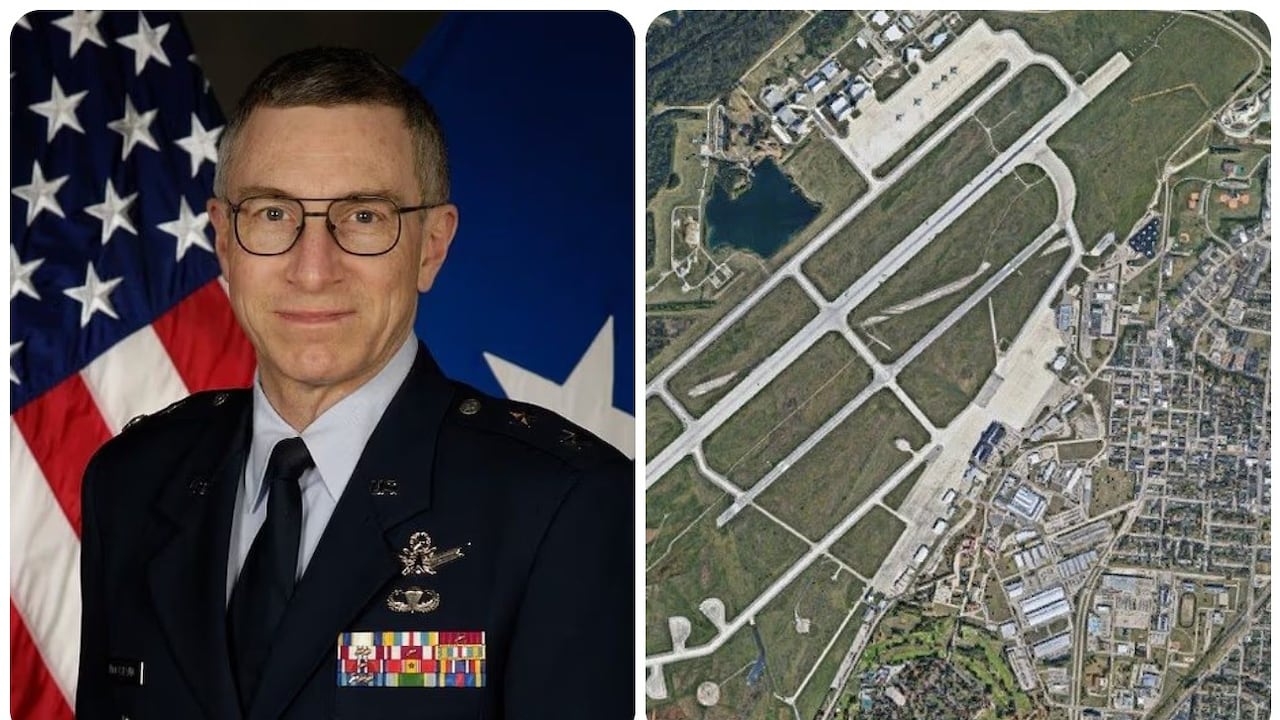
McCasland’s name has surfaced in UFO circles over the years. Some accounts link him to advisory roles or interactions with figures pushing for greater transparency on unidentified aerial phenomena (UAP), though he never publicly confirmed involvement in such matters. His retirement in 2013 did not end his influence; he remained active in aerospace networks, including serving on committees bridging military and civilian interests at Kirtland. In retirement, he lived quietly in Albuquerque, blending into community life while carrying the weight of decades in secretive defense work.
The question “Did a UFO really take him away?”—has gained traction in online forums and fringe discussions, especially given the timing. Recent developments in UAP disclosure, including government reports and calls for transparency, have amplified interest in anyone tied to historical programs. Some speculate that McCasland, after years of research, might have uncovered something profound—perhaps evidence of non-human intelligence—that led to his abrupt removal. Others suggest a more earthly explanation: perhaps he ventured into the harsh desert terrain for reflection or exercise and suffered a health-related incident, becoming lost or incapacitated.
Authorities have repeatedly stressed that the investigation remains focused on welfare concerns, with no indication of abduction or supernatural involvement. The Silver Alert criteria—applied to individuals over 50 showing potential cognitive or physical decline—points to a vulnerable adult scenario rather than conspiracy. Family and friends have not commented extensively, but the prolonged silence has heightened anxiety among those who knew him as a dedicated, low-key professional.
As searches continue amid New Mexico’s vast landscapes, the case highlights the intersection of military secrecy, public fascination with the unknown, and the fragility of human life. McCasland’s legacy in advancing aerospace technology stands in stark contrast to the uncertainty now surrounding his fate. Whether due to natural causes, an unfortunate accident, or something unexplained, his disappearance serves as a catalyst for renewed debate about what secrets high-ranking officials might carry—and what happens when those secrets intersect with the mysteries of the skies.
For now, the public is urged to report any information, no matter how small, to BCSO’s Missing Persons Unit. In a world increasingly attuned to UAP sightings and disclosure efforts, the vanishing of a man like McCasland ensures that questions about UFOs—and whether they could “take” someone—will linger long after the search concludes.