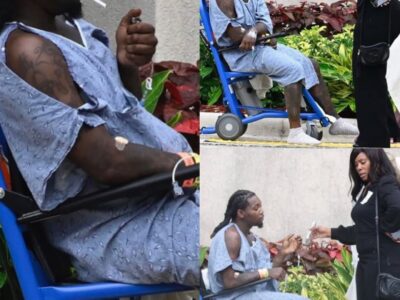
They Threw Her To The K9s—Then This Female Navy SEAL Took Control Instantly.
Part 1
The gate slammed behind me with the kind of metallic finality that makes your spine understand something before your brain does.
Concrete pen. Chain-link fence. Four military working dogs spread across the far side like a tightening net. Ninety pounds each, all tendon and scar and bad patience. The late afternoon sun hit the fence hard enough to turn the steel white. I could smell hot metal, old bleach, and dog sweat baked into concrete. Somewhere outside the enclosure a man laughed too softly, like he already knew how this ended.
I kept my hands loose at my sides.
Lieutenant Colonel Dominic Kesler stood at the fence with his jaw set so hard it looked painful. He had one palm flat against the chain link, wedding-band tan line still visible even though there was no ring on his finger. That detail stuck with me for some reason. Men like him always told on themselves in small ways first.
“Let her prove it,” he said.
The lead dog lunged.
That is not where this story starts, but that is the moment everything that had been buried for thirty-three years finally began to come up.
My name is Kira Brennan. I was twenty-seven years old that afternoon, a naval officer, attached to a K9 innovation team under Naval Special Warfare, and I had spent most of my life chasing a ghost with my father’s eyes.
I never met him.
Captain Thaddius Brennan died on February 27, 1991, seven kilometers outside Kuwait City, six weeks before I was born. In every official version of my childhood, he died a clean heroic death—combat conditions, operational chaos, a tragic casualty in a war full of them. My mother kept the folded flag in a walnut case on the mantel and his picture in the hallway, the one where he was half smiling in desert camouflage with a German Shepherd at his side. People who visited always lowered their voices in front of that photograph. They looked at me and said I had his eyes.
When I was little, I used to stand on a kitchen chair and trace the glass over his face with one finger.
When I was older, I learned people tell children the version of grief they can live with.
I was fourteen when I found the real report.
My mother kept it in a file cabinet she never locked because she trusted me to be decent, which is a dangerous thing to do with a fourteen-year-old girl who already suspects everyone is lying. It was raining that afternoon, hard enough that the gutters overflowed. I still remember the smell of wet eucalyptus drifting in through the cracked kitchen window while I sat on the floor in her study and read words nobody had ever intended me to see.
Redirected aggression.
Handler-directed attack.
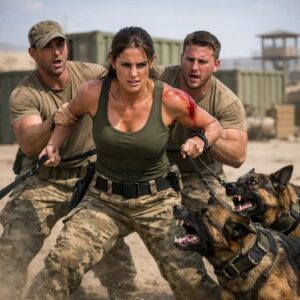
Behavioral instability worsened by corrective escalation.
I read paragraph seventeen three times because the blood in my ears was so loud I missed half the sentence the first two times. My father had not been killed by enemy fire. He had not died in some noble blur of battlefield randomness. He had been killed by his own K9 partner after the dog’s training collapsed into something ugly and misdirected.
The last thing my father said, according to Staff Sergeant Mike Hollis, was: It wasn’t his fault.
Not the dog’s fault.
That sentence sat inside me for thirteen years like a piece of shrapnel.
Some girls decide to become doctors because they lose someone to illness. Some become lawyers because they see injustice early. I built my whole life around one question: what kind of training breaks a dog so badly it stops knowing friend from threat?
By nineteen I was studying animal behavior and stress physiology like my life depended on it. By twenty-two I was in the Navy. By twenty-five I was working in places where the air smelled like fuel and dust and men still believed pain was the fastest teacher. By twenty-seven I had a reputation for getting difficult dogs to stand down without force. People called it instinct because that sounded prettier than obsession.
Then Commander Diana Frost called me into a fluorescent conference room in San Diego and slid a thin folder across the table.
She was the sort of woman who never wasted motion. Steel-gray hair cut close. No jewelry. Eyes that made you feel like your excuses had already been measured and rejected.
“Camp Harrison,” she said. “North Carolina. Special operations K9 training facility. Eleven complaints in eighteen months. Four preventable dog deaths. Multiple reports buried at regional level.”
I opened the folder.
The first photograph was a German Shepherd lying in a run, front shoulder visibly lower than the other, eyes dark with that flat exhausted look animals get when pain becomes their normal weather. There were medical notes in the margin. Untreated stress fractures. Repeated electrical burns. Rehabilitation likely if intervention is immediate.
At the top of the page, in neat black block letters, was the dog’s name.
Havoc.
For a second my fingers stopped working.
The name hit like a live round.
Havoc.
My father’s dog had been named Havoc too. Different war, different decade, but the same breed, the same shadowed reputation that followed certain working lines like a curse. I stared at the photograph until the edges blurred. The dog in the image wasn’t just injured — he was broken in the way only repeated betrayal can break something that once trusted completely.
Commander Frost watched me without blinking. “Kesler runs the program now. Old-school. Believes stress inoculation through pain builds unbreakable dogs. He’s lost four animals in the last year and a half. Command wants it stopped quietly. You go in as an evaluator. Observe, document, recommend. If you find what we think you’ll find, we pull the plug on his methods.”
I closed the folder. “And if I push back?”
Frost’s mouth twitched — not quite a smile. “Then you prove why we picked you. Because you don’t flinch when the dogs come at you. And because you understand what happens when someone throws a dog away instead of fixing what’s wrong with the handler.”
Two days later I was on a plane to North Carolina.
Now I stood inside the concrete pen at Camp Harrison, four military working dogs fanning out in a loose semicircle, lips peeled back over white teeth. Lieutenant Colonel Dominic Kesler watched from the fence line like a man who had already written the ending.
The lead dog — a massive Malinois named Reaper — launched first.
Time slowed the way it does when adrenaline floods the system. I didn’t run. I didn’t shout. I dropped my center of gravity, turned my body sideways, and let the dog’s momentum carry him past me. As he sailed by, I extended one arm in a smooth arc, fingers brushing the pressure point behind his ear while my other hand offered a calm, open palm. The second dog hesitated. The third and fourth circled, confused by the lack of fear or fight.
Reaper skidded, spun, and came again — but slower this time, head lower, ears flicking with uncertainty. I spoke once, low and steady, the same tone I’d used on nervous dogs in dusty Afghan compounds and rain-soaked training yards from California to Germany.
“Easy. You’re okay. I’m not the threat.”
The Malinois stopped three feet away, chest heaving, eyes locked on mine. I held the gaze without challenge, then slowly lowered myself to one knee, exposing my neck in the universal language that says I am not here to dominate you.
Reaper took one cautious step forward, then another. His nose touched my outstretched hand. A wet, warm huff of breath. The other dogs relaxed their stances, tails lowering.
Behind the fence, Kesler’s face had gone the color of old brick.
“What the hell is this?” he snarled. “Stand down those dogs! This is supposed to be a control test!”
I rose slowly, keeping my movements predictable. Reaper leaned against my leg, still wary of the colonel but now bonded to the only calm presence in the pen.
“Control test?” I said, loud enough for the small group of handlers watching from the observation platform. “Or punishment theater? These dogs aren’t attacking because they’re aggressive. They’re attacking because they’ve been taught that every stranger is a threat that must be broken before it breaks them.”
Kesler slammed a palm against the chain link. “You think you can waltz in here and rewrite thirty years of proven doctrine with some hippie dog-whisperer bullshit?”
I walked toward the gate, the four dogs now trailing me like uncertain ducklings. One of the younger handlers moved to open it, but Kesler barked at him to stay put.
“No one leaves until I say so.”
I stopped a few feet from the fence and looked him dead in the eye. “Colonel, your dogs are broken because your methods are broken. Pain doesn’t create loyalty. It creates fear. And fear always finds a new target when the handler isn’t looking.”
Kesler’s jaw worked. For a moment I thought he might order the handlers to release the dogs again. Instead, he unlocked the gate himself and stepped inside, chest puffed, voice dripping contempt.
“Prove it then, Brennan. Right here. You versus Havoc. No tricks. No treats. Just you and the dog that’s already put two handlers in the hospital.”
The name landed again like a second punch.
Havoc.
They brought him out on a heavy chain. The German Shepherd moved with a limp, shoulder still visibly favoring the injured side, but his eyes burned with the kind of exhausted rage that comes from too many nights spent wondering why the people who were supposed to protect him kept hurting him instead.
When they unsnapped the lead inside the pen, Havoc didn’t charge immediately. He circled once, assessing. I stayed perfectly still, breathing slow and deep, letting him read my scent, my posture, my lack of tension.
Then he lunged.
This time I didn’t sidestep. I met the charge low, wrapping my arms around his thick neck in a controlled hold that pinned his momentum without crushing his windpipe. We rolled together across the concrete. Havoc snapped and thrashed, but I kept my voice in his ear the entire time — calm, steady, repeating the same phrase my father had once used with his own Havoc according to the old reports.
“I’ve got you. I’ve got you. Not going to hurt you.”
The struggle lasted less than forty seconds. Gradually, the dog’s resistance softened. His body went limp against mine, not in defeat but in exhausted surrender. I released the hold and sat up, letting Havoc rest his head across my lap. One scarred ear flicked as I gently stroked the fur between his eyes.
The entire training yard had gone silent.
Kesler stood frozen, fists clenched so tight the knuckles were white.
I looked up at him. “This dog doesn’t need more correction. He needs trust. He needs time. And he needs a handler who understands that loyalty isn’t beaten into an animal — it’s earned.”
Kesler opened his mouth, but no words came out at first. When they did, they were quiet and dangerous. “You have no idea what it takes to prepare these dogs for what’s waiting overseas.”
“I know exactly what it takes,” I said, voice hardening. “Because my father died because someone like you thought pain was the only teacher. His dog turned on him after too many ‘stress inoculations.’ The report called it redirected aggression. I call it preventable.”
The color drained from Kesler’s face. He knew the name Brennan. Everyone in K9 circles eventually heard the story, even if they pretended they hadn’t.
I stood slowly, Havoc rising with me, pressing against my leg for support. “I’m not here to take your job, Colonel. I’m here to make sure no more dogs die because their handlers forgot they’re partners, not tools. And no more handlers die because the system broke the dog first.”
Two weeks later, Commander Frost arrived with a review board. Kesler was relieved of duty pending full investigation. The program at Camp Harrison underwent immediate overhaul — new protocols, mandatory behavioral science training, and a focus on positive reinforcement alongside necessary discipline.
Havoc never returned to full operational status. Instead, he came home with me — retired early, given the quiet yard and soft bed he had earned the hard way. Some nights he still woke with nightmares, whining softly until I sat on the floor beside him and reminded him, the same way I reminded myself, that the past didn’t get to decide the future.
As for me, the ghost I had chased for thirty-three years finally settled.
I never got to meet my father, but I got to finish what he started: proving that the bond between human and dog doesn’t have to end in blood and regret. That trust can be rebuilt, even after everything has been thrown away.
And somewhere in the quiet moments — when Havoc rested his heavy head on my knee and looked up with those old, tired eyes that had seen too much — I liked to think my father was watching.
Not with disappointment.
But with pride.
Because in the end, the daughter he never met had taken the broken pieces he left behind and turned them into something that could still heal.
News

BREAKING: FOUR MEN ALLEGEDLY STOLE NEARLY $70,000 FROM CARDI B’S CREDIT CARD WHILE OFFSET WAS SHOT OUTSIDE A FLORIDA CASINO
On a chaotic Monday evening in early April 2026, two separate but headline-grabbing incidents involving Cardi B and her ex-husband Offset unfolded within hours of each other, sending shockwaves through…
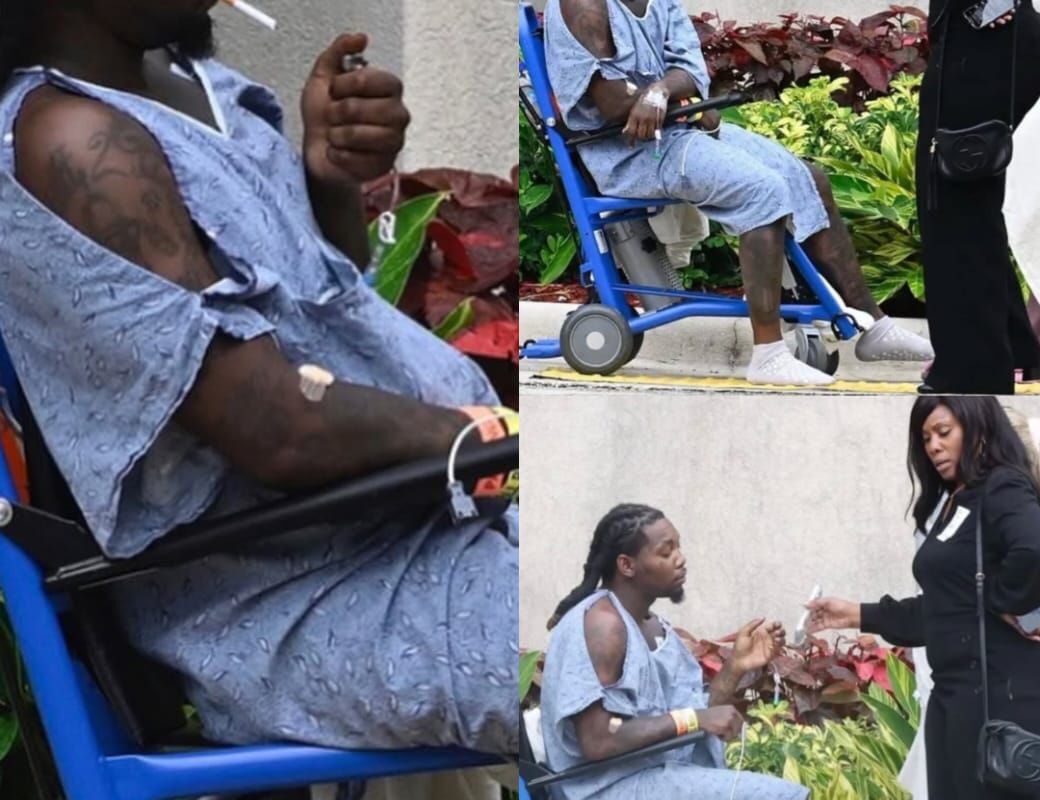
OFFSET SEEN FOR FIRST TIME SINCE BEING SHOT, SMOKING IN HOSPITAL GOWN
In a striking image that quickly captured the attention of the music world, former Migos rapper Offset was photographed on Tuesday, April 7, 2026, taking a smoke break outside Memorial…

CARDI B BRINGS OUT MEEK MILL FOR AN UNFORGETTABLE NIGHT DURING HER SOLD-OUT ‘LITTLE MISS DRAMA’ TOUR IN PHILADELPHIA
The energy inside Philadelphia’s Xfinity Mobile Arena on the evening of April 7, 2026, was already electric long before the lights dimmed. Thousands of fans packed the venue for another…
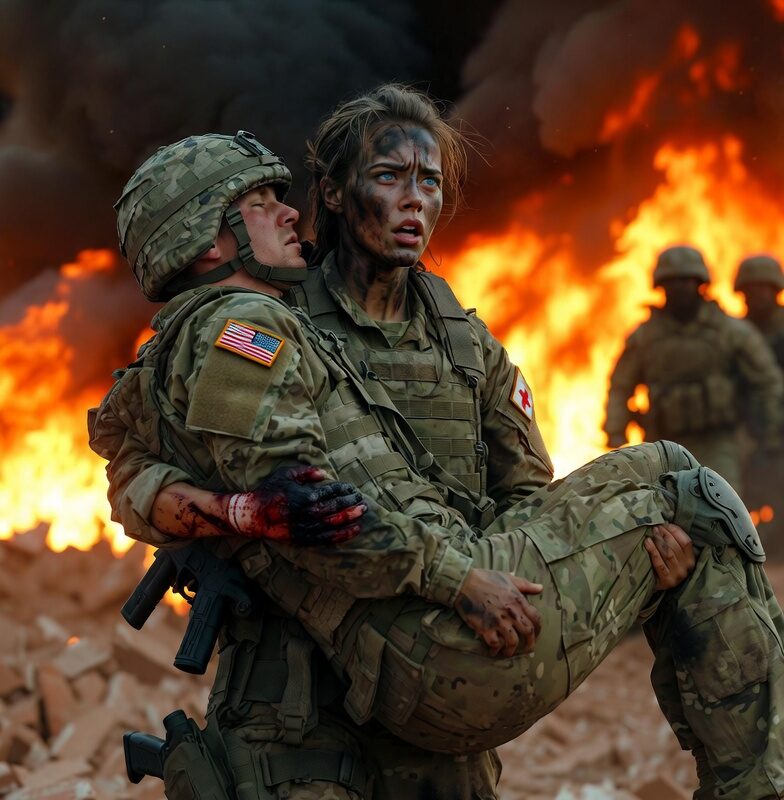
They Thought the Fire Would Finish Him—Then I Went In and Refused to Leave Him There
They Thought the Fire Would Finish Him—Then I Went In and Refused to Leave Him There My name is Claire Sutton, and the first thing SEAL Team 3 decided about…
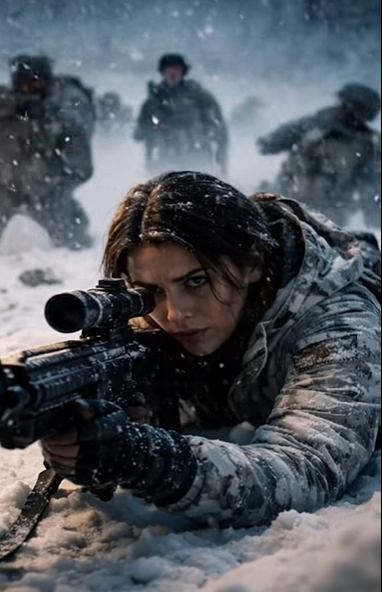
THE NIGHT A “BROKEN” NURSE WAS ORDERED TO HIDE—EIGHTEEN MARINES DIDN’T KNOW SHE WAS THE DEADLIEST SECRET ON THE MOUNTAIN…
THE NIGHT A “BROKEN” NURSE WAS ORDERED TO HIDE—EIGHTEEN MARINES DIDN’T KNOW SHE WAS THE DEADLIEST SECRET ON THE MOUNTAIN… The helicopter dropped us into a storm that felt alive,…
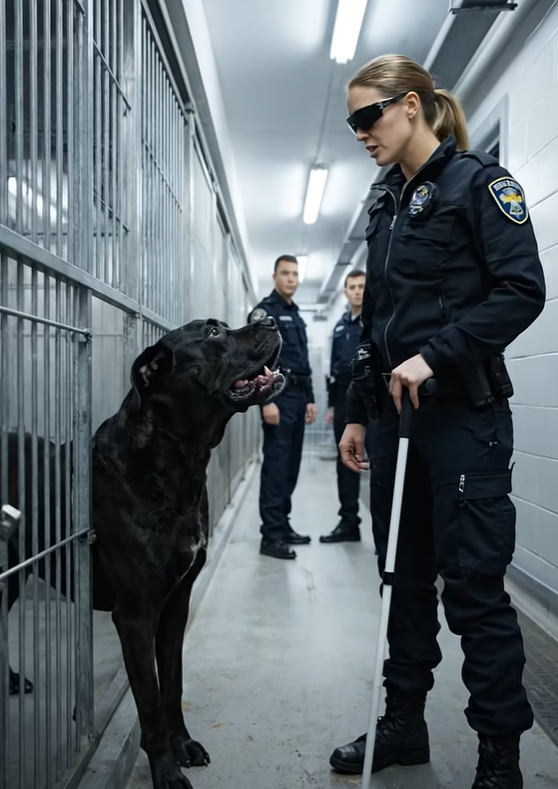
“Bite Me, and You’re Dead—So Decide: Fight or Trust Me.” In a Kennel Corridor, a Blind Captain Confronts an “Unadoptable” War Dog—and Neither Will Back Down
“Bite Me, and You’re Dead—So Decide: Fight or Trust Me.” In a Kennel Corridor, a Blind Captain Confronts an “Unadoptable” War Dog—and Neither Will Back Down In a narrow kennel…
End of content
No more pages to load