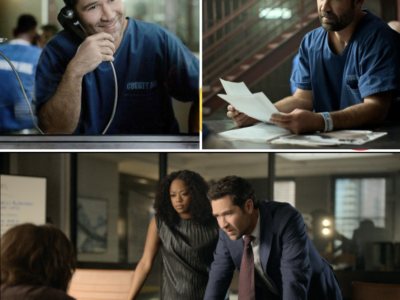
In the rust-belt shadows of Kingstown, Michigan—a forsaken speck on the map where the clang of cell doors is the morning alarm and the scent of desperation hangs thicker than factory smoke—power isn’t elected; it’s seized, one bloody concession at a time. This is the unforgiving terrain of Mayor of Kingstown, the Paramount+ juggernaut that’s exploding onto screens like a Molotov through a precinct window. Co-created by the unflinching Taylor Sheridan (Yellowstone, 1883) and Hugh Dillon, the series has rocketed from cult hit to cultural gut-punch, drawing comparisons to Goodfellas‘ mobbed-up machismo and The Wire‘s surgical dissection of institutional rot. Viewers aren’t just tuning in; they’re hunkered down, breath held, as episodes peel back layers of graft, grudge, and grim inevitability. “It’s like stepping into a pressure cooker of human frailty,” one fan raved online, while another confessed, “I binged season one and woke up feeling like I’d done time myself.” With four seasons deep and no end in sight, this isn’t television—it’s a siege on your conscience, a raw, relentless saga where every alliance frays and every victory tastes like ash.
At its iron core, Mayor of Kingstown orbits the McLusky clan, a trio of brothers who’ve clawed their way into the vacuum left by Kingstown’s collapsed auto industry. Here, prisons aren’t just buildings; they’re the economic engine, warehousing souls in a cycle of violence that bleeds into every corner of town. The series kicks off with Mitch McLusky (Kyle Chandler, all rumpled charisma and quiet command), the ostensible “Mayor”—not by ballot, but by brokering uneasy truces between cops, cons, guards, and gang lords. Mitch’s operation is a delicate web of favors: smuggling contraband for protection, greasing palms to quash riots, whispering threats that echo through cellblocks. But when a sniper’s bullet shatters that fragile peace in the premiere’s gut-wrenching opener, the mantle crashes onto his younger brother, Mike (Jeremy Renner, reborn as a force of weathered fury). Mike’s no saintly successor; he’s a former inmate who did hard time himself, emerging with tattoos like war maps and a moral compass magnetized to survival. Haunted by the ghosts of his own stretch inside, Mike inherits the role with a mix of dread and defiance, turning the family business into a high-wire act over a pit of vipers.
Renner’s Mike is the show’s thunderous heartbeat, a performance so viscerally lived-in it feels ripped from the headlines of America’s underbelly. With his perpetual five-o’clock shadow and eyes like storm clouds, Renner channels a man perpetually one wrong word from eruption—brooding in dive bars over cheap whiskey, barking orders into burner phones, or staring down barrel-chested inmates with the calm of someone who’s already lost everything worth losing. It’s a role that demands physicality and pathos in equal measure: watch him in season one’s riot sequence, shirt torn, fists flying amid the chaos of upturned bunks and improvised shivs, his roars mingling with the inmates’ howls in a symphony of savagery. Yet beneath the bravado lies a fractured soul—Mike’s not in it for glory, but for the flicker of redemption, haunted by the brother he couldn’t save and the town that’s devouring itself. Renner’s alchemy turns Mike from archetype to anti-hero; he’s the guy you’d buy a drink for, then check your back when he leaves the bar. “Renner doesn’t just play Mike—he becomes him,” a viewer posted in a forum frenzy. “You feel every scar, every sleepless night.”
The ensemble orbits Mike like planets in a decaying solar system, each adding gravitational pull to the moral black hole. Taylor Handley as Kyle, the baby brother and a conflicted Kingstown PD detective, embodies the series’ razor-edge tension between badge and blood. Handley’s Kyle is a powder keg of idealism, his boyish features hardening with each ethically bankrupt call—covering for a crooked partner one shift, wrestling with the fallout of a botched raid the next. By season two, Kyle’s demotion to state police only amplifies his isolation, his scenes with Mike crackling with fraternal friction: whispered pleas in rain-slicked parking lots, accusations hurled over family dinners that end in slammed doors. Hugh Dillon, co-creator and on-screen linchpin as Detective Ian Ferguson, brings a world-weary bite to the role of Mike’s grizzled right-hand man—a cop who’s seen too many body bags to believe in clean hands. Dillon’s Ferguson is all gravelly sarcasm and sidelong glances, his loyalty to Mike a fragile dam against the flood of departmental sleaze. Tobi Bamtefa’s Bunny Washington, the poised kingpin of Kingstown’s Black syndicate, steals every frame with his silken menace—poised in a tailored suit, negotiating from a penthouse like a chess master, his philosophical asides on systemic chains cutting deeper than any shank.

Supporting turns deepen the rot without stealing thunder. Aidan Gillen’s Milo Sunter, the chess-obsessed Russian mobster, slithers through season one like a serpent in the garden, his accented whispers promising apocalypse. Hamish Allan-Headley’s Robert Sawyer, a volatile corrections officer, injects explosive volatility, his arc from hothead to haunted underscoring the guards’ own imprisonment. And in a heartbreaking pivot, the late Dianne Wiest’s Miriam McLusky— the brothers’ anchor, a no-nonsense diner owner with a spine of steel—lends maternal warmth that shatters when violence claims her, her absence a wound that festers across seasons. New blood in later arcs keeps the vein fresh: Derek Webster’s stern Sheriff Bill Heckler, grappling with county politics; Nishi Munshi’s Iris, a dancer entangled in Mike’s web of protection rackets; and season three’s Derek Webster as the unyielding Sheriff Bill, whose clashes with Mike escalate into full-throated turf wars. By season four, fresh faces like Edie Falco’s iron-fisted Warden Nina Hobbs and Lennie James’ shadowy Detroit gangster Frank Moses inject seismic shifts, their arrivals heralding escalations that ripple from cellblocks to city hall.
Thematically, Mayor of Kingstown is a Molotov cocktail lobbed at the American dream’s undercarriage, interrogating incarceration not as plot device but as plague. Kingstown isn’t just setting; it’s organism, its veins clogged with racial inequities—Bunny’s crew locked in perpetual war with white supremacist crews like the Aryan Vanguard, their beefs spilling into street executions that Mike must mediate with equal parts bribe and bullet. Corruption isn’t aberration; it’s architecture, from bent judges pocketing kickbacks to union bosses turning blind eyes to guard brutality. Sheridan, drawing from his own brushes with the system, wields the script like a shiv, exposing how prisons profit off poverty, how “justice” is a luxury rationed by zip code. Loyalty, the show’s poisoned chalice, twists like barbed wire: Mike’s pacts with Bunny save lives one day, ignite vendettas the next; Kyle’s oath to the thin blue line crumbles under familial fiat. Betrayals cascade— a snitch’s whisper unraveling a truce, a lover’s pillow talk fueling a hit—each one a reminder that in Kingstown, trust is the first casualty. It’s uncomfortably real, mirroring headlines of police scandals and prison profiteering, yet never preachy; the grit grounds the gospel, leaving viewers to swallow the bitter pill.
Visually, the series is a masterclass in desolation porn, shot in the skeletal streets of Kingston, Ontario, standing in for Michigan’s decay. Director Guy Ferland (recurring eye behind Justified) and cinematographer Ben Semanoff paint in palettes of bruised blues and sodium-lit yellows—endless shots of chain-link fences rattling in the wind, derelict factories looming like tombstones, the monolithic Anchor Bay Prison squatting on the horizon like a concrete colossus. Action erupts in kinetic fury: a season two prison break choreographed like a riot ballet, inmates surging through corridors in a blur of orange jumpsuits and swinging pipes; Mike’s solo standoffs in fog-choked lots, rain sheeting off his leather jacket as headlights cut the gloom. The score, a brooding thrum from the Newton Brothers, pulses like a migraine—low brass swells underscoring tense sit-downs, staccato strings snapping during ambushes. Episodes clock in at taut 50 minutes, structured like pressure valves: season one’s opener lures with deceptive calm before the assassination detonates; mid-season pivots into gang wars that engulf the town in flames; finales detonate with pyrrhic reckonings, like Mike’s season three gambit to dismantle a trafficking ring, only to birth a hydra of new foes.
Season arcs build like gathering storms. The debut’s ten episodes chronicle Mike’s reluctant ascension, from Mitch’s funeral pyre to a climactic siege that leaves bodies cooling in the snow. Season two dives into the vacuum, with Russian remnants and Crips-Ruskie alliances fracturing the fragile order, Mike’s vigilante streak clashing with Kyle’s badge-bound restraint. Three’s powder keg ignites federal probes into Kingstown’s underbelly, introducing cartel incursions and a whistleblower’s suicide that guts the core crew. Four, fresh off its October 2025 premiere, unleashes Hobbs’ iron regime and Moses’ cross-state syndicate, thrusting Mike into a mayoral bid that’s less campaign than crucifixion—billboards defaced, debates devolving into drive-bys, alliances tested by revelations that could topple empires. Twists land like sucker punches: a trusted ally’s double-cross in episode six of season two, reframing seasons of loyalty; a mid-four bombshell tying Miriam’s killer to city hall insiders. It’s serialized chess, each move sacrificing pawns for the board.
What cements Mayor of Kingstown as obsession fuel is its refusal to sanitize the savagery. This isn’t aspirational anti-heroism; it’s the grind of complicity, where Mike’s “wins” stack corpses higher, his hands as stained as any gangster’s. Fans devour it for the discomfort—the way it crawls under your skin, forcing reckonings with real-world inequities. “Closest thing to The Wire in years,” one Reddit thread erupts, tallying 5K upvotes; another hails it as “Goodfellas with a conscience.” Critics nod to its pedigree—Sheridan’s dialogue crackles like live wires, laced with street argot and philosophical barbs—but praise the emotional excavation: Mike’s therapy sessions, raw confessions to a counselor who sees through the bluster, humanizing the fixer without forgiving him.
In a golden age glutted with capes and cozies, Mayor of Kingstown carves its niche as the unflinching mirror to society’s fractures—a reminder that in towns built on cages, freedom’s just the space between bars. It’s not escapism; it’s endurance, a sledgehammer swing at complacency that leaves you stunned, silent, and starving for more. As season four barrels toward its close, with Mike eyeing a horizon of handcuffs and hubris, one thing’s certain: Kingstown’s grip is ironclad. Tune in, but brace— this throne’s forged in fire, and sitting on it burns.