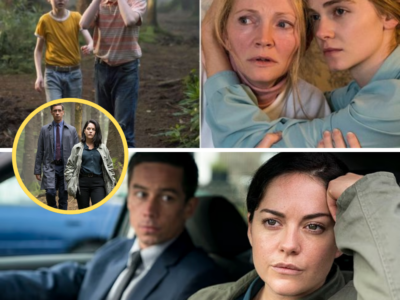
In the misty outskirts of Dublin, where ancient woods whisper secrets older than the city itself, a young ballerina lies dead on a cold stone altar. Her body is arranged with eerie ritual precision, as if offered to some forgotten god. One girl murdered. Three children vanished into those same trees twenty years earlier. And only one boy ever came back—broken, memory shattered, carrying a darkness he refuses to name.
This is the hook that drags you into The Dublin Murders, the 2019 BBC thriller now exploding across Netflix in 2026 like a long-buried case file suddenly reopened. Viewers who stumble upon it late at night report the same thing: they plan to watch one episode and wake up at dawn with all eight parts devoured, hearts pounding, minds racing. “Impossible to stop once it starts,” they say. And they’re right. Beneath the surface of a classic police procedural lies something far more sinister—a psychological descent into trauma, identity, and the lies we tell ourselves to survive.
The story begins in the present with Detectives Rob Reilly and Cassie Maddox, partners on Dublin’s elite Murder Squad. Killian Scott plays Rob with a quiet intensity that simmers just below the surface, while Sarah Greene brings Cassie to life as sharp, empathetic, and fiercely loyal—the kind of partner who knows your secrets before you admit them. When 13-year-old Katy Devlin, a promising young ballerina, is found murdered in the woods outside the fictional town of Knocknaree, the case lands on their desks. The location is no coincidence. Two decades earlier, in the summer of 1984, three children—Adam, Peter, and Jamie—disappeared while playing in those exact woods. Only Adam survived, emerging from the trees with blood on his shoes and no memory of what happened to his friends. He changed his name, moved away, and rebuilt his life as Rob Reilly. Now the woods have claimed another child, and the past is clawing its way back.

What makes The Dublin Murders so addictive is how it refuses to be just another whodunnit. Yes, there are clues, red herrings, and shocking twists. But creator Sarah Phelps, adapting elements from Tana French’s acclaimed Dublin Murder Squad novels In the Woods and The Likeness, weaves something deeper: a meditation on how violence echoes through time, how trauma reshapes identity, and how the act of investigating can destroy the investigators themselves.
As Rob and Cassie dig into Katy’s death, the connections multiply. Katy’s family hides tensions beneath a respectable facade—her father involved in local politics fighting a controversial motorway project that would cut through the woods. Archaeologists working nearby uncover ancient artifacts, reminding everyone that this land has seen blood rituals long before modern Dublin. The investigation pulls in suspects from every corner: suspicious neighbors, a troubled brother, even members of the Devlin family who seem too quick to point fingers. Yet the real tension comes from within the squad room. Rob’s suppressed memories begin to fracture his composure. He drinks too much, lashes out, and risks everything to keep his true identity hidden from colleagues. Cassie, ever the steady one, becomes his anchor—until the case forces her into a dangerous undercover operation that blurs the line between cop and criminal.
Halfway through the series, the narrative boldly shifts gears, incorporating the core premise of French’s second novel. Cassie is sent undercover into a bohemian household after a murder victim is discovered who looks eerily like her. She assumes the dead woman’s identity, living among a group of eccentric, close-knit friends in a crumbling old house. This second thread—equal parts psychological thriller and identity study—tests Cassie to her limits. The household feels like a dreamlike bubble, seductive and dangerous, where truth and performance intertwine. Viewers often describe this section as the moment the show becomes unputdownable: you’re no longer just watching detectives solve a crime; you’re watching a woman risk her soul to become someone else.
The atmosphere is thick enough to cut with a knife. Director Saul Dibb and his team capture Ireland’s moody landscapes with haunting beauty—the fog rolling through the trees, rain-slicked streets of Dublin at night, dimly lit interrogation rooms where confessions feel like exorcisms. The score pulses with unease, strings that rise and fall like a heartbeat under stress. Costumes and production design ground the story in the late 2000s while flashbacks to 1984 feel authentically sun-drenched and innocent, making the loss that follows even more devastating.
Performances elevate every scene. Scott’s Rob is a masterclass in repressed anguish; every flicker of recognition in his eyes when he returns to Knocknaree feels earned and painful. Greene’s Cassie is the emotional heart—warm yet steel-spined, capable of both tenderness and calculated deception. Supporting players like Tom Vaughan-Lawlor as the shrewd Frank Mackey, Conleth Hill as the foul-mouthed Superintendent O’Kelly, and a young cast portraying the child victims bring layers of authenticity. The chemistry between Rob and Cassie crackles with platonic intensity; their friendship is the show’s quiet tragedy, tested repeatedly by the cases that demand they sacrifice pieces of themselves.

What truly pulls viewers deeper, as the teaser promised, is the detail hidden in plain sight. Small objects, repeated motifs, a child’s drawing, a piece of jewelry, the way light falls through the trees—everything connects in ways that reward careful watching. The series doesn’t spoon-feed answers. Revelations arrive like sudden storms, forcing you to re-evaluate everything you thought you knew. By the finale, the murders are solved, but the emotional wreckage remains. Some questions about that long-ago day in the woods are answered; others linger like ghosts, mirroring the unresolved pain French’s novels are famous for.
Critics in 2019 were divided. Some praised the ambitious blend of two complex books into one eight-episode arc, calling it atmospheric and psychologically acute. Others felt the compression made certain plot turns feel rushed or overly convenient. Yet time has been kind to The Dublin Murders. On Netflix in 2026, a new generation is discovering it without the weight of book comparisons. Social media is filled with breathless reactions: “Did NOT see that twist coming,” “Binged in one night—my heart is still racing,” and “One of the best crime shows out there, period.” Its sudden chart dominance proves that quality slow-burn thrillers never really fade; they just wait for the right audience to find them.
At its core, The Dublin Murders is about the stories we bury to keep living. Rob’s lost memories, Cassie’s undercover transformation, the secrets each suspect clutches like lifelines—all speak to how trauma reshapes us. The woods themselves become a character: ancient, indifferent, swallowing innocence and spitting out survivors forever changed. In an era of flashy true-crime docs and quick-cut procedurals, this series stands out for its patience. It lets dread build slowly, lets characters breathe, and trusts viewers to piece together the puzzle alongside the detectives.
The resurgence on Netflix feels fitting. In a world still processing collective trauma—pandemics, political upheaval, personal losses—stories that confront darkness head-on resonate more than ever. The Dublin Murders doesn’t offer easy catharsis or tidy moral lessons. Instead, it asks uncomfortable questions: What if the monster in the woods was never a stranger? What if the real horror is how ordinary people fracture under pressure? And what price do we pay to uncover truths that were never meant to see daylight?
If you haven’t started yet, clear your schedule. Begin with that haunting image of the ballerina on the altar. Let the woods draw you in. By the time the final credits roll, you’ll understand why this “forgotten” BBC gem is suddenly everywhere. One body. Three missing children. A secret no one was meant to find. And a series that, once it has you, refuses to let go.
The trees remember. And now, so will you.
News
The Cucumber Patch Murder: How Young Flavia de Luce Is Turning a Quiet English Village Into Netflix’s Next Obsession
In a quiet English village where hedgerows hide centuries of grudges and a crumbling manor house clings to faded glory, a dead body turns up in the cucumber patch. One…
“It Starts with a Funeral… But the Truth Is Far Worse”: Netflix’s Haunting New Thriller ‘The Accused’ Unsettles Viewers with Buried Family Secrets and Standout Performances
A quiet funeral opens the door to decades of deception in Netflix’s latest psychological thriller, The Accused, a slow-burning drama that has quietly captivated audiences and left many unable to…
“Touching and Beautiful”: Taylor Sheridan’s ‘The Madison’ Overtakes Yellowstone with Record Ratings and Heartfelt Praise for Its Powerful Performances
In a landscape dominated by high-octane action and sprawling ranch conflicts, Taylor Sheridan has delivered something quieter yet profoundly moving with his latest Paramount+ series, The Madison. The six-episode neo-Western…
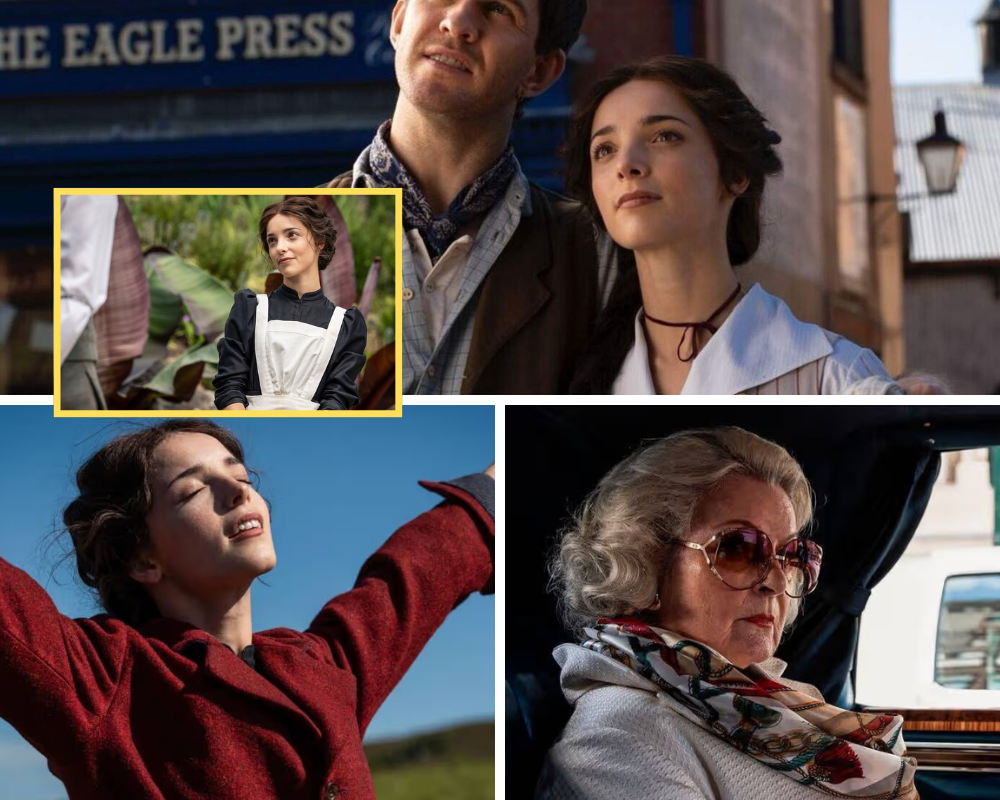
From Kitchen Maid to Empire Builder: “A Woman of Substance” Becomes the Surprise Streaming Sensation Everyone Is Bingeing
What started as a low-key launch on Channel 4 has rapidly transformed into one of the most addictive viewing experiences of the year. The new eight-part period drama A Woman…

‘I Don’t Know If I Can Get Through This Without Breaking… Because This Is The Voice That Raised Me,’ — Carrie Underwood Whispered, Visibly Fighting Tears As She Offered A Deeply Personal Tribute To George Strait
The stage at the 2026 iHeartRadio Music Awards grew unusually quiet as Carrie Underwood stepped forward. What began as a star-studded celebration of music across genres turned into one of…

AMAZING COVER — American Idol Standout and Missouri Mom Hannah Harper Delivers a Breathtaking Take on Brandon Lake’s “Gratitude” Ahead of the Songs of Faith Night
In a season already filled with powerful vocal moments and emotional storytelling, Hannah Harper has once again reminded everyone why she has emerged as one of the most compelling contestants…
End of content
No more pages to load