In the sun-dappled meadows of a bygone England, where the chime of church bells mingles with the rumble of a detective’s motorbike, a chapter that has enchanted Sunday evenings for over a decade draws to its poignant close. It’s official: Grantchester Season 11, slated for a 2026 premiere on PBS Masterpiece and ITV, will be the last hurrah for the vicar-and-cop duo that redefined cozy crime with heart-wrenching depth. After eleven seasons of unraveling murders amid moral quandaries, roaring through rain-slicked lanes on a trusty Norton sidecar, and nurturing one of television’s most soul-stirring bromances, the series bids adieu to the idyllic Cambridgeshire village that birthed it. Filming wrapped just weeks ago in the very heart of its namesake—Cambridge’s spired skyline and Grantchester’s thatched-roof charm—leaving cast and crew in a haze of tears, laughter, and vintage car exhaust. Robson Green’s gruff Geordie Keating, now paired with Rishi Nair’s introspective Alphy Kotteram, returns for one final ride, alongside a beloved ensemble including Al Weaver’s steadfast Leonard Finch, Tessa Peake-Jones’s matriarchal Mrs. C, and Kacey Ainsworth’s resilient Cathy Keating. Set against the heady haze of summer 1963, this farewell season promises palace intrigue swapped for parish politics, sweeping battles of conscience, and a slow-burn spark that could either forge futures or fracture them forever. As creator Daisy Coulam vows, it’s a send-off that honors the power of friendship and love, wrapping arcs with the grace of a hymn and the grit of a gavel.
Since its 2014 debut on ITV—quickly crossing the pond to captivate PBS audiences—Grantchester has been more than a procedural puzzle; it’s a tapestry of tenderness woven through the thorns of post-war Britain. Inspired by James Runcie’s “The Grantchester Mysteries” novels, the series traded gothic shadows for golden-hour glow, pairing Anglican vicars with pragmatic detectives in an unlikely alliance against evil. James Norton’s Sidney Chambers kicked off the reverie in the 1950s, his crisis of faith clashing gloriously with the era’s stiff-upper-lip stoicism. Tom Brittney’s torch-passing as the rock ‘n’ roll-infused Will Davenport injected youthful fire, trading sermons for saxophones and celibacy for scandal. Now, with Rishi Nair’s Alphy—a Tamil vicar grappling with colonial ghosts and personal piety—the show evolves into its most nuanced era, mirroring 1960s shifts toward liberation and loss. Over 60 episodes, it’s chronicled not just whodunits—a poisoned parishioner here, a missing magistrate there—but the quiet revolutions of the human spirit: interracial romances defying decorum, queer awakenings amid repression, and the eternal tug between duty and desire. Viewers have flocked to its formula—elegant estates doubling as crime scenes, jazz-infused jazz clubs pulsing with peril—making it a fixture of Masterpiece’s Mystery! lineup, with Season 10 still unspooling to rave reviews. But as the calendar flips to 1963, the final bell rings not in defeat, but in defiant celebration: one last “Oh, Lord…” exhaled over a pint, one final sidecar sprint through sunlit orchards.
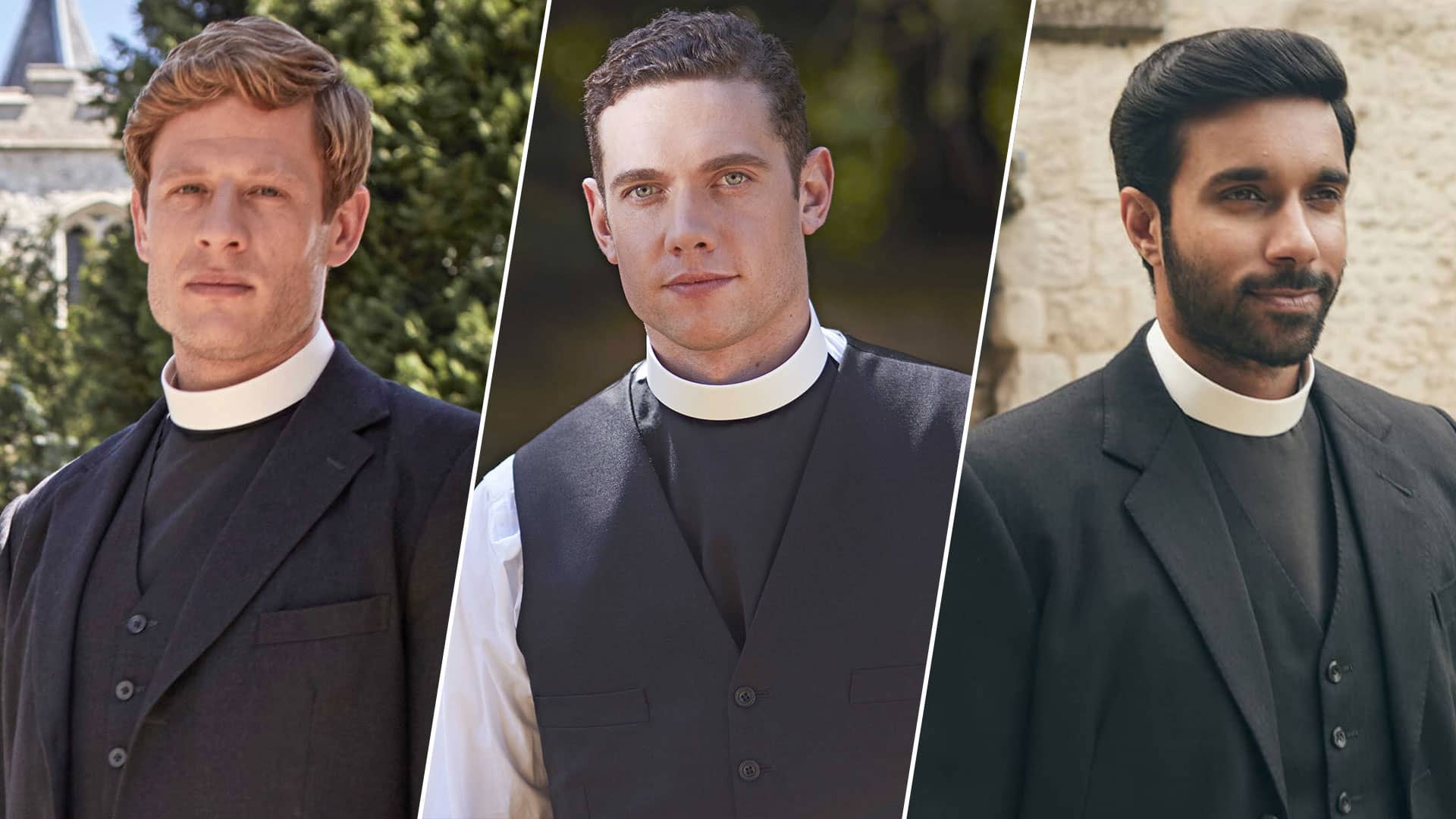
The heart of Grantchester‘s allure has always been its bromance—a platonic pact forged in foxholes of the soul, where the vicar’s velvet compassion tempers the cop’s iron resolve. No pairing has crackled quite like Green and Nair’s Geordie and Alphy, a duo whose contrasts ignite the screen like flint on steel. Robson Green, the Geordie legend from Soldier Soldier and Touch of Rain, embodies Keating with a world-weary warmth that’s equal parts bulldog bark and teddy bear hug. At 57, Green brings a seasoned simmer to the role he’s inhabited since 2014, his detective’s rumpled raincoat a second skin, his laugh lines etched from years of lifting mates from the muck. Geordie’s arc has been a masterclass in midlife metamorphosis: from a buttoned-up widower haunted by his wife’s death to a family man embracing chaos, his Catholic guilt clashing with Anglican allies in a symphony of secular-spiritual sparring. In Season 11, whispers from the set paint a portrait of peril: a tantalizing career offer from London beckons, one that could whisk him away from the fenlands forever, testing the bonds that have moored him. “Geordie’s at a crossroads,” Green shared during a wrap-party toast, his voice thick with the North East burr. “It’s about choosing heart over hustle—does he trade the village for the Yard, or stay for the souls that need saving?” Fans, who’ve shipped “Gealphie” fan art since Nair’s debut, hold their breath: will this be the rift that redefines them, or the forge that makes their friendship unbreakable?
Enter Rishi Nair’s Alphy Kotteram, the third vicar in as many eras, whose quiet storm has revitalized the rectory since Season 9. At 34, Nair—fresh from The Sister and Trying—infuses Alphy with a layered luminosity: a man of color navigating 1960s prejudice, his sermons laced with postcolonial poetry and personal penance. Alphy’s past, long shrouded in selective silence, erupts in the finale like a monsoon—revelations about a life unlived, perhaps a lost love or forsaken family back in India, forcing him to interrogate identity and faith. His growing connection with the bishop’s daughter, Meg (Charlotte Ritchie, sparkling as the free-spirited foil to his fervor), simmers from spark to slow-burn blaze, a romance that dances on the edge of ecclesiastical taboo. Set pieces tease stolen glances in the cloister, fervent debates over dinner that dissolve into tentative touches, all underscored by the era’s Beatles-buzzing optimism. “Alphy’s journey is about embracing the whole self,” Nair reflected post-filming, eyes misty on the Grantchester green. “Faith isn’t a cage; it’s a compass. This season, he points it toward possibility—and peril.” Their chemistry, honed through motorbike jaunts and midnight confessions, culminates in one last ride: Geordie gunning the engine, Alphy in the sidecar clutching case files and crucifixes, the wind whipping whispers of “what if” into the willows.
Orbiting this central orbit is an ensemble as rich as the Cambridgeshire clay, each thread pulling the emotional quilt taut. Al Weaver’s Leonard Finch, the curate-turned-confidant whose queer courage has been the show’s quiet revolution, returns for redemption: post-Season 10’s marital strains, he seeks forgiveness in fractured friendships, his arc a hymn to hidden hearts finding harbor. Tessa Peake-Jones, luminous as the redoubtable Mrs. Chapple-Carey (Mrs. C), anchors the vicarage with maternal might—her fruit scones and forthright faith a balm for bruised egos, her hopes for Season 11 pinned on “one more tea party to mend what’s mended.” Kacey Ainsworth’s Cathy Keating, Geordie’s anchor and antagonist, navigates family fissures with fiery grace; her storyline teases tensions over Geordie’s potential exodus, a wife’s worry woven with warrior resolve. Melissa Johns’s plucky DC Miss Scott adds brass to the bullpen, her banter a bright spark in the boys’ club, while Bradley Walsh’s Jack Chapple-Carey brings baritone levity as the vicar’s valet-cum-visionary. Guest turns—from Oliver Chris’s enigmatic bishop to rising stars like Sophie Wu as a mysterious parishioner—pepper the plot with fresh intrigue, ensuring the parish remains a powder keg of passions.
Thematically, Season 11 is Grantchester‘s grand gospel: a valediction on crossroads, where family feuds flare, forgiveness flows like the Cam, and faith flickers against the dawn of the Swinging Sixties. Creator Daisy Coulam, who scripted the lion’s share since inception, pens a finale that probes profundity without preachiness—huge decisions loom, from Geordie’s gavel to Alphy’s altar, all framed by 1963’s cultural churn: civil rights ripples across the pond, youthquake quakes the quoins. Murders mount—a vicarage vandal turned venomous, a fete foul with fatal folly—but they’re mere mirrors for inner tempests, each case a cipher for the characters’ quests. Production’s pivot back to authentic locales—filming in Cambridge’s cobbled courts and Grantchester’s apple-blossom bowers—infuses authenticity, with vintage Vauxhalls purring past punts and period picnics under perpetual summer skies. Behind the lens, it’s been a labor of love: crews, many stalwarts since Sidney’s day, convened for the last waltz in July 2025, wrapping in October amid autumnal applause. Tears flowed freely on the final day—Green and Nair’s meadow embrace a meta-masterstroke, cameras capturing camaraderie as catharsis. “We’ve built a family,” Coulam affirmed, “and now we let them fly.”
As the dust settles on this decade’s darling, Grantchester‘s legacy gleams like stained glass in the slanting sun: a reminder that in the murk of mystery lies the miracle of connection. Season 10’s lingering cases—airing now on PBS—build to this crescendo, priming pumps for the penultimate plunge. Executive producer Emma Kingsman-Lloyd hails it as “the most ambitious yet,” a bang-out blaze of bromance and bravery. For devotees who’ve dissected sidecar symbolism on forums and toasted tots in tearooms, the farewell feels fraught: Will Geordie don the London fedora? Will Alphy’s spark with Meg ignite a new congregation? One thing’s certain—one last ride awaits, engine thrumming with the ghosts of seasons past, sidecar swaying with the weight of what-ifs. In a TV landscape littered with abrupt axings, Grantchester chooses closure with class, its final “Oh, Lord…” a prayer for paths well-pursued. As the credits cue on that 1963 horizon, the village won’t vanish; it’ll echo eternally, a beacon of bromance in the British dusk. Tune in come summer 2026—your vicar-and-cop vigil ends not in silence, but in a symphony of souls saved, one heartfelt huzzah at a time.