The Divine Spark: How Channel 4’s “Falling” Ignites a Forbidden Romance Between Faith and Desire
In an era where television often chases spectacle and high-stakes action, Channel 4’s new six-part drama Falling arrives as a quiet revelation. Premiering on May 19, 2026, this intimate romantic series, penned by the acclaimed Jack Thorne—best known for powerhouse works like Adolescence and This Is England—marks the writer’s first foray into a full-blooded love story. At its core, Falling explores the electrifying and devastating collision of two lives bound by sacred vows, as a devoted nun and a charismatic priest find themselves irresistibly drawn to one another. With stellar performances from Keeley Hawes and Paapa Essiedu, the series has already sparked intense online discussions, praise for its emotional depth, and debates about faith, sacrifice, and the human heart’s capacity for unexpected change.
The premise is deceptively simple yet profoundly charged: Anna (Keeley Hawes), a nun who has spent over two decades in a sheltered convent life, crosses paths with Father David (Paapa Essiedu), a dynamic young Catholic priest deeply embedded in the gritty realities of his Bristol parish. What begins as a chance encounter blossoms into a connection that challenges everything they believe about themselves, their commitments to God, and the paths they have chosen. Neither is seeking love—Anna finds purpose and family among her sisters in the convent, while David throws himself into community work, advocating for the marginalized in a deprived area. Yet, as their worlds intersect, the emotional pull proves impossible to ignore, forcing both to confront the true cost of desire.
Thorne’s script, directed by Peter Hoar, unfolds with a deliberate pace that allows tension to simmer. The series is set against the backdrop of contemporary Britain, blending the serene, cloistered world of the convent with the raw urban struggles of East Bristol. Anna tends to the convent garden, supplying fresh produce to local food banks, embodying a life of quiet service and routine. Her existence is stable, supported by the watchful Abbess Francesca (Niamh Cusack) and a close-knit group of sisters. David, by contrast, is a man of action—a “radical” priest who pushes for practical change, such as needle exchanges and youth programs, often clashing with more conservative church figures like Bishop Peter (Jason Watkins).
Their initial meeting is understated but loaded with unspoken energy. A seemingly innocuous interaction—perhaps involving shared community efforts—ignites a spark. As the episodes progress, viewers witness Anna’s growing restlessness and David’s internal conflict. The chemistry between Hawes and Essiedu is palpable, often cited as one of the show’s standout elements. Hawes brings a layered vulnerability to Anna: a woman who entered religious life young and has known little else, yet harbors quiet doubts and a wry sense of humor. Essiedu portrays David with charisma and intensity, capturing a man who is both deeply faithful and haunted by personal struggles, including a past battle with alcohol and complex family ties, particularly with his sister Susan (Sophie Stone).
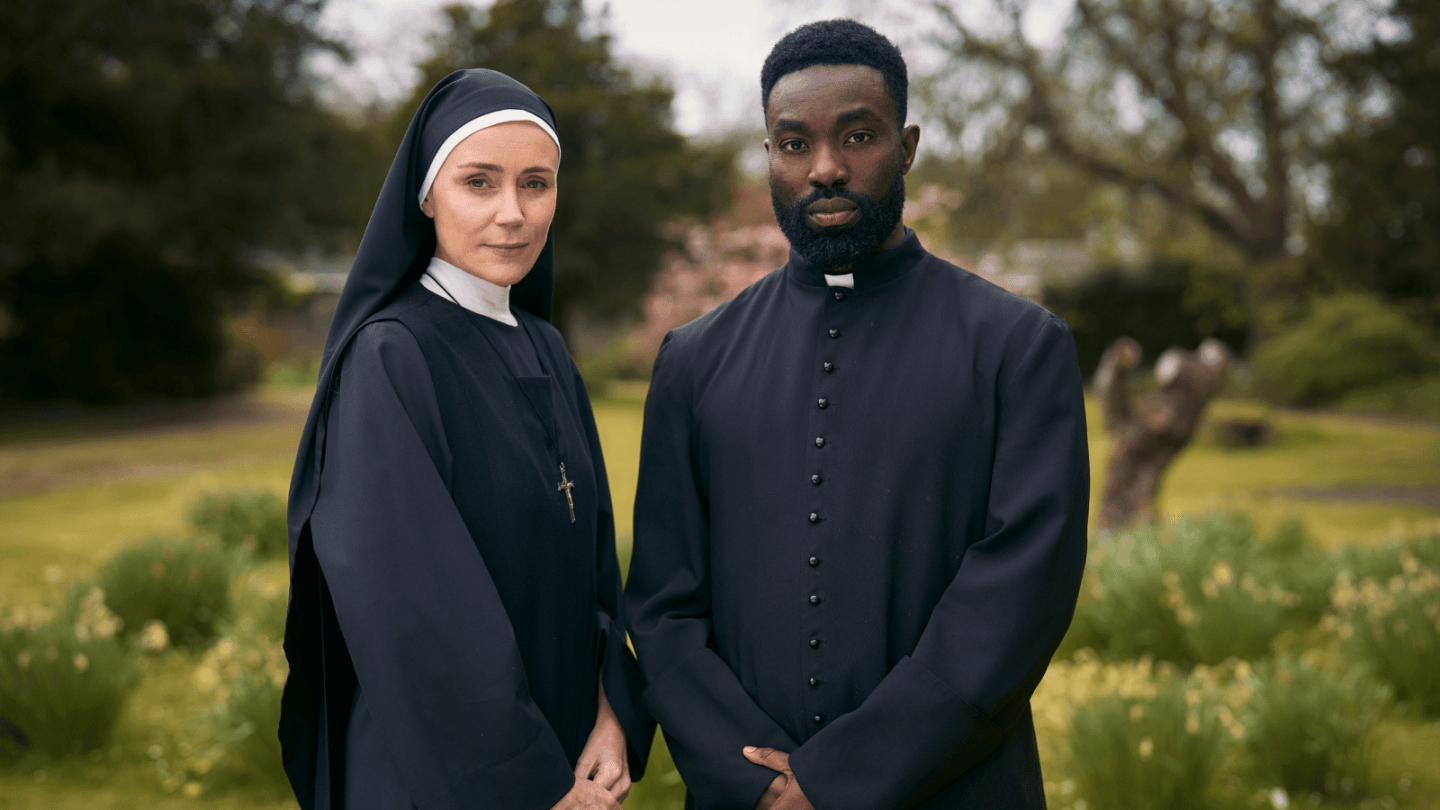
What elevates Falling beyond a simple forbidden romance is its nuanced exploration of faith. Thorne does not caricature the Church or reduce the characters’ beliefs to obstacles. Instead, the drama delves into the genuine spiritual wrestling that accompanies such a profound shift. For Anna, leaving the convent is not just about romance; it represents a seismic reevaluation of identity after years of devotion. The series portrays her transition to secular life with sensitivity—moments of haircut and new clothes symbolizing rebirth, but also isolation and uncertainty. David faces his own dilemmas: the fear of disappointing his community, the weight of his vows, and the practical realities of a relationship that could upend his ministry.
Early episodes highlight these tensions beautifully. Anna’s bold declaration of love leaves David stunned, leading to her temporary move in with a supportive parishioner, Muriel (Rakie Ayola). Gossip swirls, forcing confrontations with church hierarchy and personal demons. Supporting characters add richness: the abbess grappling with succession and loyalty, a troubled teen named Tina (Holly Rhys) whom David mentors, and various community members reflecting broader societal issues. Thorne’s signature strength—crafting authentic, dialogue-driven scenes—shines here, blending wit, warmth, and raw emotion.
The show’s inspiration adds another layer of intrigue. Thorne has spoken about a real-life news story involving a nun and priest who fell in love, which lingered with him as an exploration of “love at first sight” and its consequences. While Falling is fictional and not a direct adaptation, this kernel grounds the narrative in emotional truth. Real former religious figures have shared similar journeys of leaving orders for love, adapting to new lives while retaining elements of faith—echoes that resonate throughout the series.
Critical reception has been largely positive, with many hailing it as one of 2026’s most surprising gems. Reviewers praise Hawes’ “exceptional” and “divine” performance, noting it as potentially her strongest since Bodyguard. Essiedu’s portrayal is equally lauded for its depth and magnetism. The script earns acclaim for its elegance and maturity, offering a slow-burn intimacy rare in modern TV. Some, however, find the central romance occasionally inauthentic or overly stylized, critiquing dialogue that can feel detached from everyday speech. Yet even detractors acknowledge the strength of the peripheral stories and the cast’s commitment.
Online reactions have been fervent. Social media buzzes with fans dissecting the chemistry, sharing clips of pivotal scenes, and debating the moral complexities. Hashtags related to the show trend as viewers binge the episodes available on Channel 4’s platform. Many draw parallels to Fleabag‘s hot priest trope but note Falling‘s greater seriousness and emotional stakes. Discussions range from theological implications to broader questions about celibacy, personal fulfillment, and whether love can truly transcend lifelong commitments.
Visually, the series captivates with contrasts: soft lighting and tranquil convent gardens juxtaposed against Bristol’s bustling streets and community centers. The score complements the mood, heightening moments of longing and revelation. Production details, including filming in Bristol and Cardiff, lend authenticity to the settings.
At its heart, Falling is more than a romance—it’s a meditation on identity, community, and the courage required to pursue authenticity. Thorne poses uncomfortable questions: What happens when the life you built no longer fits? How do you reconcile duty with desire? Can faith and human connection coexist in new forms? The answers are neither tidy nor preachy, allowing viewers to draw their own conclusions.
As the series unfolds across its six episodes—releasing in a weekly linear pattern but available to stream in full—tensions escalate. Anna navigates life “outside,” questioning her choices amid feelings of displacement. David battles external pressures and internal guilt. Close quarters and shared secrets test their bond, leading to moments of profound intimacy and painful reckonings. The finale teases possibilities of fresh starts, leaving audiences reflecting on sacrifice, redemption, and the unpredictable ways hearts “fall.”
In a television landscape crowded with reboots and thrillers, Falling stands out for its humanity. Keeley Hawes and Paapa Essiedu’s powerhouse performances anchor a story that feels both timeless and urgently contemporary. Jack Thorne has delivered a drama that lingers, inviting empathy for characters navigating impossible choices. Whether it reaffirms faith, challenges it, or simply celebrates the messy beauty of love, Falling is essential viewing—a poignant reminder that even in the most structured lives, the heart can rewrite the script.
With its blend of emotional intelligence, strong ensemble work, and thought-provoking themes, Falling cements itself as a highlight of the year. It doesn’t just tell a love story; it explores what it means to truly fall—into passion, doubt, growth, and perhaps a new understanding of the divine in the everyday. For those seeking substance amid the noise, this Channel 4 offering delivers in abundance.