THE BRITISH WWII DETECTIVE SERIES YOU DIDN’T KNOW YOU NEEDED IS BACK ON NETFLIX: FOYLE’S WAR REMAINS A TIMELESS MASTERPIECE OF MYSTERY AND HISTORY
A quiet gem of British television has resurfaced on Netflix, drawing in a new wave of mystery enthusiasts who are discovering—or rediscovering—one of the most intelligent and atmospheric detective dramas ever made. Foyle’s War, the acclaimed period series created by Anthony Horowitz, transports viewers to the English Home Front during World War II, where the real battle isn’t always on distant beaches but in the shadowy corners of everyday life. With its elegant pacing, meticulous historical detail, and unflinching moral complexity, the show proves that some of the most compelling stories emerge not from frontline heroism but from the quiet pursuit of justice amid chaos.
The series centers on Detective Chief Superintendent Christopher Foyle, portrayed with understated brilliance by Michael Kitchen. A widower and principled policeman stationed in the coastal town of Hastings, Foyle is repeatedly denied his request to join the military effort. Instead, he remains on the home front, investigating crimes that exploit the wartime disruptions: black market dealings, sabotage, espionage, and murders masked as accidents. His calm demeanor, sharp intellect, and refusal to compromise on ethics make him a formidable force. Foyle doesn’t shout or posture; he observes, questions, and methodically uncovers truths that powerful figures would prefer to stay buried. In a world of rationing, air raids, and suspicion, his investigations reveal how ordinary people—and those in authority—can bend or break under pressure.
Kitchen’s performance is the quiet heartbeat of the series. Foyle is thoughtful, reserved, and deeply humane, often delivering dry wit or pointed moral observations with a single raised eyebrow or measured pause. He is frequently underestimated by suspects who see only a middle-aged detective rather than a man of unyielding integrity. Supporting him is his spirited driver and assistant, Samantha “Sam” Stewart, played by Honeysuckle Weeks. Sam’s youthful energy, quick mind, and growing confidence provide a perfect counterpoint to Foyle’s restraint. Their partnership evolves from professional necessity into genuine mutual respect and subtle affection, adding warmth and emotional depth to the otherwise somber tone.
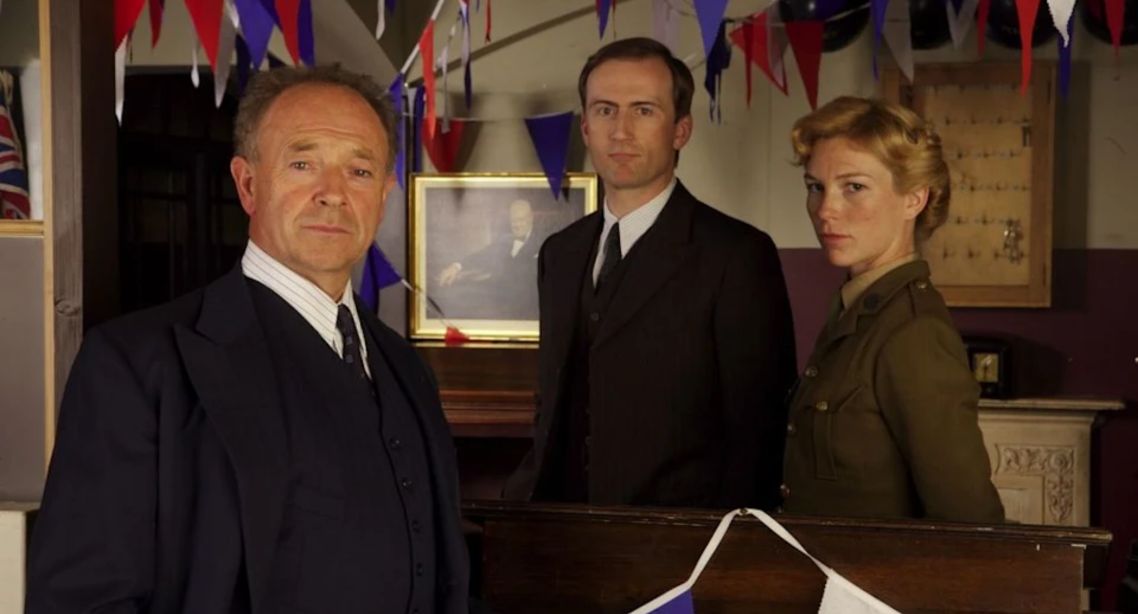
Anthony Howell rounds out the core trio as Detective Sergeant Paul Milner, a loyal but wounded veteran whose wartime injuries have left him with a prosthetic leg and lingering trauma. Milner’s arc explores the personal toll of the conflict, offering poignant moments of vulnerability amid the procedural elements. Together, this ensemble navigates cases that blend classic whodunit structure with broader historical commentary—on class divides, corruption, prejudice, and the ethical compromises demanded by war.
The show’s eight seasons span the duration of World War II and extend into the immediate postwar period. Early episodes focus on Hastings and the Sussex countryside, where the threat of invasion looms and everyday crimes intersect with national security. As the series progresses, Foyle’s investigations widen to include MI5 intrigue, scientific espionage, and the shadowy beginnings of the Cold War. Horowitz, drawing from real historical events, weaves in authentic details: the internment of enemy aliens, rationing scams, code-breaking efforts, and the moral dilemmas of collaboration versus resistance. Each standalone mystery—often structured as feature-length episodes—feels self-contained yet contributes to the overarching sense of a nation in flux.
What sets Foyle’s War apart is its refusal to sensationalize. The suspense builds slowly, through dialogue, character observation, and atmospheric tension rather than graphic violence or frantic action. Air raid sirens, blackout curtains, vintage cars, and period costumes create an immersive world where history feels lived-in rather than recreated. The writing is sophisticated, with twists that emerge logically from clues planted early on, and resolutions that often carry bittersweet weight. Foyle’s cases rarely end with tidy triumphs; justice prevails, but not without cost, reflecting the era’s harsh realities.
The series originally aired on ITV from 2002 to 2015, spanning 28 episodes across eight seasons. It earned critical acclaim for its storytelling, performances, and historical accuracy, becoming a favorite among fans of intelligent crime dramas. After concluding with Foyle transitioning into intelligence work in the postwar years, the show left audiences satisfied yet longing for more. Recent buzz has surged as all seasons became available on Netflix in certain regions, including the UK after a decade-long absence, introducing the series to streaming audiences who might have missed it during its original run.
Viewers new to the show praise its binge-worthy quality: episodes are richly detailed yet accessible, with each mystery offering a complete arc while building character relationships over time. Social media is filled with comments from fans who started with one episode and found themselves hooked for hours, captivated by the slow-burn suspense and the way the war’s backdrop amplifies personal dramas. It’s often described as “British TV at its finest”—understated, thoughtful, and profoundly satisfying.
For those who enjoy series like Midsomer Murders (also from Horowitz), Inspector Morse, or Endeavour, Foyle’s War offers a similar blend of cerebral detection and period charm, but with the added gravitas of wartime stakes. The mysteries often touch on larger themes: loyalty, sacrifice, prejudice against refugees, the abuse of power, and the quiet heroism of those who uphold the law when society is unraveling.
As the world rediscovers this hidden treasure on Netflix, Foyle’s War stands as a reminder that great storytelling endures. In an era of fast-paced thrills, its deliberate pace and moral depth feel refreshingly profound. Christopher Foyle’s quiet battles on the Home Front may not make headlines, but they resonate deeply—proving that the fight for truth and justice can be as gripping far from the battlefield as on it. If you’re seeking an intelligent, atmospheric mystery with heart and history, this might just become your next obsession.