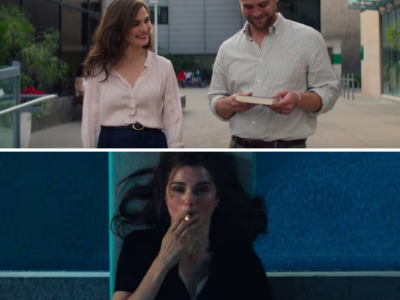
In the quiet streets of a sleepy Swedish town, where the hum of everyday life masks the sharp edge of unspoken horrors, Netflix has dropped a grenade into the true crime genre—one that doesn’t explode with sensational twists but simmers, relentlessly, until it seeps into your bones. The Breakthrough, the four-part Swedish limited series that premiered on January 7, 2025, isn’t peddling gore-soaked shock value or larger-than-life monsters. It’s a meticulously crafted deep dive into one of Europe’s most baffling cold cases: the 2004 Linköping double homicide, a brutal stabbing that claimed a young boy and an elderly woman in broad daylight, shattering a community and baffling investigators for 16 agonizing years. Viewers aren’t just tuning in; they’re confessing to all-night binges, emerging bleary-eyed and breathless, declaring it “the smartest, most gripping true crime series ever made.” Social media is ablaze with one-night marathon admissions—”I started at 8 PM, finished at 4 AM, and now I can’t sleep”—and fervent endorsements that “no other true crime comes close.” In a year bloated with flashy docuseries and dramatized depravity, The Breakthrough stands apart: a slow-burning thriller so disturbingly real, so grounded in human frailty, that it redefines tension as the quiet drip of dread. This isn’t entertainment; it’s excavation, unearthing the raw truth of a case solved not by luck, but by the unyielding march of science and sorrow.
To understand why The Breakthrough has glued audiences to their screens like nothing before, step back to that fateful afternoon in October 2004. Linköping, a mid-sized city in southeastern Sweden known more for its university and apple orchards than urban nightmares, became the epicenter of the nation’s second-largest murder investigation—rivaled only by the assassination of Prime Minister Olof Palme. Eight-year-old Mohammed Ammouri, an innocent boy walking home from school, and 57-year-old Anna-Lena Svensson, a grandmotherly figure out for a routine errand, crossed paths with an unseen predator. In a matter of minutes, both were savagely stabbed in separate but eerily proximate attacks, their lives snuffed out on a bustling sidewalk under a pale autumn sky. Eyewitnesses scattered like leaves in the wind, descriptions fragmented into shadows—a tall man in dark clothing, perhaps fleeing on a bike. The crime scene yielded scant evidence: a partial DNA profile from a bloodied glove, but no matches in any database. What followed was a labyrinthine probe that ballooned into thousands of interviews, hundreds of suspects, and a national reckoning with vulnerability. Families were torn asunder, detectives haunted by dead ends, and the public gripped by a fear that lingered like fog over the Motala River. For 16 years, the case festered as a cold file, a ghost in Sweden’s forensic halls—until a radical pivot in investigative methodology cracked it wide open, marking Europe’s first murder solved through genealogical DNA tracing.
The Breakthrough—titled Genombrottet in its native Swedish—transforms this saga into a taut, four-episode odyssey of persistence and pathos, directed by Lisa Siwe (The Bridge) and penned by Oskar Söderlund (Snabba Cash). Far from the genre’s typical frenzy of red herrings and rapid-fire revelations, the series unfolds like a Nordic winter: deliberate, chilling, and inexorable. It opens not with the stabbings, but with their echo—a quiet montage of empty swings and wilting flowers at a memorial site, the camera lingering on the faces of the bereaved as years bleed into one another. This isn’t a whodunit; it’s a why-and-how, centering the human toll with surgical empathy. Viewers praise its “quiet tension,” the way it builds dread through mundane details: a detective sifting faded case files under fluorescent lights, a mother’s ritual visit to her son’s grave, the soft click of a computer mouse as ancestry trees branch into the past. “You don’t need unbelievable twists or larger-than-life villains—just the truth, told slowly, and it’ll destroy you,” one fan posted on X, encapsulating the chorus of acclaim that’s propelled the series to Netflix’s global Top 10 within days. With a 92% Rotten Tomatoes score from critics hailing its “restrained power” and “emotional authenticity,” The Breakthrough proves that restraint can be riveting, turning a real-life investigation into a thriller that feels as intimate as a confession.
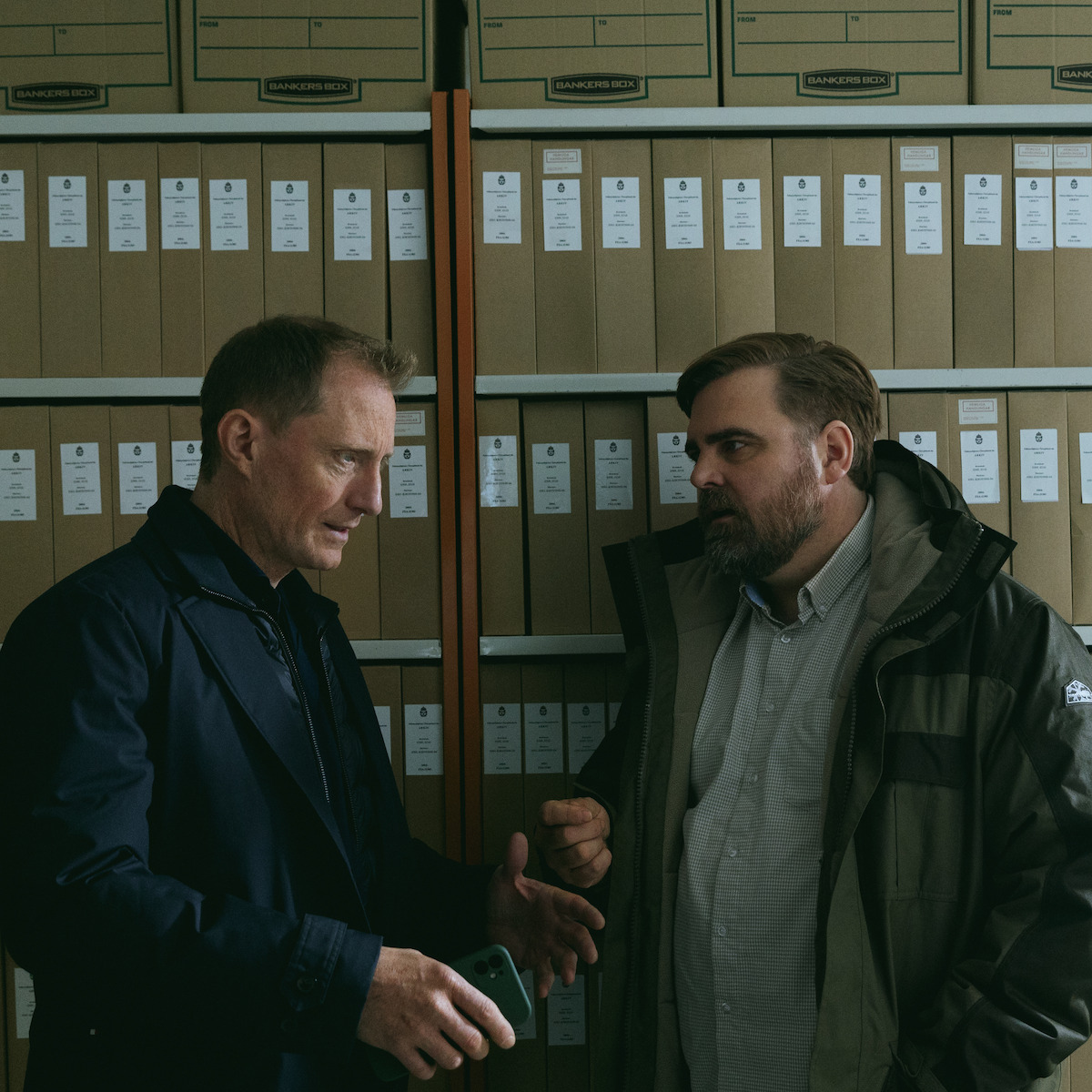
At the series’ steel spine is Detective John Nordin, portrayed with haunted gravitas by Peter Eggers (Snabba Cash). Eggers, a Stockholm theater veteran whose brooding intensity has simmered in Scandinavian noir staples, embodies Nordin as a man weathered by the case’s weight—a chain-smoking everyman whose marriage frays at the edges, his daughter’s soccer games sacrificed to late-night stakeouts that yield nothing. In Episode 1, “The Echo,” we meet him in 2004, barking orders at a chaotic crime scene, his face a mask of controlled fury as rain washes away potential prints. But as the seasons shift—marked by subtle visual cues like falling leaves to budding blooms—Nordin ages into a shadow of himself, the unsolved murders etching lines around his eyes. By 2020, with the case teetering on archival oblivion, he champions an untested alliance: partnering with civilian genealogist Per Dahlgren (Mattias Nordkvist, Deliver Me), a bespectacled archivist whose world of parish records and family trees collides jarringly with police procedure. Their dynamic is the series’ quiet engine—a prickly mentor-protégé bond forged in frustration, where Nordin’s street-honed instincts clash with Dahlgren’s data-driven precision. “It’s not about hunches anymore,” Nordin growls in a pivotal scene, slamming a fist on a desk piled with yellowed documents. Eggers infuses the role with a raw vulnerability, his performance earning whispers of Emmy contention; it’s a portrayal that humanizes the badge, showing how obsession can both sustain and sabotage.
Nordkvist’s Per Dahlgren serves as the narrative’s innovative heartbeat, a reluctant hero thrust from academia into the fray. Drawing from the real-life Peter Sjölund, the genealogist whose 2020 breakthrough made headlines, Dahlgren is no flashy forensic wizard but a meticulous mouse-clicker, his home office a warren of Ancestry.com tabs and 18th-century ledgers. Episode 2, “Branches,” plunges into his process: uploading the killer’s partial DNA to public databases, cross-referencing anonymous user profiles with Swedish church archives, tracing maternal lines back to rural hamlets where great-great-grandparents wed. It’s tense television disguised as tedium—the glow of screens in a darkened room, the soft ping of a match, the dawning horror as a suspect’s family tree aligns. Nordkvist, with his lanky frame and wide-eyed earnestness, captures Dahlgren’s quiet exhilaration, a man whose “eureka” moments arrive not in fanfare but in the rustle of paper. Their collaboration peaks in Episode 3, “Roots,” a rain-lashed montage of dead ends and breakthroughs, where a single baptismal record unravels generations. Critics laud this as “the smartest procedural pivot since The Wire,” a masterclass in showing how science democratizes justice—affordable consumer tools outpacing bureaucratic behemoths.
Yet, The Breakthrough transcends its investigative spine by centering the victims’ orbits, weaving their stories with a tenderness that elevates it beyond genre tropes. Eight-year-old Mohammed, reimagined as the wide-eyed Klara (Lily Evita Wahlsteen in flashbacks), flickers through home videos and sibling anecdotes, his laughter a haunting counterpoint to the silence that follows. His mother’s unraveling—portrayed with shattering restraint by Yana Marina Svensson—is a slow bleed of grief: empty bedrooms, half-eaten meals pushed aside, therapy sessions that devolve into sobs. Anna-Lena, the grandmother whose kindness defined her neighborhood, lingers in vignettes of bridge games and bakery chats, her daughter (Jessica Liedberg) channeling rage into advocacy for cold case reforms. These threads aren’t exploitative asides; they’re the emotional core, illustrating how a killer’s anonymity amplifies the agony. Episode 4, “Harvest,” culminates not in courtroom bombast but a subdued arrest at dawn, the suspect—a nondescript retiree whose ordinary life hid unspeakable rage—led away as families exhale in fractured relief. Director Siwe, known for her empathetic lens in The Bridge, employs long takes and natural light to mirror the case’s languid pace, her camera a compassionate witness rather than a voyeur. “It’s a human tragedy first,” Siwe has said, and the series honors that, focusing on resilience over retribution.
What sets The Breakthrough ablaze in 2025’s true crime deluge—amid flashier fare like Hulu’s Devil in the Family or Netflix’s own Monster: The Ed Gein Story—is its unflashy audacity. No salacious reenactments of the stabbings; instead, implied violence through sound design—a muffled scream, the thud of a body—and emotional aftershocks. The script, rooted in Anna Bodin and Peter Sjölund’s nonfiction tome, takes liberties for drama—composite characters, compressed timelines—but stays faithful to the facts: the 2004 slayings, the 2019 DNA upload false start, the 2020 genealogical coup that identified the perpetrator via distant cousins’ GEDmatch profiles. Released amid Sweden’s introspective noir wave, it arrives as a global salve for audiences weary of American sensationalism, offering Scandi subtlety that simmers like a fjord mist. Social feeds erupt with binge confessions: TikTok duets recreating Dahlgren’s tree-tracing, Reddit threads debating ethical quandaries of genetic privacy, X posts hailing it as “the anti-Making a Murderer—no heroes, just humans grinding toward truth.” Viewership metrics skyrocket, with completion rates hitting 85% in the first week, outpacing even Baby Reindeer‘s viral grip. For a genre often accused of trauma porn, this is catharsis: proof that the truth, unadorned, can be the most devastating plot twist.
As the final frame fades on a Linköping sunrise—families scattering ashes, detectives toasting with bitter coffee—one line from Nordin lingers: “Justice isn’t a sprint; it’s the long shadow of the wait.” In our fractured feed of instant outrage and ephemeral scandals, The Breakthrough is a rebuke: a reminder that some stories demand patience, that dread distilled drop by drop cuts deeper than any jump scare. Netflix viewers, glued from prologue to epilogue, aren’t just watching a case close—they’re witnessing the quiet revolution of how we unearth the past. If you’re craving a true crime tale that’s soul-searing, surgically tense, and utterly essential, this is it. Dive in, but brace yourself: once the slow burn ignites, it doesn’t flicker out. It’s the kind of series that doesn’t just haunt your night—it reshapes your dawn.