“She’s A Ghost In A Jacket That Stinks Of Failure,” My Dad Mocked Me At His Ceremony. “A Disgrace To The Uniform,” My Sister Whispered. Then A 4-Star General Walked In, Said, “Major Frost? Goddamn Hero!” Dad’s Face Went Pale.
Part 1
My father’s retirement ceremony smelled like floor wax, white roses, and money.
Not fresh money. Old money. The kind that sits in committee rooms, signs defense contracts, and pretends it has never gotten blood on its cuffs.
I sat in the back corner of the Fort Myer Officers Club ballroom with a short glass of Jim Beam and my old field jacket folded over the chair beside me. The jacket still held the faint smell of gun oil, smoke, and the dust of a valley I had spent seven years trying not to dream about. Around me, polished officers in dress blues and women in jewel-colored gowns moved through the room with the easy confidence of people who had never had to fight to stay visible. Champagne flutes clicked. Somebody laughed too loudly near the bar. The chandeliers threw soft gold light across the room and made everything look expensive enough to be innocent.
It wasn’t.
Through the high windows behind the dais, I could see rows of white stones at Arlington catching the last pale light of evening. They looked cleaner than the people in the ballroom.
At the front of the room stood my father, Major General Richard Sterling, broad-shouldered and silver-haired, his dress uniform pressed so sharply it might have cut paper. He had one hand resting on the podium like he owned oak as a concept. The room adored him. Senators did. Defense contractors did. Think tank men with good hair and bad consciences did. My father had spent thirty-eight years building exactly the kind of face people trusted at a distance.
I knew what that face looked like up close.
I hadn’t seen him in person in almost seven years. Not since the day a plain brown envelope arrived at my apartment in Virginia and told me the Army had decided my memory was unreliable, my judgment unstable, and my career officially over. A sticky note had been clipped to the front in my father’s neat handwriting.
Vicki, this is for the best. Let it go.
I’d kept that note. Not because it meant anything to me. Because it told the truth too clearly.
Across the room, my younger sister Amanda caught my eye and smiled the way people smile when they’ve already written your part for you. She was standing beside her husband, a lawyer with a square jaw and donor-class hair, wearing a cream dress that probably cost more than my truck. Amanda had inherited our father’s talent for looking soft while aiming sharp. She glanced at my jacket, then at my boots, then back at my face.
Still playing soldier? her expression said.
I took a sip of bourbon and let it burn.
I hadn’t come there to make a scene. I had come because I wanted to see what victory looked like from the inside. I wanted to watch him be celebrated by people who had no idea what he had buried to get there. I wanted to remind him, just by existing in the room, that some ghosts don’t stay put.
He was finishing a speech about service and sacrifice when his eyes found me.
You could feel the shift before he spoke. The room sensed something. Conversations thinned. A waiter near the side wall froze with a tray of empty glasses in both hands.
My father smiled, but only with his mouth.
“To move forward,” he said into the microphone, voice rich and warm and perfectly measured, “we must also recognize that every institution carries relics of its past.”
His gaze pinned me across eighty feet of polished floor and expensive shoes.
“Some of those relics,” he went on, “refuse to let go. They cling to failure and call it principle.”
A hush spread through the ballroom so completely I could hear the ice settle in my drink.
He lifted one hand, not quite pointing, but close enough that everyone followed the line of it straight to me.
“My daughter Victoria,” he said. “A ghost in an old jacket that still stinks of lost battles. She mistakes surviving for serving. She does not belong in a room built on progress.”
There it was. Public execution, done with a smile.
A few people laughed because powerful men teach rooms how to behave. A senator’s wife near the front pressed her lips together and looked away. Somebody whispered, “Oh God,” under their breath. Amanda leaned toward a woman beside her and murmured, just loud enough for me to hear, “How pathetic. Still trying to play the hero.”
The thing is, shame works best when it finds soft tissue. Mine had scarred over years ago.
I picked up my glass, took one slow swallow, and held my father’s gaze. I gave him nothing. No lowered head, no shaky mouth, no stumble toward the door. Just my face, the one he had worked so hard to erase from official memory.
His expression tightened by a fraction. Only I would have seen it. That tiny irritation when the target refuses to bleed on schedule.
The double doors at the back of the ballroom opened with a soft, authoritative click that somehow cut through the silence like a knife through silk.
A tall man in full dress uniform stepped inside. Four silver stars gleamed on each shoulder. His chest was a constellation of ribbons and combat patches that told stories most people in this room had only read about in sanitized briefings. General Marcus Hale, one of the most respected four-star officers still on active duty, walked straight down the center aisle as if the entire ceremony had been waiting for him.
Every head turned. Even the waitstaff stopped moving.
My father’s face didn’t just pale; it went the color of old paper left too long in the sun. The confident smile he’d worn while carving me up froze mid-sentence and cracked at the edges.
General Hale stopped ten feet from the podium, scanned the room once with calm, battle-hardened eyes, then looked directly at my father.
“Major General Sterling,” he said, voice carrying easily without a microphone. “I apologize for the late arrival. Traffic from the Pentagon was a nightmare.”
He turned slightly, and his gaze found me in the back corner. Recognition lit his face instantly.
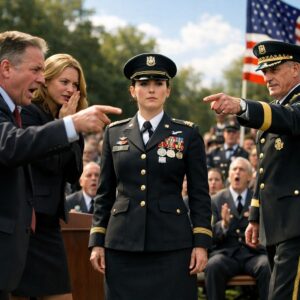
“Major Frost?” he called out, loud enough for the entire ballroom to hear. “Goddamn hero. Come here, Vicki.”
The room went so quiet I could hear my own heartbeat.
I stood slowly, the old field jacket still draped over my arm. Every eye followed me as I walked forward between the rows of tables. My boots, scuffed and unpolished, sounded loud against the marble floor. I stopped beside General Hale.
He didn’t shake my hand. He pulled me into a quick, genuine bear hug, the kind soldiers give each other after surviving the same hell.
“You look good, kid,” he said quietly, just for me. Then louder, for the room: “For those of you who don’t know, this is Major Victoria Frost. Seven years ago, in the Kunar Valley, she made a call that saved over two hundred American and allied lives when her battalion was ambushed by a force three times their size. She held the line for thirty-six hours with a shattered radio, a broken leg, and half her platoon already KIA. When the relief column finally broke through, she was still directing fire from a exposed position, refusing medevac until every wounded man was out.”
He turned to face my father directly.
“Her after-action report was buried. Her recommendations ignored. And when she wouldn’t stop pushing for accountability on the intelligence failures that led to that ambush—the ones that came from higher up the chain—she was quietly retired on a Section 8 technicality. Unreliable memory. Unstable judgment.” General Hale’s voice dropped into something colder. “Funny how that works when the truth gets inconvenient.”
My father’s mouth opened, but no sound came out.
General Hale continued, addressing the entire room now. “I was the one who reviewed the classified files three months ago. The ones that somehow never made it into the official narrative. Victoria Frost didn’t fail the Army. The Army failed her. And tonight, while we’re all here clapping for a man who signed off on those decisions to protect his own career trajectory, I thought it was time the record got straightened.”
He reached into his jacket pocket and pulled out a small velvet box.
“Major Frost, on behalf of the Secretary of Defense and the President of the United States, I’m authorized to present you with the Distinguished Service Cross. You earned this seven years ago. It’s long overdue.”
He pinned the medal on the lapel of my old field jacket, right over the faded name tape that still read FROST.
The room was completely still except for the soft click of the pin.
My father looked like he might actually faint. Amanda’s perfect cream dress suddenly seemed too bright, her face too shocked to maintain its usual polished disdain.
General Hale turned back to the podium. “General Sterling, I believe you were in the middle of a speech about service and sacrifice. Please, continue. I’d love to hear how you define those words.”
My father tried. He really did. He cleared his throat, gripped the podium, and opened his mouth again. But the words wouldn’t come. Not the same ones, anyway. The carefully rehearsed lines about progress and moving forward sounded hollow now, even to the people who had been nodding along five minutes earlier.
I looked at him one last time. Not with triumph. Not even with anger anymore. Just the quiet exhaustion of someone who had finally been seen.
Then I did the only thing that felt right.
I saluted General Hale, crisp and steady, the way I’d been taught before everything went to hell.
He returned it with respect.
Without another word to my father or my sister, I turned and walked back down the aisle. The crowd parted for me now, not out of shame, but something closer to awe mixed with discomfort. A few officers stood as I passed. One older colonel even nodded at me with genuine regret in his eyes.
At the double doors, I paused and looked back once.
My father was still standing at the podium, hands trembling slightly, the retirement ceremony he had spent years orchestrating now lying in ruins around him. The white roses on the tables suddenly looked less like celebration and more like funeral flowers.
Amanda wouldn’t meet my eyes.
I stepped outside into the cool Virginia night. The air smelled clean, like pine and distant rain. For the first time in seven years, the dust of that valley didn’t cling quite so heavily to my shoulders.
Behind me, I heard General Hale’s voice resume inside the ballroom—calm, measured, and final.
“Let’s talk about real sacrifice, shall we?”
I smiled faintly, touched the new medal on my jacket, and walked toward my truck without looking back.
Some ghosts don’t stay put.
But tonight, one of them finally got to walk free.
News
Sacrificed Herself To Save 480 SEALs — Unitl Medics Arrived To Find Their Respected Mentor
Sacrificed Herself To Save 480 SEALs — Unitl Medics Arrived To Find Their Respected Mentor Part 1 The first thing Commander Nate Harwick heard was my voice. Not my face….
“Last Warning!” She Said—They Jumped Her Anyway And Met A Navy SEAL Combat Master.
“Last Warning!” She Said—They Jumped Her Anyway And Met A Navy SEAL Combat Master. Part 1 The gravel lot behind the Joint Tactical Integration Facility sounded different before sunrise. In…
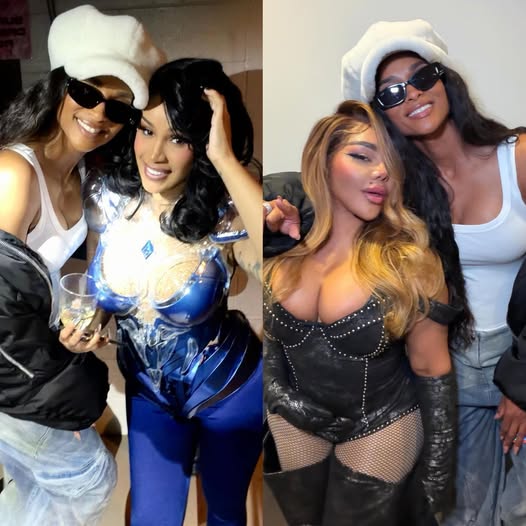
Ciara with Cardi B & Lil Kim at Madison Square Garden Last Night — Best Friends Shine Together!
The energy inside Madison Square Garden was already electric, but when Ciara joined forces with Cardi B and Lil’ Kim backstage during Cardi’s sold-out Little Miss Drama Tour stop in…
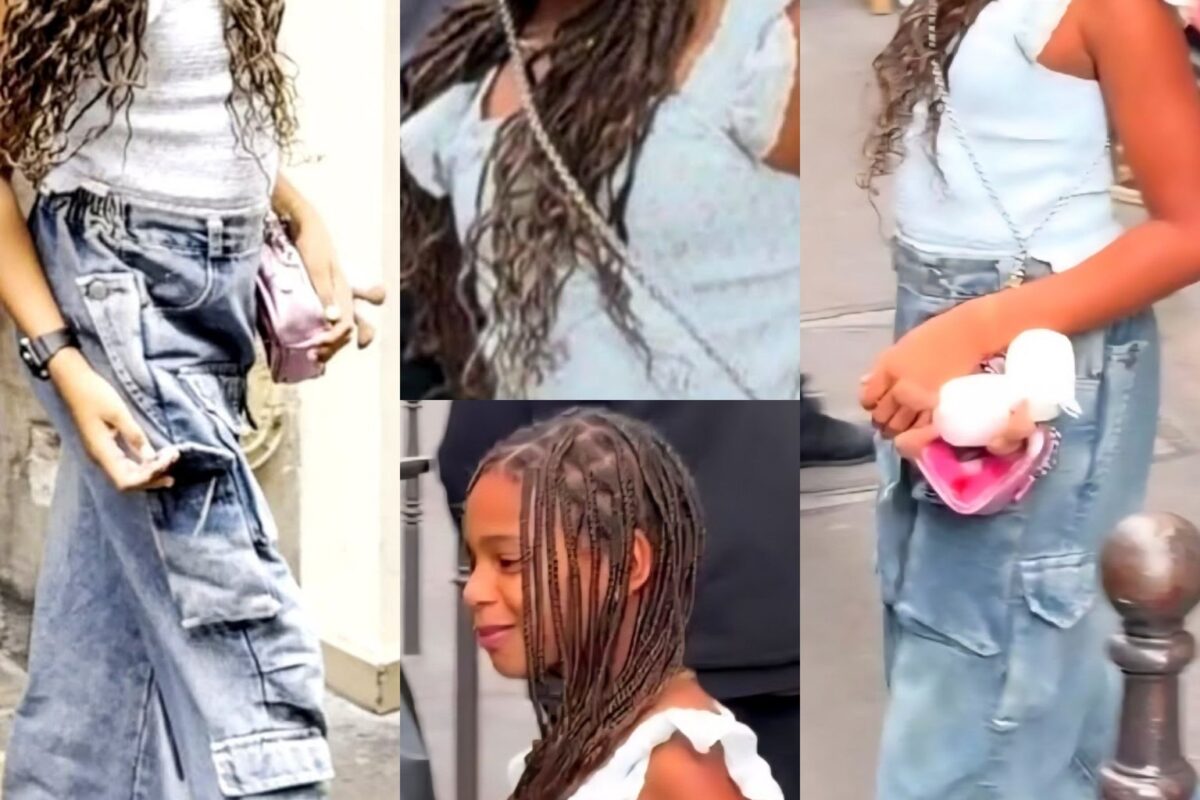
You’re Seeing Double — Again: Rumi Carter Joins Blue Ivy in Paris, and the Carter Legacy Is Taking Over the Fashion Capital
Paris, the eternal capital of style and sophistication, just witnessed another unforgettable Carter family moment. Blue Ivy Carter and her younger sister Rumi Carter were spotted leaving the renowned restaurant…

Stefon Diggs Allegedly Called Cardi B a Bad Example… Her Response Says It ALL
The internet is still recovering from the latest explosive exchange between Cardi B and NFL star Stefon Diggs. What started as an alleged offhand comment from Diggs criticizing the rapper…
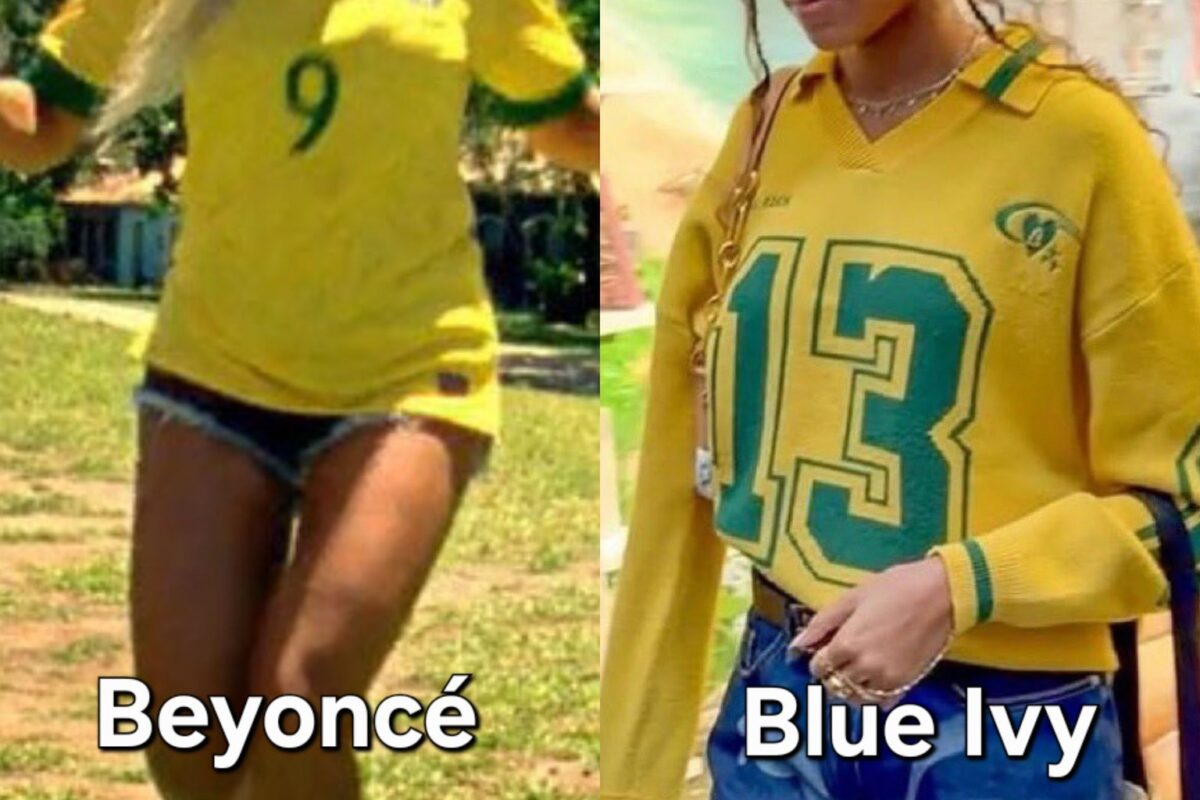
You’re Seeing Double. Beyoncé (2013) vs. Blue Ivy (2026). It’s the Same Energy, the Same Aura, and the Same Iconic Face Card!
Thirteen years apart, yet the resemblance is uncanny. Side-by-side photos of Beyoncé during her historic 2013 Super Bowl halftime performance and her daughter Blue Ivy Carter at the 2026 Super…
End of content
No more pages to load