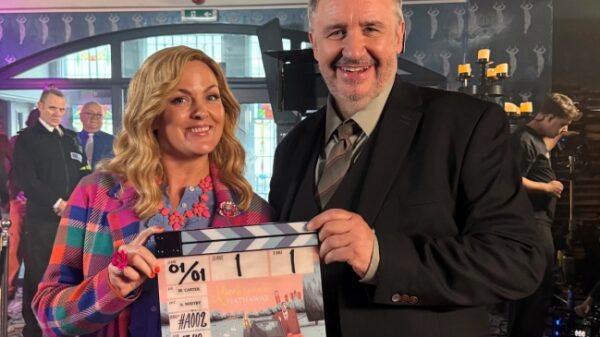
As the autumn mist rolls over the River Avon, curling around the half-timbered facades of Stratford-upon-Avon like a conspirator’s whisper, it’s hard not to feel a pang of affectionate anticipation. The Bard’s birthplace, with its labyrinthine lanes and lingering echoes of Elizabethan intrigue, has long been more than a tourist trap—it’s the beating heart of Shakespeare & Hathaway: Private Investigators, the BBC’s delightfully daft cosy crime drama that marries murder most foul with merriment most merry. Now, with cameras rolling once more on the sixth series—filming kicked off in mid-October 2025 amid the town’s golden foliage—the show beckons us back to its quirky corner of Warwickshire. It’s a return that feels less like a sequel and more like slipping into a well-worn pair of wellies for a ramble through the countryside: comforting, chaotic, and chock-full of surprises. Premiering exclusively on U&Alibi in 2026 before a broader BBC and iPlayer rollout, this latest outing promises to blend the series’ signature wit with a shake-up in the ranks, ensuring that even in Shakespeare’s immortal words, “all the world’s a stage”—and the drama’s just getting started.
For the uninitiated, or those whose memory of past escapades has faded like a forgotten sonnet, Shakespeare & Hathaway burst onto screens in February 2018 as a co-production between BBC Studios and UKTV, created by the late Jude Tindall and Paul Matthew Thompson. What began as a six-episode lark has blossomed into a five-series (and counting) phenomenon, spanning over 50 episodes of gleeful gumshoeing. At its core is the mismatched partnership of Frank Hathaway (Mark Benton), a rumpled ex-Detective Inspector whose glory days ended in a cloud of scandal and unpaid bills, and Luella “Lu” Shakespeare (Jo Joyner), a plucky former hairdresser whose intuition rivals her fondness for floral frocks. Their agency, perched precariously above a dodgy kebab shop on Henley Street—mere footsteps from the Bard’s birthplace—tackles cases that skewer small-town secrets with Shakespearean flair: titles drawn from the playwright’s canon, plots laced with literary nods, and resolutions that favor heart over handcuffs.
The inaugural series set the tone with “O Brave New World,” where Lu, reeling from her online beau’s untimely demise (poisoned pint at the Dirty Duck pub, naturally), hires Frank to clear her name—only to ignite a partnership forged in farce and forensics. From there, the Bardic breadcrumbs led through “The Chimes at Midnight” (a bell-ringer’s bellicose blackmail ring), “This Promised End” (a will-we-won’t-we inheritance whodunit amid a family feud), and “This Rough Magic,” where a magician’s disappearing act turns fatally final. Season 1 wrapped with “Toil and Trouble,” a witchy cauldron of corporate curses, and “Exit, Pursued by a Bear,” a zoological zoo of zoo-keeper zany. Sebastian Brudenell (Patrick Walshe McBride), the thespian assistant with a flair for the dramatic and a wardrobe of questionable cravats, joined the fray early, providing comic relief and occasional competence.
Season 2 doubled down on the duo’s dynamic, expanding to ten episodes that roamed from “The Fairest Show Means Most Deceit” (a beauty pageant bedecked in betrayal) to “I’ll Met by Moonlight” (a nocturnal nosedive into nocturnal naughtiness). Highlights included “The Chameleon’s Dish,” where identity swaps spiraled into identity crises, and “Outrageous Fortune,” a fortune-teller’s fateful fibs unraveling under Frank’s skeptical squint. Lu’s warmth thawed Frank’s frost, while Sebastian’s luvvie leanings led to laugh-out-loud liaisons with the local constabulary, embodied by the no-nonsense DI Marlowe (Amber Aga). By Season 3, the formula had fans hooked: “The Rascal Cook” dished up culinary carnage, “A Worm Will Do It” unearthed gardening grudges, and the holiday-tinged “In the Blink of an Eye” delivered festive foul play with a side of sleigh bells.
The fourth series, airing in 2022, leaned into lockdown-era levity with nine main episodes plus a Yuletide special, “The Devil’s Due,” where a pantomime prince met a princely peril. Standouts like “The Pale Cast of Thought” pondered philosophical poisonings and “All That Glisters Is Not Gold” panned for pyrite in a prospector’s plot. Sebastian’s solo foray in the finale marked his maturation, even as Frank and Lu navigated romantic red herrings—Lu’s flirtations with a suave solicitor, Frank’s gruff guardianship over a wayward niece. Season 5, which wrapped its UK run on U&Alibi in November 2025 just as production on the new batch began, ramped up the stakes with “Destruction, Blood and Massacre” (a stormy manor house locked-room labyrinth) and “As I Have Seen a Swan” (a vigilante’s masked mayhem clashing with a street-art sting). Other gems included “The Unquiet Dead” (ghostly goings-on at a haunted heritage site) and “The Devil’s Cocaine” (a bardic bake-off turned baking bad), culminating in a blackmail brouhaha that left DS Keeler (Tomos Eames) indebted to the detectives’ dubious methods.
What elevates Shakespeare & Hathaway beyond bog-standard British sleuthing—think Midsomer Murders minus the morbidity, or Death in Paradise with fewer palm trees—is its unapologetic embrace of the absurd. Cases aren’t just crimes; they’re capers capering through cultural touchstones, from RSC rehearsals gone rogue to falconry fiascos atop Mary Arden’s House. The humor hums with puns (“To sleep, perchance to scheme”), sight gags (Frank’s perpetual pastry pilfering), and character quirks that endear rather than exasperate. Frank’s world-weariness, tempered by a teddy bear’s tenderness; Lu’s lion-hearted loyalty, wrapped in leopard-print leggings; Sebastian’s showbiz sparkle, dimmed only by his daft devotion—these are the threads weaving the show’s tapestry. And oh, the setting: Stratford isn’t backdrop but co-conspirator, its swans gliding serenely as bodies bob in the canal, its tearooms tinkling with tipsy tip-offs.
Critics, initially sniffy about the “crassness” of the title (The Telegraph dubbed it “cliché-stuffed” in 2018), have warmed to its woolly charms. By Season 3, The Guardian was gushing over its “gentle glow of goodwill,” while Radio Times awarded four stars for “cosy crime with a comedic kick.” Viewership has steadied at around 3-4 million per episode on BBC One, with U&Alibi streams surging 20% year-on-year. Globally, it’s a BritBox staple in North America, where fans flock to its feel-good forensics, and a cult hit in Australia via ABC iView. Rotten Tomatoes hovers at 82%, buoyed by audiences who cherish its “comfort food for the soul”—a far cry from gritty Scandi-noir, more like a scone with clotted cream and a crime chaser.
Yet, as with any Bardic tale, change is the only constant. Series 6 marks a poignant pivot: Sebastian, the floppy-haired factotum who’s been the agency’s theatrical glue since Episode 2, bids farewell in pursuit of Hollywood stardom. “He’s off to LA for his dream role,” teases the official synopsis, a meta nod to McBride’s own rising star (fresh from The Great‘s scheming courtier). In his stead slinks Bea Gardiner (Aruhan Galieva), an “excitable” RADA alumna and Sebastian’s old chum, whose “dynamic” energy promises to jolt the agency’s equilibrium. Galieva, 28 and buzzing from Doctor Who‘s sonic shenanigans and Black Mirror‘s dystopian dips, brings a bilingual bite—born in Kazakhstan, raised in the UK, her violin virtuosity (she’s a Royal Philharmonic Orchestra alum) might even soundtrack a subplot. “Bea’s a fresh face with fresh ideas,” hints Creative Director Deborah Sathe, “infusing the office with a different rhythm.” Expect culture clashes: her classical chops clanging against Frank’s cop-show cynicism, her zeal zipping Lu’s zippy zeal into overdrive. Will Bea decode cryptic clues with Shakespearean sonnets, or bungle stakeouts with symphonic flair? The tease suggests she’ll thrive in the field’s frenzy, perhaps uncovering a case tied to Stratford’s immigrant undercurrents.
Returning anchors Mark Benton and Jo Joyner ensure continuity’s caress. Benton, 64 and a Waterloo Road veteran, relishes Frank’s “doughnut detective” dalliances: “Thrilled doesn’t cover it—series 6 feels like coming home to a hot pasty and a hotter mystery.” Joyner, 47, post-EastEnders soap suds, slips into Lu like “fluffy pink slippers”: “Muddling through more mayhem with Mark in Warwickshire? Pure joy.” Their on-screen alchemy—banter as brisk as a canal breeze—remains the show’s spine, with guest turns from locals like the RSC’s thespians adding authentic Avon accents. Behind the scenes, Executive Producer Neil Irvine plots “love affairs and hypnotists” amid “the best Shakespeare landmarks,” from Nash’s House to the Bard’s very birthplace. Script Producer Lyn Washbrook and Series Producer Mat McHale helm a Birmingham-based crew that’s as tight-knit as the trio they trail.
Plot particulars remain under wraps tighter than a miser’s miserere—UKTV’s coy on specifics, lest spoilers sour the Avon—but whispers hint at ten episodes (or thereabouts) of elevated eccentricity. Imagine a hypnotist’s hocus-pocus ensnaring a Swan Theatre soiree, or a love triangle tangled in the town’s Tudor tearooms. Bea’s debut might dovetail with Sebastian’s send-off: a starlet stalked on set, forcing a transatlantic tag-team? Or a RADA reunion rife with rehearsed resentments? The Bardic bent endures—titles like “The Course of True Love Never Did Run Smooth” or “Blow, Winds, and Crack Your Cheeks”—but with Bea’s infusion, expect edgier explorations: workplace woes for wandering thesps, the immigrant’s itch in idyllic England. Amid it all, Frank and Lu’s will-they-won’t-they simmers, perhaps bubbling over in a confessional canal cruise.
As filming unfurls through November’s nip—cameras capturing cobblestones slick with leaf-fall, extras in Elizabethan garb dodging modern minicabs—the buzz builds. Season 5’s strong slot-smashing on U&Alibi (outpacing averages by 15%) underscores the appetite for this antidote to autumnal gloom. In a TV landscape littered with lacerating thrillers, Shakespeare & Hathaway stands as a salve: crimes cracked with kindness, laughs landed like lucky escapes, and a town where every corner conceals a couplet of chaos. Series 6, with its bittersweet bye to Sebastian and bonny bonjour to Bea, honors the old while heralding the new—a gentle reminder that, as the Bard might quip, “parting is such sweet sorrow,” but the play’s the thing. When it graces screens in 2026, expect to laugh till you snort your scone, gasp at the guile, and sigh with satisfaction. After all, in Stratford’s eternal embrace, the mysteries never end—they just encore.