In the drizzling gloom of London’s outskirts, where forgotten marshes swallow secrets as readily as the Thames claims its drowned, the cold case unit of the Metropolitan Police persists like a stubborn tide. Unforgotten, the ITV powerhouse that has redefined British crime drama since 2015, returns for its sixth season on PBS Masterpiece with a premiere that feels both achingly familiar and daringly renewed. Airing Sundays at 10/9c starting August 24, 2025, on PBS stations nationwide and the PBS Masterpiece Amazon Channel, this six-episode arc—already a smash in the UK since February—plunges viewers into the muck of Whitney Marsh, where dismembered remains signal not just a murder, but a mosaic of buried lives. With DI Sunny Khan (Sanjeev Bhaskar) and new DCI Jess James (Sinéad Keenan) at the helm, the series continues its meticulous excavation of the past, blending procedural precision with the kind of emotional shrapnel that leaves scars long after the credits roll. And for fans still mourning the ghost of Nicola Walker, Season 6 offers solace: a seamless evolution that honors legacy while forging ahead, capped by the swift renewal for Season 7, ensuring Brighton’s fog-shrouded mysteries endure.
What elevates Unforgotten beyond the procedural pack is its refusal to chase spectacle. Creator Chris Lang crafts tales where the crime is merely the key to a lockbox of human frailty—grief unspooling like frayed rope, regrets hardening into alibis, and truths emerging not with fanfare, but the quiet thud of inevitability. Season 6 opens on a bone-chilling note: a spine dredged from Whitney Marsh’s brackish depths, followed by limbs unearthed in a builder’s trench nearby. Forensic pathologist Dr. Leanne Balcombe (Georgia Mackenzie) confirms the horror—the body was dismembered pre-burial, a deliberate desecration pointing to rage or ritual. Identified as Gerry Cooper, a small-time hustler vanished in 2021 amid pandemic chaos, his death catapults the team into a labyrinth of suspects whose lives, on the surface, couldn’t be more disparate: a bombastic TV pundit with a silver tongue and buried scandals; an autistic adult tethered to his overprotective mother; an Afghan refugee cramming for citizenship, his optimism scarred by exile; and a university dean whose academic polish conceals a venomous underbelly. As Jess and Sunny peel back the layers—interrogations in sterile rooms, stakeouts under sodium lamps—the connections crystallize, revealing a web spun from betrayal, addiction, and the kind of moral compromises that fester in isolation.
At the duo’s core, Bhaskar and Keenan embody the series’ emotional engine, their partnership a slow-burning forge tempered by loss. Sunny, the backpack-toting everyman whose Sikh heritage infuses his quiet wisdom, carries Cassie’s absence like an invisible ballast. Her off-screen death in Season 4’s finale—a car crash that shattered the unit—still echoes in his hesitant smiles and graveside vigils, but Season 6 marks a tentative thaw. Bhaskar, drawing on his comedic roots from Goodness Gracious Me to infuse Sunny with wry vulnerability, navigates grief’s undertow: a family dinner interrupted by case files, or a rare laugh shared with his daughter that hints at healing. “Sunny’s learning to breathe again,” Bhaskar shared in a recent interview, his voice laced with the character’s quiet resolve. Opposite him, Keenan’s Jess James is a force of calculated steel—brusque, budget-obsessed, and allergic to sentiment—yet cracked by personal tempests. Her husband’s infidelity, revealed in Season 5’s premiere, lingers like a bruise, compounded now by a estranged sister’s tentative reconnection that unearths childhood wounds. Keenan’s portrayal, honed in Little Boy Blue and Doctor Who, transforms Jess from interloper to integral: her no-nonsense briefings mask a fierce protectiveness, and in a standout scene amid the marsh’s fog, she confesses to Sunny, “We don’t get to choose our ghosts—they choose us.” Their dynamic, initially prickly post-Cassie, has mellowed into a profound symbiosis: Sunny’s intuition guiding Jess’s logic, their clashes yielding the empathy that cracks cases.
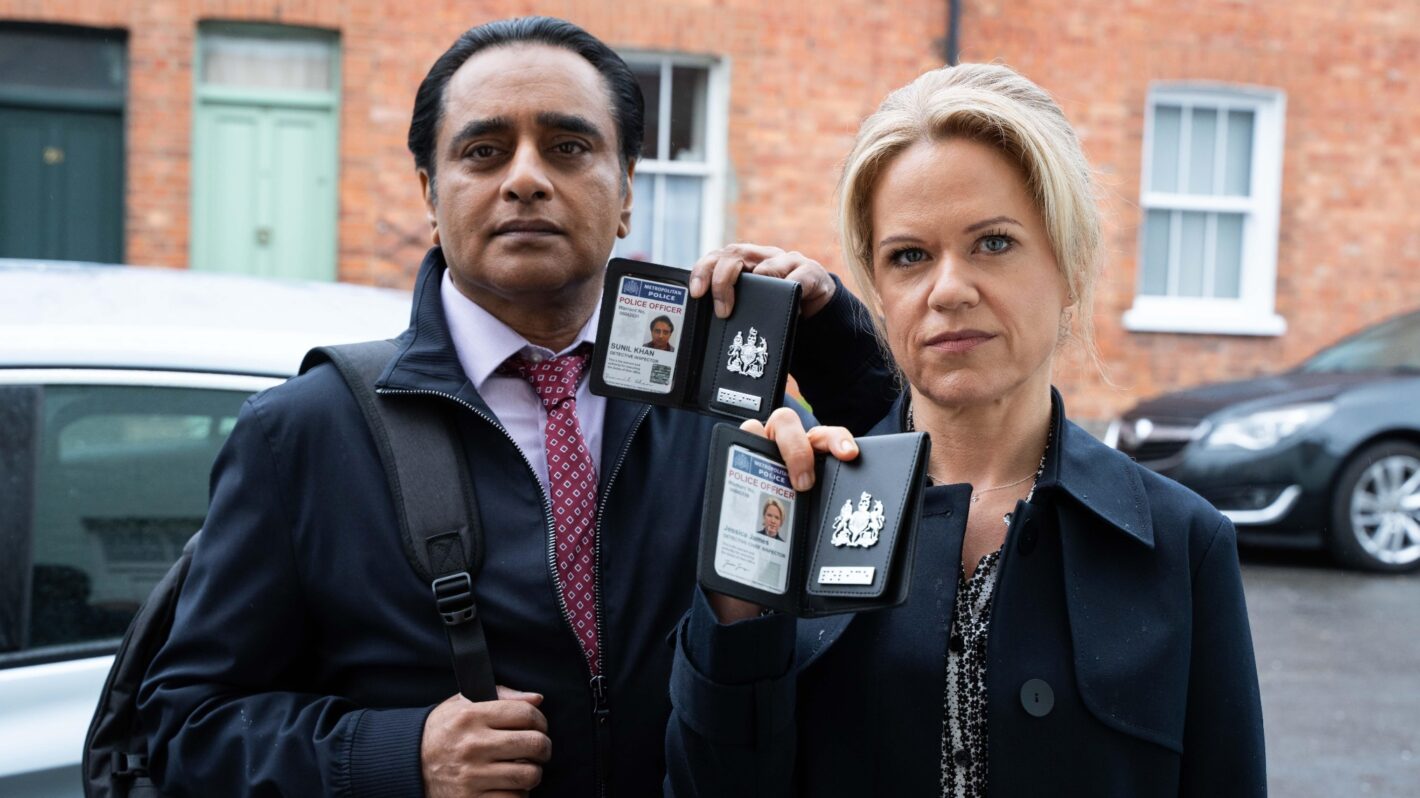
The ensemble, that unsung backbone of Unforgotten‘s authenticity, pulses with renewed vigor. Returning stalwarts like DS Murray Boulting (Jordan Long), the unflappable anchor whose dry humor leavens the team’s tension, and DC Fran Lingley (Carolina Main), whose idealism was tested by Cassie’s loss but now blooms under Jess’s command, provide continuity amid flux. DC Kaz Willets (Pippa Nixon) brings tech-savvy edge to digital deep dives, while Hiten Patel’s DC Ram Sidhu adds procedural grit. Mackenzie’s Leanne, the pathologist whose clinical detachment belies a wry wit, delivers autopsy revelations with the precision of a scalpel—her Season 6 highlight: piecing Gerry’s remains like a macabre puzzle, unearthing tattoos that link him to a forgotten ’90s rave scene. New blood invigorates the suspect roster: Victoria Hamilton’s Juliet Cooper, Gerry’s widow, layers grief with guarded fury; MyAnna Buring’s enigmatic academic hides academic rivalries behind poised smiles; Emmett Scanlan’s volatile pundit erupts in rants that expose a history of rage; and rising stars Maximilian Fairley as the autistic Marty and Elham Ehsas as the resilient refugee infuse raw vulnerability, their performances earning early BAFTA whispers. Veterans like Michelle Dotrice and Jan Francis add gravitas, their cameos unraveling familial knots with heartbreaking subtlety.
Critics and fans alike hail Season 6 as a triumphant pivot, proving Unforgotten thrives sans Walker. “Keenan’s Jess isn’t a replacement—she’s a reinvention,” raved The Guardian, praising how the show mirrors the team’s mourning, turning absence into narrative fuel. Viewership soared in the UK, with the premiere drawing 7.4 million—ITV’s biggest drama launch in a year—and 18 million ITVX streams, while U.S. anticipation builds via PBS Passport marathons of prior seasons. Social buzz on platforms like Reddit and X pulses with relief: “Thought we’d lost the magic post-Nicola, but Sinéad’s fire keeps it blazing,” one viewer posted, echoing a chorus that celebrates the fresh alchemy. Longtime devotees, weaned on Cassie’s empathetic unravelings—from a ’70s schoolboy’s bones in Season 1 to wartime skeletons in Season 3—appreciate the evolution: Jess’s arc explores modern fractures like digital deception and migration’s toll, while Sunny’s growth honors Cassie’s legacy without mimicry. “It’s like losing a parent and finding a new family,” Bhaskar reflected. “The heart’s the same—it’s just beating differently.”
This season’s cold case, rooted in 2021’s lockdown isolation, resonates with eerie timeliness. Gerry’s dodgy dealings—a botched property scam amid COVID restrictions—expose societal fissures: economic desperation fueling crime, families splintered by quarantine, and prejudices flaring against outsiders like Ehsas’s character, whose asylum backstory mirrors real refugee struggles. Episodes unfold with Lang’s hallmark restraint: no lurid reenactments, just forensic montages scored to haunting strings, suspect interviews that double as therapy sessions, and quiet montages of London—Thameside walks, rainy allotments—mirroring internal turmoil. Episode 2 delves into Gerry’s widow, Hamilton’s Juliet navigating widowhood with a teenage daughter (Pixie Davies) whose rebellion masks inherited shame. By midseason, darker strata emerge: the pundit’s predatory past, the dean’s embezzlement cover-ups, Marty’s overlooked abuse—each revelation a domino toppling toward a finale that ties pandemic-era neglect to timeless inhumanity. “We investigate the dead to understand the living,” Jess intones in Episode 4, a line that encapsulates the series’ ethos: crimes as prisms refracting regret.
As Season 6 crests on PBS—concluding September 28, with episodes streaming free for two weeks post-air on the PBS app, or indefinitely via Passport—the horizon gleams with promise. ITV’s Season 7 greenlight, announced mere weeks after the UK finale, cements Unforgotten‘s longevity, with filming slated for January 2026 in London. Scripts by Lang already tease a ’60s-era case—whispers of child remains evoking Moors-like horrors—while Jess and Sunny’s personal stakes escalate: her sister’s betrayal deepening, his tentative romance flickering amid duty’s pull. “We’re not solving puzzles; we’re mending fractures,” Lang noted, hinting at bolder societal probes like online radicalization or elder isolation. Bhaskar and Keenan return, their off-screen camaraderie—forged in table reads and lockdown shoots—promising richer rapport. “Season 7 feels like homecoming,” Keenan enthused, her Irish lilt belying Jess’s steel.
In an era of twist-happy thrillers, Unforgotten endures as a salve: deliberate, devastating, deeply humane. Walker’s Cassie lingers in memory’s silt, but Keenan’s Jess and Bhaskar’s Sunny prove the river runs deeper still. As the marsh yields its final secrets, so too does the series—unearthing not just killers, but the fragile threads binding us. For PBS viewers, tune in this Sunday; the fog lifts, but the echoes? They never truly fade. Season 7 awaits, another layer peeled from the past, reminding us why some stories, like some bones, refuse to stay buried.