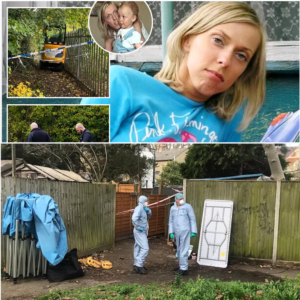
In the humid underbelly of Charlotte, North Carolina, where the LYNX Blue Line snakes through the city’s pulsing veins, a single act of violence has ignited a fierce debate over accountability, compassion, and the fractured edges of the American justice system. On August 22, 2025, 23-year-old Iryna Zarutska, a Ukrainian refugee who had fled the horrors of war for a shot at the American dream, was stabbed to death in a crowded train car. The perpetrator, Decarlos Brown Jr., a 34-year-old drifter battling severe mental illness, now faces first-degree murder charges. But as court documents reveal his long history of schizophrenia and untreated delusions, a haunting question looms: Does his broken mind offer a lifeline to leniency, or does it merely underscore the systemic failures that allowed tragedy to strike? And in the end, was Iryna’s death a wrongful twist of fate, or an inevitable collision of chaos and neglect?
Iryna’s story was one of quiet triumph against overwhelming odds. Born in Kyiv in 2002, she grew up in a loving family, the eldest of three siblings, with a passion for art that lit up her world. Her hands, skilled from years at Synergy College studying restoration, could coax beauty from broken things—sculptures from clay, designs from fabric. But Russia’s full-scale invasion in February 2022 shattered that peace. Bombs rained on her city, friends lost to the front lines, and the constant dread of death became her reality. “We lived minute by minute,” her mother, Anna, would later say through tears in a video call from Ukraine. By August 2022, Iryna, then 20, made the heart-wrenching choice to escape with her younger sister Valeriia and brother Bohdan, leaving her father Stanislav behind. Landing in Charlotte, sponsored by distant relatives, she dove into rebuilding: enrolling at Rowan-Cabarrus Community College for English and veterinary studies, waitressing at Zepeddie’s Pizzeria with a smile that masked her scars.
Charlotte’s South End neighborhood became her canvas—a vibrant mosaic of breweries, murals, and multicultural faces. Iryna volunteered at animal shelters, walking dogs with a gentleness born of her own displacement. She fell in love with Stas Nikulytsia, a fellow Ukrainian immigrant, their bond forged in shared stories of loss and hope. They moved in together, dreaming of a wedding by year’s end, perhaps in a garden blooming with sunflowers—a nod to home. “She was living the dream,” Stas posted on Instagram, a photo of Iryna sketching by their window. “Finally safe, finally happy.” Her final shift at the pizzeria ended around 10 p.m. on that fateful Friday. Boarded the train at Scaleybark station, khaki uniform still on, she settled in for the short ride home, oblivious to the storm brewing just seats away.
Decarlos Brown Jr. was a ghost in the system, a man whose cries for help echoed unanswered for years. At 34, with a gaunt frame and haunted eyes, Brown had spiraled into the abyss of untreated schizophrenia. Diagnosed in his early 20s, he battled hallucinations—voices commanding violence, shadows that weren’t there. His criminal record was a patchwork of desperation: armed robbery in 2018, felony larceny, breaking and entering. Released from prison in 2020 after serving time, he cycled through shelters and streets, calling 911 repeatedly in the months before the attack. “He’s hearing things, seeing demons,” his mother, Carla Brown, told police in July 2025, pleading for intervention. His sister, Tasha, echoed the desperation: “Decarlos isn’t bad; he’s sick. The system keeps letting him slip.” Just weeks before the stabbing, a magistrate released him on a written promise to appear—no bail, no mandatory treatment—despite a fresh misuse of emergency services where he ranted about a “man-made force” controlling his mind.
On the train, those forces unleashed. Four minutes after departure, Brown, in a red sweatshirt, pulled a knife and lunged at Iryna without provocation. Witnesses described a frenzy: slashes to her neck and face, blood arcing across the car as she clutched her throat, gasping. “She didn’t even scream—just looked shocked,” one passenger recalled, voice trembling. Chaos erupted—screams, a rush to aid her with napkins and shirts—but Brown exited calmly at the next stop, tackled by arriving officers. Iryna was rushed to Atrium Health Carolinas Medical Center, but by 11:17 p.m., she was gone. The autopsy confirmed massive blood loss from severed arteries, her young life snuffed in seconds.
Brown’s arrest was swift, charged with first-degree murder by Mecklenburg County prosecutors. But the mental health angle surfaced almost immediately, casting a shadow over the case. Court filings paint a portrait of profound illness: Brown’s history of paranoid delusions, documented in medical records from previous incarcerations, where he claimed “invisible enemies” targeted him. In North Carolina, the insanity defense—rooted in the M’Naghten rule—requires proving the defendant didn’t know the nature of his act or that it was wrong due to mental disease. Brown’s public defender has signaled intent to pursue it, filing notice under state law that mandates advance disclosure. Experts weigh in: “Schizophrenia can impair judgment profoundly,” says a forensic psychologist familiar with similar cases. “If he was in a psychotic break, believing Iryna was part of his hallucinations, it could negate intent.”
Yet, is this a true mitigating circumstance, or a hollow excuse? In NC, mental illness doesn’t automatically absolve guilt but can influence outcomes. For first-degree murder, carrying life without parole or death, juries consider aggravating and mitigating factors at sentencing. Diminished capacity—where illness clouds but doesn’t erase understanding—might drop charges to second-degree or voluntary manslaughter, reducing sentences from life to 20-30 years. Brown’s team argues his untreated condition, exacerbated by homelessness and repeated releases without care, created a perfect storm. “The real perpetrator is the system,” his attorney stated outside court. “Years of ignored pleas for treatment led to this.” Data backs the claim: North Carolina’s mental health services are strained, with waitlists for inpatient care stretching months, and only 30% of those with severe schizophrenia receiving consistent treatment.
Critics, including Iryna’s family and Stas, cry foul. “Mental illness doesn’t give a free pass to murder,” Stas said at a vigil, his voice raw. “She was innocent, building a life—stabbed for nothing.” The debate rages: Does compassion for Brown’s brain chemistry undermine justice for victims? Precedents abound—cases like the 2019 Dayton shooter, whose schizophrenia was cited but didn’t prevent conviction. In NC, successful insanity pleas are rare, succeeding in under 1% of cases, often leading to indefinite commitment in forensic hospitals rather than freedom. If acquitted by reason of insanity, Brown could face lifelong institutionalization, a “not guilty but not free” verdict that satisfies neither side.
At the heart lies Iryna’s wrongful death—a term that resonates deeply in civil courts, where her family now pursues a wrongful death lawsuit against Brown’s estate and potentially the city for transit security lapses. Wrongful death claims in NC allow survivors to seek damages for lost companionship, medical bills, and future earnings, even without a criminal conviction. Iryna’s case screams negligence: her death wasn’t inevitable but preventable. The train’s surveillance caught the attack, yet no armed guards patrolled that night, and Brown’s prior run-ins with police hadn’t flagged him as a transit threat. “She died oan uổng—wrongfully,” her uncle from Ukraine said, the Vietnamese phrase slipping in for emphasis. “A refugee who escaped bombs, killed by a man society failed to help or stop.”
Public outrage has boiled over. Protests clogged Charlotte’s streets, blending calls for mental health reform with demands for tougher sentencing. President Trump weighed in on X: “Iryna Zarutska’s killer? A career criminal with mental issues our soft judges ignored. No excuses—lock ’em up!” Local leaders, including Mayor Vi Lyles, announced a task force on transit safety and crisis intervention, acknowledging the dual failures. Brown’s family, torn between grief and guilt, shared stories of his decline: a once-promising mechanic derailed by symptoms ignored since his teens. “We begged for help,” Tasha Brown said. “Now a girl’s gone because of it.”
As arraignment looms on September 20, the courtroom will become a battleground of empathy and retribution. Forensic evaluations will probe Brown’s psyche—did delusions drive the knife, or was malice masked? Iryna’s loved ones, from Stas planning a solitary wedding toast to her parents watching from afar, seek closure. Her funeral, held August 25 at a local Orthodox church, drew hundreds: pizzeria coworkers toasting her laughter, shelter volunteers honoring her kindness. Buried in Charlotte under a dove-etched stone—her sculpture motif—the city she adopted holds her memory.
Iryna’s death wasn’t just a statistic; it was a wrongful erasure of potential. A wedding postponed, a boutique unrealized, a family fractured across continents. Brown’s mental torment explains but doesn’t excuse; it highlights a justice system teetering on compassion’s edge. In Charlotte’s rails, where lives intersect fleetingly, her story demands reckoning: Treat the ill before they snap, punish the acts without mercy, and ensure no more dreams bleed out on cold floors. As Stas visits her grave, whispering vows eternal, one truth endures—Iryna’s light, dimmed too soon, illuminates the path to better.