The vast, gleaming decks of a cruise ship promise paradise on the waves—a symphony of laughter, clinking glasses, and the endless horizon. But beneath the surface, in the steel bowels where engines hum and secrets fester, reality can turn as cold as the morgue’s embrace. For the family of Michael Virgil, a 35-year-old father from Southern California, this duality became a haunting nightmare during a short holiday voyage in December 2024. What started as a joyful escape aboard Royal Caribbean’s Navigator of the Seas ended with Virgil’s lifeless body consigned to a refrigerated locker, the ship sailing onward as if nothing had happened. Now, nearly a year later, a wrongful death lawsuit has ripped open the wound, alleging not just negligence in serving him 33 alcoholic drinks but a grotesque post-mortem handling that has sparked outrage. And fueling the fire: grainy, leaked CCTV footage circulating online, capturing the final, frantic moments before his demise, transforming a private tragedy into a viral specter.
Michael Virgil wasn’t chasing oblivion when he boarded the 3,388-passenger behemoth on December 13, 2024, in Los Angeles. He was building memories. With his fiancée, Connie Aguilar, and their seven-year-old autistic son, plus extended family, the trip was a four-day jaunt to Ensenada, Mexico—a brief unplug from the daily grind of his job as a mechanic in Riverside. Virgil, described by loved ones as a gentle giant with a quick laugh and tireless work ethic, splurged on the ship’s “Deluxe Beverage Package,” a $80-a-day pass for unlimited booze that dangles temptation like bait. It’s a cruise staple, marketed as carefree indulgence, but in Virgil’s case, it allegedly became a conduit for catastrophe. According to the lawsuit filed in federal court in Miami on December 5, 2025, by Aguilar’s attorneys at Kherkher Garcia, LLP, servers poured relentlessly: at least 33 drinks—beers, cocktails, shots—over seven hours, even as his slurred words and stumbling gait screamed intoxication.
The ship’s design doesn’t help. Bars pepper every corner: the bustling atrium lobby where passengers wait for cabins, poolside tiki huts, even near elevators for that “one more” nightcap. With alcohol accounting for up to 30% of onboard revenue, staff incentives lean toward generosity, not restraint. Maritime law demands carriers protect passengers from self-harm, yet the suit claims Royal Caribbean’s “Responsible Service of Alcohol” training was a hollow checkbox, ignored amid the profit pulse. By late afternoon, as the Navigator cut through Pacific swells three miles offshore, Virgil—disoriented, shirtless, and separated from his family—wandered Deck 5’s tight corridors. Frustration boiled over. He pounded on cabin doors, kicked at one belonging to a hiding crew member, and bellowed threats at passenger Christopher McHale, who captured the chaos on his phone. “I’m going to kill you!” Virgil roared, lunging in a fog of fury and ethanol.
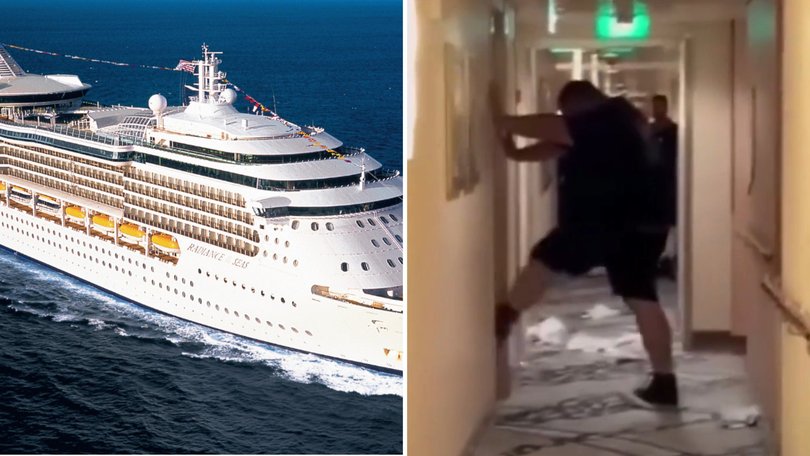
That’s when the response escalated from mishandled to mortal. Security—untrained in de-escalation for the inebriated, per the filings—stormed in. They tackled him face-down onto the linoleum, piling on with full body weight, compressing his 300-pound frame against the floor. Multiple officers, totaling over 500 pounds, pinned his chest and limbs in a prone restraint long criticized for asphyxiation risks. As he gasped and thrashed, the captain—watching via CCTV—greenlit chemical warfare: blasts from several cans of pepper spray to his face, stinging his eyes and airways in the confined space. Then, onboard medics jabbed him with Haloperidol, a heavy-duty antipsychotic sedative ill-suited for acute alcohol poisoning or respiratory distress. Virgil’s body, already strained by obesity and an undiagnosed enlarged heart, buckled. His breaths turned to wheezes, his heart stuttered into arrest. At 8:32 p.m., the shipboard doctor called it: dead at sea.
But the horror didn’t end with his last exhale. Aguilar, roused from her cabin by panicked relatives, begged the crew to turn back to Long Beach. “Please, get us home,” she pleaded, cradling their son amid the sobs. The response? Stone-cold protocol. With no immediate port viable—logistics, costs, schedules—the Navigator pressed on. Virgil’s body was zipped into a bag and wheeled to the morgue: a converted food refrigerator in the lower decks, chilled to 34 degrees Fahrenheit to halt decomposition. For three more days, as the ship docked in Ensenada and frolicked through Mexican waters, his remains jostled in that icy limbo. Revelers above danced to DJ beats, gambled in casinos, and sipped mai tais by infinity pools, oblivious to the father frozen below. “They put Michael in a refrigerator and continued the cruise for multiple days,” Aguilar recounted through tears in court documents, her voice a raw echo of betrayal. The FBI boarded upon return on December 16, launching a probe standard for maritime deaths, but no charges have stuck—yet.
Enter the lawsuit, a 50-page salvo demanding unspecified millions in damages for lost wages, emotional torment, and funeral costs. It accuses Royal Caribbean of fostering a “toxic cocktail” culture: over-service as policy, security tactics ripped from outdated playbooks, and medical interventions without due caution. The pepper spray in an enclosed hall? A respiratory nightmare. The Haloperidol without checking for contraindications? Medical malpractice afloat. And the fridge? Not malice, perhaps, but a callous emblem of priorities—passenger throughput over human dignity. Attorney Kevin Haynes likened it to George Floyd’s restraint: “Excessive force turning a man into a casualty.” The Los Angeles County Medical Examiner agreed, ruling homicide via mechanical asphyxia—force blocking breath—exacerbated by booze, cardiomegaly, and bulk. No natural causes; this was human error, amplified by the sea’s isolation.
Then came the leak: CCTV footage, grainy and unflinching, slipping into the digital ether via social media and news outlets like KTTV. Shared widely on platforms like X (formerly Twitter), the clips—totaling under three minutes—paint a visceral prelude. Virgil, wild-eyed and weaving, charges down the dim hallway, shirt flapping, foot slamming into a door like a battering ram. McHale’s phone video syncs with the ship’s cameras, showing the crew member’s retreat into a towel closet, barricading as Virgil’s fists rain down. “Get away!” McHale yells, his footage shaky, heart-pounding. Cut to security’s arrival: a blur of uniforms swarming, bodies piling on. Virgil’s muffled cries fade to silence under the weight. One frame, frozen in infamy, captures the pin-down—knees on his back, arms twisted—before the feed cuts, leaving viewers with a gut-punch void. Hashtags explode: #CruiseHomicide, #RoyalCaribbeanCoverup, #JusticeForMichael. Posts rack up millions of views, from outraged influencers decrying “corporate murder” to skeptics blaming Virgil’s binge. “They stuffed him in a fridge like yesterday’s catch,” one viral tweet seethes, amplifying the suit’s fridge revelation.
The footage’s provenance? Murky. Sources whisper it was subpoenaed during the FBI inquiry but “escaped” via an anonymous crew whistleblower or hacked server—cruise lines guard their tapes like Fort Knox, deleting after 30 days unless litigation looms. Royal Caribbean, in a boilerplate statement, expressed sorrow but zipped lips on the pending case: “We were saddened by the passing of one of our guests and cooperated fully with authorities.” No denial of the footage, no apology for the cooler. Critics pounce: this isn’t their first rodeo. Over 100 wrongful death suits in a decade, from overboard ejections to bar brawls. Just months prior, in October 2024, a Taylor Swift-themed cruise saw 66-year-old Dulcie White plummet after heavy drinking—another alcohol-fueled fatality. The Cruise Lines International Association touts safety stats—fewer than one death per 100,000 passengers—but advocates like Friends of Cruise Whistleblowers call it a veil over the “booze cruise” epidemic. CDC logs 200-plus alcohol incidents yearly, a quarter fatal.
For Aguilar, the leak is double-edged. It validates her nightmare, thrusting Virgil’s final fury into the spotlight, but it desecrates his memory—reduced to a meme-worthy monster, not the doting dad who fixed bikes and coached soccer. Their son, now eight, senses the fracture: “When’s Daddy’s boat trip over?” he asks, clutching faded photos. Holidays blur into voids without Virgil’s bear hugs. Aguilar, a single mom steeling against grief, channels rage into reform. “He deserved a hero’s return, not a freezer drawer,” she told reporters, her voice cracking. The suit demands not just cash but change: mandatory intoxication scanners, crisis-trained security, and morgue protocols with dignity—perhaps family repatriation flights, not icebox limbo.
As the case grinds toward trial, potentially landmark for beverage liabilities, the leaked CCTV looms like a ghost in the machine. It humanizes the horror, forcing armchair juries to confront the thin line between vacation and violation. Was Virgil a victim of his vices, or the system’s siren call? The footage doesn’t judge; it accuses. On X, threads dissect every pixel: “Look at the spray cloud— that’s suffocation,” one user posts, embedding the clip. Replies flood with cruise survivor tales—overserved blackouts, ignored pleas. Royal Caribbean’s fleet sails on, 500,000 drinks poured daily, but Virgil’s echo ripples: a reminder that beneath the buffets and balmy nights, the hold hides truths too cold to ignore.
In the end, as Aguilar fights for closure, the fridge becomes metaphor—a chilling vault for an industry’s unchecked excess. Virgil’s voyage, meant for joy, ended in a drawer, but his story? It’s breaking free, one leaked frame at a time, demanding the sea reckon with its shadows. For families eyeing that next ticket, the horizon now whispers caution: paradise has a price, and sometimes, it’s paid in ice.