Professor X’s Fall and Magneto’s Betrayal: Explosive Rumors Shake the Foundations of Avengers: Doomsday and Beyond
The Marvel Cinematic Universe stands on the brink of its most ambitious and potentially devastating chapter yet. With Avengers: Doomsday scheduled for December 18, 2026, and Avengers: Secret Wars following in 2027, insiders are painting a picture of high-stakes betrayal, shocking deaths, and paradigm-shifting alliances that could redefine the franchise. At the center of the latest seismic rumors: Patrick Stewart’s iconic Professor X meets his end at the hands of Robert Downey Jr.’s Doctor Doom in Doomsday, ensuring he will not return for the multiversal climax of Secret Wars. Even more dramatically, Ian McKellen’s Magneto reportedly turns against his fellow mutants and the Avengers, aligning himself with Doom and choosing to remain as one of Battleworld’s most formidable villains.
These developments, attributed to reliable insider Daniel RPK, represent a bold and ruthless evolution for the incoming X-Men characters in the MCU. After decades of on-screen rivalry and reluctant friendship between Charles Xavier and Erik Lehnsherr, their final MCU chapter may deliver the ultimate fracture in their philosophies—one that costs lives and reshapes realities. For fans who grew up with Stewart and McKellen’s legendary portrayals in the Fox X-Men films, the emotional weight of these rumored arcs feels both inevitable and heartbreaking.
Professor X has long symbolized hope, unity, and the dream of peaceful coexistence between mutants and humans. Stewart’s dignified, telepathic leader brought gravitas and moral complexity to the role across multiple films. In the MCU, his inclusion alongside other legacy X-Men cast members signals a respectful integration of the mutant saga into the larger multiverse narrative. Yet rumors suggest his time is limited. According to leaks, Doom—portrayed with menacing intellect and overwhelming power by Downey Jr.—eliminates Xavier during the events of Doomsday. This death removes the moral anchor of the X-Men at a critical juncture, leaving survivors to navigate a leaderless struggle amid incursion threats and multiversal collapse.
The decision to sideline Stewart after Doomsday aligns with reports of the veteran actor potentially retiring from the role, or even acting altogether, given his age and storied career. Killing off such a foundational figure raises the stakes dramatically. It prevents the character from simply carrying over unchanged into Secret Wars and forces the narrative toward darker, more desperate territory. Without Xavier’s guiding vision of reconciliation, the X-Men may fracture further, with some embracing more militant approaches in a universe already teetering on annihilation.
Complementing this tragedy is Magneto’s rumored defection. McKellen’s Magneto has always embodied the opposite extreme to Xavier’s idealism— a Holocaust survivor whose experiences forged an unyielding commitment to mutant supremacy and protection at any cost. In Doomsday, after initial alignment or uneasy cooperation with the Avengers and his old friend, Magneto reportedly sees in Victor von Doom a vision more aligned with his own. Doom offers the promise of a “better universe,” one where mutants (or at least Magneto’s chosen people) can thrive without compromise or persecution. Seduced by this ideology and perhaps the raw power Doom wields, Magneto betrays his allies and commits to the villain’s cause.
The betrayal culminates in Magneto remaining on Battleworld—the patchwork planet central to Secret Wars—as one of its strongest and most dangerous inhabitants. This positions him not merely as a henchman but as a major antagonistic force in the event film. Imagine the drama: a magnetic mastermind enforcing Doom’s will across fractured realities, clashing with former friends and forging uneasy new alliances. McKellen, still commanding the screen at an advanced age, would likely deliver a performance blending charisma, rage, and tragic conviction. His recent on-set comments and teases about massive destructive sequences only fuel speculation that Magneto will unleash his powers on an unprecedented MCU scale.
The dynamic between these two titans—Xavier’s death and Magneto’s turn—perfectly encapsulates the central conflict of the Multiverse Saga. Doom, as a god-like ruler seeking to impose order on chaos, exploits ideological divisions that have long defined the X-Men. Where Xavier sought harmony, Magneto sees opportunity in authoritarian strength. This schism mirrors broader MCU themes: the cost of idealism versus pragmatism, the seductive danger of power, and the personal betrayals that make large-scale events feel intimate and devastating.
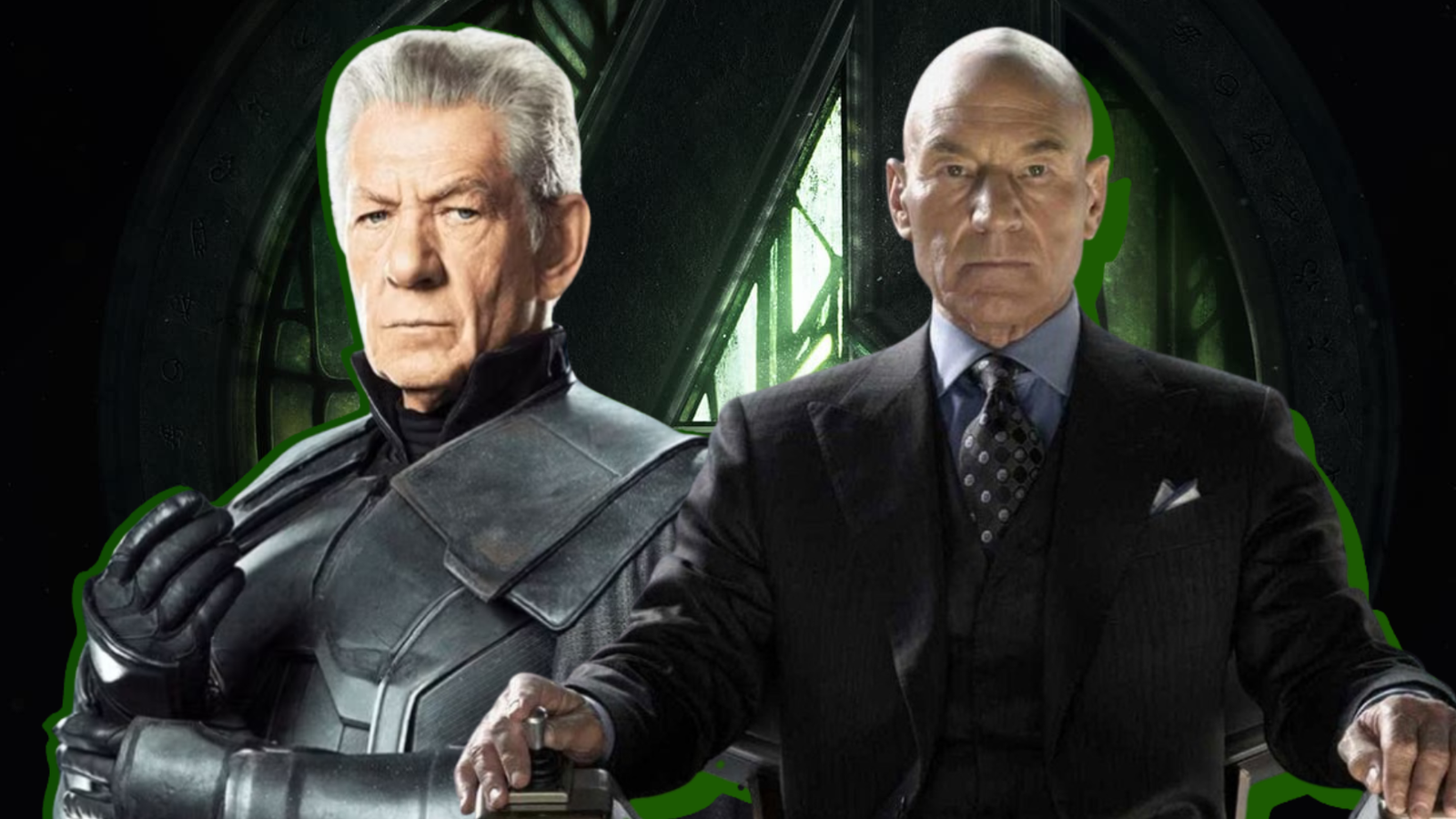
Avengers: Doomsday, directed by Anthony and Joe Russo, assembles an unprecedented cast. Alongside Stewart and McKellen, expect appearances from legacy X-Men like Kelsey Grammer’s Beast, James Marsden’s Cyclops, Rebecca Romijn’s Mystique, and others. The film also brings back core Avengers, introduces new threats, and builds directly toward the reality-warping Secret Wars. Teasers have already showcased Xavier and Magneto sharing poignant moments—chess games in ruined settings symbolizing their fractured brotherhood—making the rumored outcomes even more poignant.
Battleworld itself promises to be a character in its own right: a chaotic amalgam of destroyed universes stitched together under Doom’s iron rule. Heroes and villains from across realities will converge there, leading to alliances, rivalries, and battles that test every moral boundary. Magneto thriving as a top-tier threat in this environment opens doors for epic confrontations—perhaps against Wolverine, the Fantastic Four, or even a redeemed Doctor Strange. His presence ensures the mutant perspective remains vital even after Xavier’s fall.
Of course, all such details remain unconfirmed rumors. Marvel Studios excels at controlled leaks, misdirection, and last-minute adjustments to preserve surprise. Daniel RPK has delivered accurate information in the past, but plans can evolve during production. Still, the narrative logic holds: major deaths clear the deck for fresh storytelling, while controversial alliances inject unpredictability. Killing legacy icons raises emotional investment, and a Magneto heel turn honors the character’s complex history without reducing him to a simple villain.
Fan reactions to these possibilities have been intense and divided. Some lament the potential loss of Stewart’s Xavier, viewing it as a disrespectful end for a beloved icon. Others celebrate the boldness, arguing that permanent consequences are necessary to make the multiversal stakes feel real. Discussions rage over whether McKellen’s Magneto can truly be redeemed after such a betrayal or if he becomes a permanent fixture in the post-Secret Wars MCU. Social media overflows with fan art, theories, and debates about how these arcs might play out visually—telepathic last stands, magnetic storms clashing with Doom’s technology, and tearful goodbyes between old friends.
Beyond spectacle, these rumored events offer rich thematic territory. Xavier’s death forces survivors to question his dream: Was it naive? Worth fighting for? Magneto’s choice explores the seductive pull of radical solutions in desperate times. In a universe facing literal doomsday, when does protection cross into domination? These questions elevate the films from mere superhero clashes to profound explorations of leadership, trauma, and ideology.
As production continues and more official footage emerges, excitement builds. Doomsday already promises spectacle on a scale rivaling Infinity War and Endgame. Adding the emotional gut-punches of Professor X’s elimination and Magneto’s allegiance shift could make it one of the most memorable entries yet. For two actors who defined a generation of comic book cinema, these final (or near-final) performances carry the weight of legacy.
Whether the rumors prove fully accurate or evolve into something equally dramatic, one thing is clear: the MCU is entering an era where no hero is safe, no friendship is guaranteed, and the lines between savior and tyrant blur dangerously. Professor X may fall, Magneto may rise in darkness, and in the ruins of multiple universes, a new order will emerge—forged in betrayal, loss, and the unyielding will to survive. As audiences prepare for these titanic clashes, the only certainty is that nothing in the Marvel Universe will ever be the same.