Prince Harry’s Fury Over Palace’s Refusal to Grant Meghan Security Before Engagement Reignites Royal Rift Fears
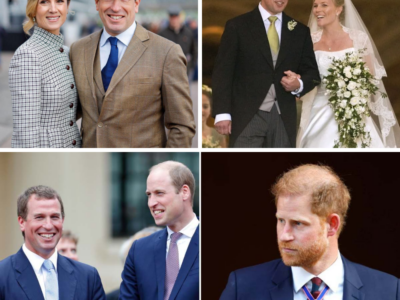
In the tightly controlled world of the British monarchy, where appearances are meticulously managed and protocol reigns supreme, Prince Harry’s long-simmering resentment toward perceived double standards has once again come into sharp focus. According to explosive new claims in royal biographer Tom Bower’s latest book on the Duke and Duchess of Sussex, Harry was left “shocked” and deeply unsettled by the “unpredicted and unimagined humiliation” inflicted on his uncle Prince Andrew. That public downfall has reportedly left Harry convinced that his brother, the future King William, could one day strip him and Meghan of their remaining titles and effectively “banish” them from Britain.
The fear stems from a pattern Harry sees within the institution: unequal treatment, swift punishments for perceived missteps, and a reluctance to extend the same protections or courtesies to those outside the inner circle. Bower writes that the dramatic stripping of Andrew’s titles, military affiliations, and public role in early 2022—following his association with Jeffrey Epstein and the Virginia Giuffre settlement—served as a wake-up call for Harry. Andrew’s fall from grace was swift, public, and merciless. For Harry, it highlighted how quickly the palace could act when it deemed someone a liability.
Harry’s anxiety centers on his own precarious position. Although he and Meghan retain their Duke and Duchess of Sussex titles, they were stripped of their “His/Her Royal Highness” styles and barred from using “royal” in commercial ventures after stepping back as senior working royals in 2020. The couple’s public criticisms of the family, detailed in interviews, their Netflix docuseries, and Harry’s memoir Spare, have created a deep and ongoing rift. Bower suggests Harry now worries that William, once he ascends the throne, could push for the complete removal of the Sussex titles—leaving Harry with no formal connection to the monarchy and effectively barring him from Britain in any official capacity.
The root of Harry’s fear traces back to earlier grievances, particularly how Meghan was treated compared to Catherine during their respective courtships. Before Harry and Meghan were even engaged in November 2017, Harry reportedly demanded a full security detail for Meghan as media scrutiny intensified and threats emerged. Palace officials refused, citing her status as a private citizen and girlfriend, not a working royal. Harry saw this as unfair, pointing out that Catherine had received similar protection early in her relationship with William, long before their 2010 engagement. The denial left Meghan vulnerable, forced to rely on private security funded by Harry or her own resources.
This perceived double standard fueled Harry’s anger. He viewed it as evidence that the institution was reluctant to fully embrace Meghan, applying stricter rules to her than to Catherine. The security refusal became a symbol of broader inequalities—limited support, slower integration into royal life, and less protection from hostile media coverage that often carried racial undertones. Harry’s frustration grew as he felt the palace failed to shield Meghan in the same way it had shielded Catherine, contributing to the couple’s eventual decision to step back from royal duties.
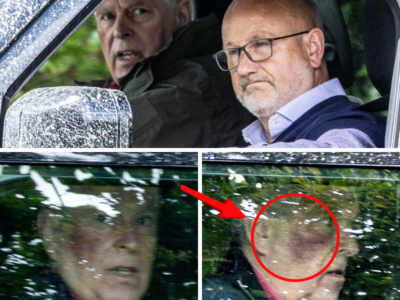
Andrew’s humiliation amplified these fears. The former Duke of York was stripped of his titles and patronages in January 2022 after a U.S. civil lawsuit accused him of sexual abuse—a claim he settled out of court. The move was seen as decisive and necessary to protect the monarchy’s reputation. For Harry, watching his uncle’s swift and total exclusion raised alarms: if the palace could act so ruthlessly against one prince, what might happen to him and Meghan under a future King William?
Bower’s book claims Harry is “rightly” concerned that William could one day remove the Sussex titles entirely. As heir apparent, William would wield significant influence over such decisions once he becomes king. The move would be constitutionally possible, though unprecedented for non-working royals who retain courtesy titles. It would symbolically sever Harry’s last formal tie to the monarchy and could limit his ability to return to Britain in any official or ceremonial capacity.
The Sussexes’ current status is already limited. They are not working royals, do not receive public funding, and are barred from using “royal” branding commercially. Yet the Duke and Duchess titles remain, granted by Queen Elizabeth II upon their marriage in 2018. Removing them would require either parliamentary action or a sovereign decision, and any move would likely spark intense debate about fairness, precedent, and the monarchy’s treatment of family members.
Harry’s fears are compounded by the ongoing estrangement. Since Megxit in 2020, relations with William and the wider family have remained strained. Public criticisms from Harry and Meghan—about mental health struggles, media treatment, and perceived lack of support—have widened the divide. William has stayed largely silent publicly but is said to feel deeply betrayed by his brother’s disclosures. Insiders suggest he views the Sussexes’ actions as damaging to the institution and has little appetite for reconciliation.
The Andrew parallel adds another layer. His downfall was swift and decisive, driven by public outrage and the need to protect the monarchy’s image. Harry worries a similar logic could be applied to him: if his continued public commentary is seen as harmful, titles could be revoked as a final severance. The fear of “banishment” reflects Harry’s concern that he could be permanently excluded from Britain, unable to return in any meaningful way without facing legal or reputational barriers.
For Meghan and Harry, now building a life in California with their children Archie and Lilibet, the prospect is sobering. Their brand—built on independence, advocacy, and storytelling—has thrived outside royal constraints. Yet the loss of titles would carry symbolic weight, severing the last official link to Harry’s heritage and potentially complicating future visits or family connections.
The palace has remained silent on future title decisions, and no official move has been signaled. But the specter of Andrew’s fate looms large. Harry’s anxiety reflects a deeper truth: once trust is broken, the monarchy can act decisively to protect itself. Whether William would ultimately strip the titles remains speculative, but the fear itself reveals how far the rift has grown.
As the Sussexes forge ahead in America, Harry’s concern underscores a painful reality: the family he once belonged to may one day formally close the door. For a man who has spoken openly about wanting reconciliation, the possibility of permanent exile is a bitter prospect—one that began with a simple “no” years ago and has only grown more daunting with time.