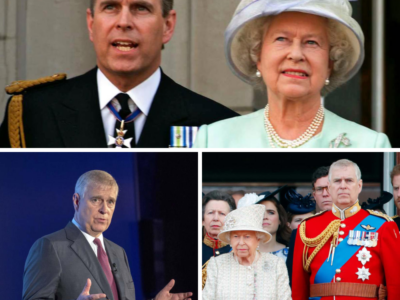
In the twilight of Queen Elizabeth II’s remarkable 70-year reign, one of the most persistent and troubling narratives to emerge concerns her relationship with her second son, Prince Andrew. Recent accounts from royal insiders, biographers, and crisis experts paint a picture of a monarch who, despite her legendary sense of duty and composure, faced intense personal pressure from Andrew in her final months and years. The claim that he “bullied” or even “blackmailed” her into certain decisions has sparked fresh debate about maternal love, institutional protection, and the human vulnerabilities at the heart of the British monarchy.
Andrew, born in 1960, was long regarded as the Queen’s favourite child. While Prince Charles embodied the heir’s sense of destiny and Princess Anne displayed fierce independence, Andrew occupied a special place in his mother’s affections. Described as charming and confident in his youth — a naval officer who served with distinction in the Falklands War — he grew into a figure whose entitlement and arrogance increasingly clashed with the restrained image the monarchy sought to project. Courtiers reportedly learned early on not to voice complaints about Andrew directly to the Queen; her protective instincts toward him were formidable.
The strain became most visible after Andrew’s long-standing association with the late financier and convicted sex offender Jeffrey Epstein came under intense global scrutiny. The friendship, which included multiple meetings even after Epstein’s first conviction, culminated in devastating allegations from Virginia Giuffre. She claimed Andrew had sexually assaulted her on three occasions when she was 17, allegations he has always vehemently denied. The 2019 BBC Newsnight interview, in which Andrew attempted to defend himself, backfired spectacularly and forced him to step back from public duties.

Yet even as the scandal escalated, the Queen appeared reluctant to take decisive action against her son. Biographers suggest this reluctance stemmed from a deep maternal bond that blurred the line between family loyalty and monarchical duty. She reportedly viewed protecting Andrew as inseparable from safeguarding the institution she had spent her life serving. In private, however, the pressure Andrew exerted on his ageing mother reportedly intensified.
According to multiple royal observers, Andrew became increasingly assertive — some say bullying — in his demands during the Queen’s final years, particularly around 2021 and 2022 when her health was visibly declining. He is alleged to have pushed for continued financial and institutional support, including involvement in decisions about his living arrangements, security, and public profile. One particularly sensitive claim involves the multi-million-pound settlement paid to Virginia Giuffre in early 2022 to avoid a trial that could have overshadowed the Queen’s Platinum Jubilee celebrations. Reports indicate the Queen contributed significantly to the settlement — possibly several million pounds — from her private funds, a move seen by some as evidence of her willingness to shield her son at personal and institutional cost.
Insiders describe scenes at Windsor Castle and Balmoral where Andrew would arrive with lawyers or friends in tow, pressing his case for leniency or continued privileges. The Queen, frail and increasingly reliant on a small circle of trusted aides, reportedly found it difficult to refuse him outright. Her advancing age, the recent loss of her husband Prince Philip in 2021, and the emotional toll of the pandemic isolation left her more vulnerable to emotional manipulation. Some accounts suggest Andrew leveraged her sense of maternal guilt and her desire for family harmony to influence outcomes that senior courtiers and even Prince Charles viewed as unwise.
This dynamic reportedly extended to smaller but symbolically significant decisions. Andrew is said to have resisted attempts to scale back his lifestyle at Royal Lodge, the grand Windsor property he shared with his ex-wife Sarah Ferguson. He pushed back against suggestions that he downsize or relinquish certain perks, arguing they were essential to maintaining his dignity as a member of the royal family. The Queen, ever the conciliator in family matters, is alleged to have acquiesced on several occasions rather than risk confrontation with her son.
Prince Charles, by contrast, took a markedly different view. Long frustrated by his brother’s behaviour, Charles — as Prince of Wales and later as King — advocated for firmer boundaries. He reportedly saw Andrew’s continued presence as a reputational risk to the monarchy at a time when public trust was already strained by other controversies. The contrast between the Queen’s protective instincts and Charles’s more pragmatic approach became stark in the final chapter of her reign. While she hesitated to strip Andrew of his titles and patronages, pressure from Charles and other senior family members eventually prevailed. In January 2022, just months before her death, the Queen formally removed Andrew’s military affiliations, royal patronages, and the right to use his “HRH” style in official capacities. He would defend the Giuffre lawsuit as a private citizen.
The decision, though necessary in the eyes of many, came after prolonged internal tension. Some palace sources described the period as one in which the Queen felt torn between her role as sovereign and her role as mother. Her famous mantra — “never complain, never explain” — extended to family matters, making open discussion of Andrew’s troubles difficult. Courtiers who tried to raise concerns often found the subject off-limits.
The Queen’s death in September 2022 at Balmoral marked the end of an era, but it also removed the primary shield that had protected Andrew for so long. Under King Charles III, the approach has been notably stricter. Andrew has faced further stripping of privileges, including the loss of his “Prince” title in some contexts and ongoing pressure regarding his residence at Royal Lodge. Recent developments, including police investigations linked to his past conduct, have only intensified scrutiny on the legacy the Queen left behind.
Critics argue that the Queen’s indulgence of Andrew damaged the monarchy’s reputation in its final years. Supporters counter that her actions reflected a profoundly human motherly love that refused to abandon a flawed child, even when institutional interests demanded otherwise. Royal historians note that Elizabeth II had always prioritised stability and continuity; in Andrew’s case, that instinct may have led her to delay tough decisions longer than wiser counsel advised.
The allegations of bullying add a poignant and unsettling layer to the narrative of the Queen’s final chapter. They portray a once-indomitable monarch who, in her eighties and nineties, found herself navigating not only the weight of history but also the emotional demands of a son who refused to accept diminished status. Whether framed as maternal devotion or institutional weakness, the story underscores a central truth about the royal family: behind the pageantry and protocol lie deeply human relationships, complete with favouritism, conflict, and regret.
As King Charles continues to steer the monarchy through turbulent times, the shadow of his brother’s scandals — and the choices their mother made — lingers. The institution has sought to draw a firmer line, but the personal cost to family bonds remains evident. In the end, the tale of Queen Elizabeth II and Prince Andrew reveals the limits of even the most steadfast duty when confronted with a mother’s unconditional love and a son’s unyielding sense of entitlement.
For the public, the revelations serve as a reminder that no reign, however long and illustrious, is immune to private struggles. The Queen’s final years were marked not only by quiet dignity and public service but also by the painful complexities of protecting a child who tested the boundaries of that protection — sometimes, it is claimed, through bullying tactics that left an ageing sovereign with little room to refuse.
News
Harry and Meghan’s Marriage Under Strain: Explosive Rows Over Money After Netflix Pulls the Plug
In the sun-drenched hills of Montecito, California, where Prince Harry and Meghan Markle once envisioned building a new empire of influence and independence, a different reality has taken hold in…
Prince Harry’s Quiet Push to Return Home: A Father’s Urgency, Family Rifts, and the Question of Life Without Meghan
In the early months of 2026, whispers inside royal circles and among those close to the Sussexes have grown louder: Prince Harry is actively exploring ways to spend more time…

“GEORGIE” — The Sweet, Secret Nickname Prince George’s School Friends Use That Even William and Kate Have Adopted at Home
At just 12 years old, Prince George is already second in line to the British throne, living a life that blends extraordinary privilege with the weight of future responsibility. Yet…
HARRY AND MEGHAN’S FIERCE ATTACK ON TOM BOWER COULD BACKFIRE SPECTACULARLY AS BESTSELLING AUTHOR FIRES BACK
Prince Harry and Meghan Markle have launched a strongly worded legal and public response against British author and royal commentator Tom Bower, accusing him of spreading “malicious falsehoods” and “defamatory…
“THEY’RE DRIFTING APART” — Sources Claim Princess Beatrice’s Marriage to Edoardo Mapelli Mozzi Is in Serious Trouble as Friends Say He’s “One of Those Men Who Needs Constant Attention”
Princess Beatrice’s once-fairy-tale marriage to Edoardo Mapelli Mozzi is reportedly under serious strain, with multiple sources claiming the couple is quietly “drifting apart” amid growing tensions over lifestyle differences, family…
“HE’LL TURN OUT JUST LIKE PRINCE ANDREW” — Chelsy Davy’s 2004 Prediction About Young Prince Harry Resurfaces as Bombshell Claim
In a revelation that has sent fresh shockwaves through royal circles, new details have emerged about a blunt and remarkably prescient warning Chelsy Davy allegedly made about Prince Harry more…
End of content
No more pages to load