In the labyrinthine streets of York, where medieval walls whisper of ancient betrayals and the Minster’s spire pierces the Yorkshire sky like a vigilant sentinel, a new alliance is quietly revolutionizing the art of detection. Patience, the riveting British crime drama that premiered on PBS and PBS Masterpiece on Sunday, June 15, 2025, at 8 p.m. ET, transplants the enigmatic spirit of its French predecessor Astrid et Raphaëlle into the fog-draped heart of northern England. This six-episode gem, streaming on the PBS app, PBS.org, and the PBS Masterpiece Prime Video Channel, stars Laura Fraser as the battle-hardened Detective Inspector Bea Metcalf and breakout talent Ella Maisy Purvis as Patience Evans, a young autistic archivist whose mind unravels mysteries like threads from a forgotten tapestry. Far from the trope-laden savant clichés that plague procedural TV, Patience crafts a poignant exploration of trust, trauma, and the kaleidoscopic ways we perceive the world—proving that true insight blooms not from uniformity, but from the courage to embrace difference.
The series ignites with a spark of serendipity in the dimly lit bowels of the City of York Police’s Criminal Records Office. Patience Evans, a 24-year-old savant self-taught in criminology through dog-eared case files and endless nights poring over evidence logs, toils in obscurity amid stacks of yellowing dossiers. Her autism manifests not as a superpower punchline, but as a lived reality: sensory overloads that send her retreating to a quiet corner with noise-canceling headphones, meticulously plotted flowcharts to navigate the chaos of phone calls, and an unerring eye for patterns that elude even the sharpest minds. Purvis, herself neurodivergent and drawing from her experiences in Heartstopper and A Kind of Spark, infuses the role with an authenticity that feels revolutionary—her subtle tics, from the rhythmic tapping of a pen to the wide-eyed intensity during breakthroughs, ground Patience in vulnerability rather than spectacle.
Enter Bea Metcalf, the no-nonsense DI whose life is a whirlwind of acrimonious divorce proceedings, teenage rebellion, and the gnawing suspicion that her son Alfie might share Patience’s neurodivergence. Fraser, channeling the steely resolve she honed in Traces and Crime, portrays Bea as a woman frayed at the edges yet fiercely protective—a single mother juggling custody battles with the relentless grind of unsolved cases. Their paths collide in the series opener, “Paper Mountain Girl, Part 1,” when a man perishes in a fiery self-immolation outside a historic guildhall, ruled a suicide but laced with anomalies that Patience spots from afar: a chemical accelerant trace echoing three cold cases involving a hallucinogenic drug that induces suggestible states and memory blackouts. Bea’s request for the Jamieson file yields not one, but two dossiers—courtesy of Patience’s instinctive cross-referencing—unveiling a web of coerced confessions and shadowy pharmaceutical trials. What begins as a professional courtesy evolves into a profound pact: Bea, seeing echoes of her own familial struggles in Patience’s guarded demeanor, champions her recruitment as a Civilian Investigation Officer, defying skeptical colleagues who deem her “temperamentally unsuitable.”
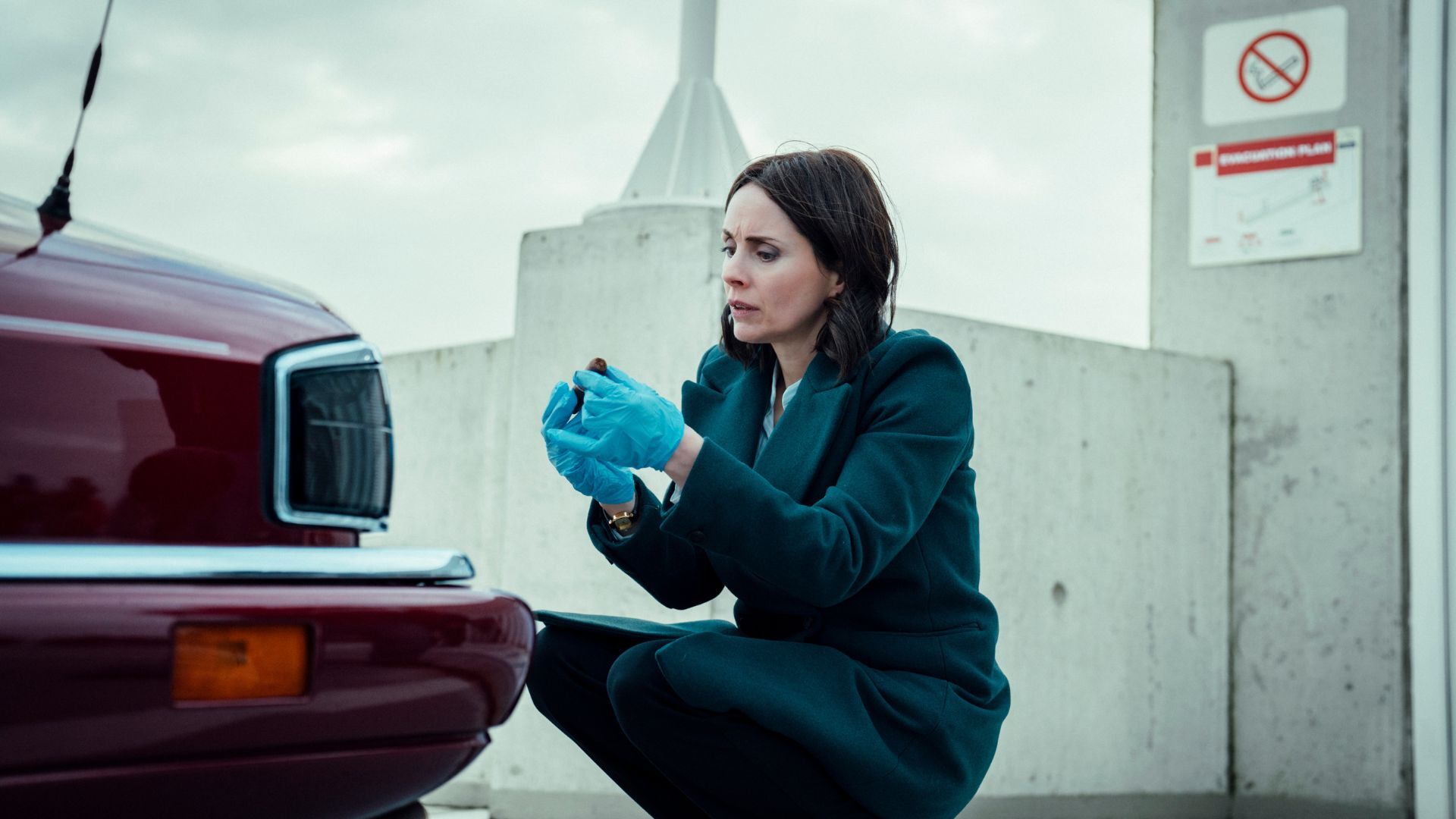
This unlikely duo’s synergy forms the narrative spine, a delicate dance of complementary perspectives that elevates Patience beyond mere whodunits. Bea’s street-honed intuition—honed from years pounding York’s cobbled alleys and interrogating suspects in rain-lashed pubs—pairs seamlessly with Patience’s analytical precision, turning routine probes into symphonies of deduction. Yet the show never shies from the friction: Patience’s aversion to crowded crime scenes forces improvisations, like remote analysis via grainy CCTV feeds, while Bea’s impatience clashes with Patience’s need for ritualistic processing time. Their bond deepens through shared silences—late-night stakeouts in Bea’s battered Volvo, overlooking the Ouse’s murky flow, where confessions spill like unguarded secrets. “You see the world in lines and links,” Bea remarks in Episode 3, her voice softening over lukewarm tea, “and somehow, that straightens out the knots in mine.” It’s a friendship forged in the crucible of cases, but laced with the raw edges of trauma: Patience’s revelations of a childhood marred by institutional neglect and familial abandonment mirror Bea’s regrets over Alfie’s potential diagnosis, creating a mirror of mutual healing.
The episodic tapestry weaves six standalone enigmas, each a mosaic of York’s historic underbelly, while threading an overarching arc of personal metamorphosis. Episode 1 and 2, the bifurcated “Paper Mountain Girl,” plunge into the drug-fueled suicide, unmasking a rogue clinician peddling experimental psychotropics to desperate addicts. Patience’s breakthrough—a fractal pattern in overdose timelines linking to a defunct clinic—propels her into the field, but not without peril: her hyper-focus draws suspicion when a witness ID places her near the scene, forcing a harrowing interrogation that tests Bea’s advocacy. By finale, the duo exposes a conspiracy of medical malfeasance, but the victory is bittersweet—Patience’s innocence cleared, yet her isolation cracked open, inviting tentative bonds with the team.
Subsequent installments amplify the stakes with York’s gothic charm as backdrop. In Episode 3, “Dinosaur’s Shadow,” a curator’s corpse sprawls amid the Yorkshire Museum’s Jurassic replicas, her death staged as a fossilized tableau amid whispers of black-market smuggling. Patience deciphers etched runes on a pilfered bone fragment, tracing it to an international ring trafficking in prehistoric relics, while Bea’s infiltration of a clandestine auction in the city’s subterranean vaults yields pulse-pounding close calls. Trauma surfaces here: Patience’s meltdown in the echoing galleries, triggered by fluorescent hums and echoing footsteps, prompts a tender intervention from Bea, who crafts a sensory toolkit—weighted blankets and lavender diffusers—echoing her own accommodations for Alfie. Episode 4, “Locked Room Enigma,” dissects the apparent suicide of a reclusive crime novelist in his barricaded study, typewriter ribbons unraveling a plagiarism scandal tied to ghostwritten bestsellers. Patience’s linguistic pattern-matching exposes fabricated alibis, but the case dredges Bea’s divorce wounds when the victim’s estranged spouse mirrors her ex-husband’s manipulations.
The midseason pivot in Episode 5, “Vanishing Act,” delivers a morgue heist where a Jane Doe’s body evaporates overnight, her fingerprints ghosting Patience’s own archived trauma— a long-buried foster care file resurfacing with eerie parallels. As the team chases leads through York’s fog-shrouded snickelways, hidden passageways beneath medieval timber frames, revelations cascade: the disappearance masks organ trafficking, with Patience’s archival sorcery linking cadavers to a clandestine clinic. Trust fractures when departmental bureaucracy questions her reliability, forcing Bea to confront her biases and rally allies like the affable DS Will Akbari (Ali Ariaie), whose wry humor lightens the load, and the steadfast pathologist Dr. Loretta Parsons (Liza Sadovy), whose forensic banter provides levity. The season crescendos in Episode 6, “Pandora’s Box,” with a passenger’s fatal coughing fit on a Routemaster bus unveiling a eco-terrorist’s poisoned payload—multiple IDs concealing a vendetta against polluters. Bea’s warned off by higher-ups with vested interests, but Patience’s decryption of encrypted manifestos exposes corporate collusion, culminating in a rain-slicked chase across the city walls. The resolution not only unmasks the culprit but cements the duo’s evolution: Patience steps into autonomy, advocating for neurodiverse protocols, while Bea embraces vulnerability, scheduling Alfie’s assessment with quiet resolve.
Patience shines brightest in its unassuming authenticity, a deliberate departure from the high-octane gloss of contemporaries like Line of Duty. Filmed largely in Belgium for tax incentives yet evoking York’s timbered charm through meticulous production design—cobblestone chases lit by gaslamp glow, evidence rooms cluttered with sepia photos—the series prioritizes emotional cartography over plot pyrotechnics. Showrunner Matt Baker, adapting the Astrid blueprint with writers Stephen Brady and Sarah Freethy, amplifies neurodiversity: all autistic roles, from Patience’s support group confidante Billy (Maxwell Whitelock) to Alfie’s subtle cues, are portrayed by neurodivergent actors, infusing scenes with lived nuance. Purvis’s performance, a revelation after her poignant turn in A Kind of Spark, earned early Emmys buzz for its layered restraint—her breakthrough smiles, rare and radiant, speak volumes. Fraser complements with grounded ferocity, her Bea’s arc a masterclass in midlife reinvention, drawing from her Breaking Bad gravitas to humanize a detective teetering on burnout.
Critics have embraced this fresh lens, with Rotten Tomatoes bestowing a 92% certified fresh score, rivaling Broadchurch‘s brooding introspection. “Purvis’s terrific turn distinguishes Patience,” raves the consensus, praising its character-driven detours over procedural predictability. Metacritic’s 66/100 signals solid favor, with The Telegraph hailing it as “a worthwhile addition to the crime ranks, fitting snugly yet innovatively.” Fans, too, are captivated: PBS streams surged 25% post-premiere, social threads buzzing with #PatiencePatterns dissecting deductions, while UK Channel 4 viewers lauded its sensitivity—though some purists decry echoes of the original Astrid. Yet, the adaptation’s tweaks—York’s historic heft subbing Paris’s boulevards, muted palettes evoking emotional restraint—carve a distinct identity, sidestepping stereotypes for normalized portrayals of sensory challenges and relational growth.
The buzz extends to the ensemble’s depth: Mark Benton’s grizzled DCI Henry Gibson provides paternal ballast, his folksy wisdom clashing delightfully with Bea’s intensity; Nathan Welsh’s DS Jake offers kinetic fieldwork, his banter a pressure valve; Tom Lewis’s enigmatic suspect in Episode 4 layers ambiguity with Gentleman Jack flair. Neurodiversity consultant input ensures arcs like Patience’s group therapy sessions—raw exchanges on masking and meltdowns—resonate authentically, fostering viewer empathy over exploitation.
As Season 1 bows on July 20, 2025, the horizon gleams with renewal: Channel 4 greenlit an eight-episode sophomore run in May, filming wrapped with Doctor Who‘s Jessica Hynes joining as a formidable new superior, probing Patience’s methods amid departmental shake-ups. Teasers hint at bolder canvases—cross-border cases tapping York’s Viking heritage, Patience’s budding romance challenging her boundaries—while Bea’s custody saga intensifies, weaving family fractures into procedural fabric. In a genre saturated with lone-wolf geniuses, Patience reminds us that the sharpest clues hide in the overlaps: where one mind falters, another’s illuminates. For PBS audiences, Sundays at 8 p.m. offer not just mysteries solved, but worlds reimagined—one pattern, one trust, one step beyond comfort’s edge at a time. In York’s enduring shadows, this duo doesn’t just catch killers; they redefine justice, proving that seeing differently isn’t a hindrance—it’s the key to unlocking everything.