In the fall of 2021, amid a landscape dominated by streaming giants and high-profile blockbusters, a quiet, low-budget Western slipped into theaters with barely a whisper. Old Henry, directed and written by Potsy Ponciroli, arrived in a limited release—playing in just a handful of cinemas across the United States—and grossed a modest sum that barely registered on box office charts. Yet, behind its unassuming debut lay a film that critics hailed as one of the finest Westerns in recent memory, boasting a near-perfect 94% critics’ score and a strong 92% audience approval on Rotten Tomatoes. Four years later, as the Western genre surges back into prominence through sprawling TV epics and modern revivals, this haunting, character-driven gem is finally getting the attention it always deserved. It’s a story so raw, emotionally charged, and masterfully crafted that it feels both timeless and urgently relevant—a modern classic that somehow got lost in the shuffle.
The film centers on Henry McCarty, a widowed farmer eking out a living on a remote homestead in the Oklahoma Territory in 1906. Played with understated brilliance by Tim Blake Nelson, Henry is a grizzled, Bible-quoting man of few words, raising his teenage son Wyatt (Gavin Lewis) amid the harsh realities of frontier life. Their existence is one of routine hardship: tending pigs, tilling stubborn soil, and keeping the world at arm’s length. Henry is strict, almost stern, with his boy, who chafes at the isolation and yearns for something more. But beneath Henry’s weathered exterior lies a man burdened by secrets, a past he has buried deep to protect the fragile peace he has built.
The plot ignites when Henry discovers a gravely injured stranger in the wilderness. The man, Curry (Scott Haze), clings to life alongside a satchel stuffed with cash. Against his better judgment—and despite Wyatt’s protests—Henry brings the wounded man home to nurse him back from the brink. This act of reluctant mercy soon draws danger to their doorstep. A posse of armed men, led by the cold and calculating Stephen Dorff, arrives claiming to be lawmen in pursuit of a bank robber. They demand the money and the fugitive, insisting Curry is a dangerous outlaw. But nothing is as it seems. As tensions mount inside the isolated farmhouse, Henry must decide whom to trust, forcing him to confront his own history and the violent skills he has long suppressed.
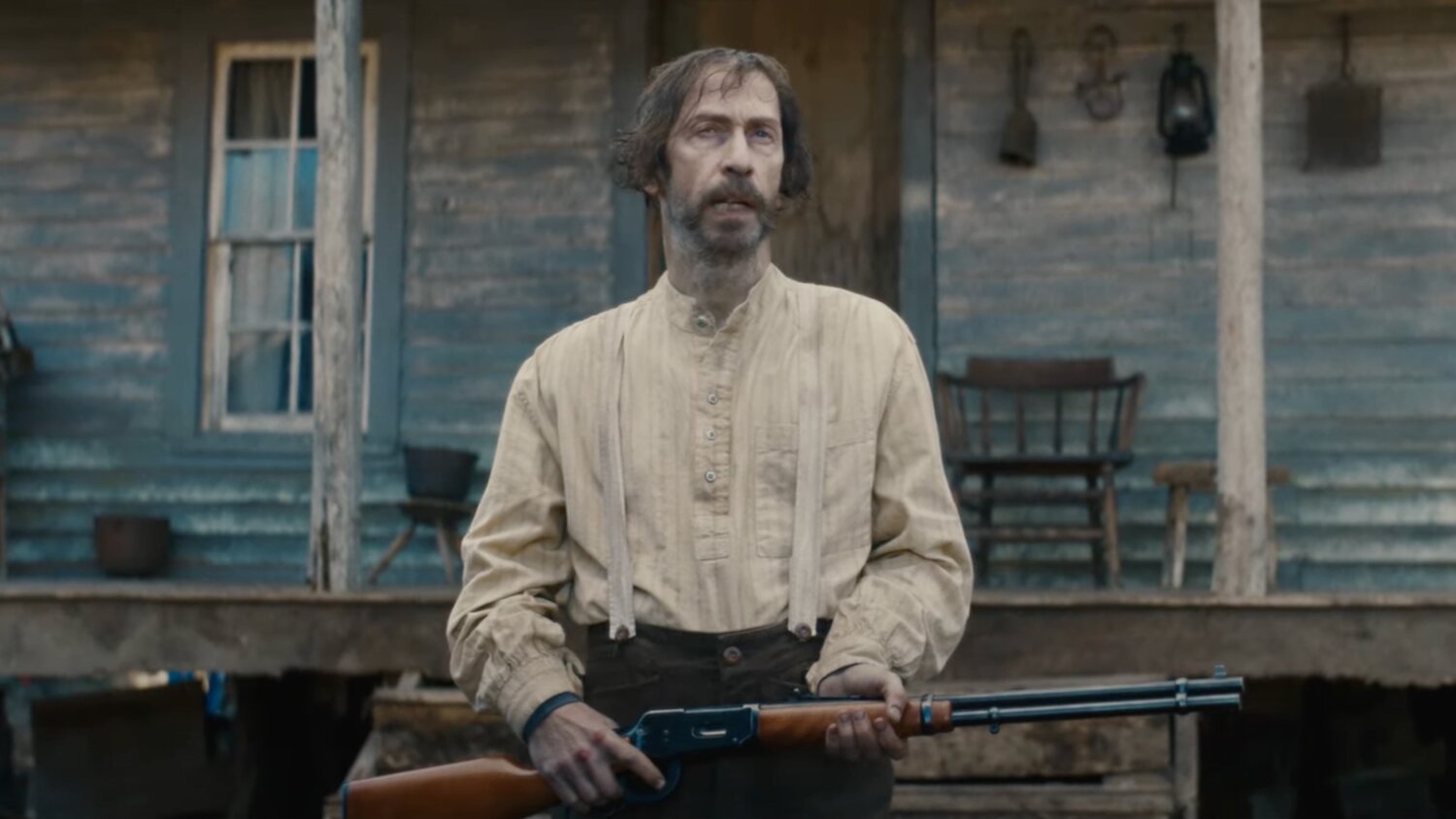
What elevates Old Henry beyond a standard siege Western is its deliberate pacing and emotional depth. Ponciroli crafts a slow-burn narrative that builds suspense through character rather than spectacle. The film opens with quiet, almost meditative scenes of rural life, allowing viewers to absorb the stark beauty of the landscape—dusty fields, weathered barns, and endless skies that feel both liberating and oppressive. Cinematography captures the desolation of the American frontier at the turn of the century, a time when the Wild West was fading into memory, giving way to modernity. The score, subtle yet evocative, underscores the mounting dread without overwhelming the dialogue or silence.
At the heart of it all is Tim Blake Nelson’s performance, widely regarded as the film’s crowning achievement. Known for memorable supporting roles—including a singing cowboy in the Coen Brothers’ The Ballad of Buster Scruggs—Nelson here steps into a rare lead that demands quiet intensity. His Henry is a man of contradictions: pious yet haunted, gentle with his son yet capable of terrifying resolve. Nelson conveys layers of regret and hidden ferocity through minimal gestures—a weary glance, a clenched jaw, or the way he handles a rifle with practiced ease. As revelations about Henry’s past emerge, the character transforms from a seemingly ordinary farmer into something far more complex and formidable. It’s a role that showcases Nelson’s range, earning praise for its nuance and power.
The supporting cast matches this excellence. Gavin Lewis brings authentic teenage rebellion and vulnerability to Wyatt, capturing the boy’s confusion and eventual growth as he witnesses his father’s true nature. Scott Haze’s Curry is enigmatic and wounded, his motives ambiguous enough to keep audiences guessing. Stephen Dorff delivers a chilling antagonist—charismatic yet ruthless—whose black-hat villainy feels grounded in the genre’s traditions. Trace Adkins and others round out the ensemble, adding texture to the confined drama without stealing focus.
Thematically, Old Henry explores classic Western motifs—redemption, father-son bonds, the blurred line between law and justice, and the inescapable pull of violence—while infusing them with fresh emotional weight. It echoes classics like Clint Eastwood’s Unforgiven, where a retired gunman is drawn back into bloodshed, but distinguishes itself through its intimate scale and focus on family. The story questions identity and legacy: How much of our past defines us? Can a man truly escape who he once was? In an era when Westerns often lean into spectacle or revisionist cynicism, Old Henry opts for sincerity and moral complexity, making its twists feel earned rather than gimmicky.
One reason the film initially flew under the radar was its release timing and strategy. Premiering at the Venice Film Festival in 2021, it entered a market still recovering from pandemic disruptions. With a reported budget around $1.5 million, it was never positioned for wide theatrical success. Its limited run and subsequent shift to digital platforms meant it relied on word-of-mouth rather than marketing hype. Meanwhile, bigger Western-flavored projects and TV series captured the spotlight. Yet, this modesty suits the film perfectly; it’s not flashy, but authentic, much like its protagonist.
Now, with the genre experiencing a renaissance—fueled by popular series and renewed interest in frontier tales—Old Henry stands out as a reminder of what makes Westerns endure. It’s a film that rewards patience, delivering payoffs through character development and tension rather than constant action. The violence, when it arrives, is brutal and realistic, never glorified, emphasizing its cost.
In retrospect, Old Henry feels like a hidden treasure from 2021, one that deserved far more acclaim and attention. Its near-flawless critical reception, anchored by Nelson’s career-best work, proves that sometimes the quietest films carry the loudest impact. For anyone who loves the Western genre—or simply appreciates taut storytelling, strong performances, and moral depth—this is a must-see. Four years on, the moment has arrived for audiences to discover what they missed: a powerful, beautifully crafted Western that quietly redefines what the genre can achieve in the modern age.