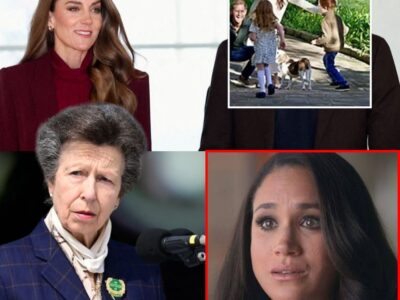
In a development that has sent shockwaves through royal circles and beyond, Princess Anne, the Princess Royal, has reportedly thrown her full weight behind Prince William and Queen Camilla in a determined campaign to permanently bar Meghan Markle from any form of return to the British monarchy. Insiders describe this as a united, hardline stance within the senior ranks of the family, signaling that the door once left slightly ajar after the Sussexes’ 2020 departure is now firmly slammed shut—possibly for good.
The claims, circulating widely in early 2026, paint a picture of deep-seated wariness among key royals toward reconciliation. Princess Anne, renowned for her pragmatic, no-frills dedication to duty and her longstanding role as one of the most reliable pillars of the institution, is said to view any prospect of welcoming Meghan back as outright “madness.” Sources close to the palace assert that Anne has been actively aligning with her nephew Prince William, the heir to the throne, and Queen Camilla to reinforce boundaries and prevent what they perceive as a high-risk disruption to the monarchy’s stability.
This position stems from years of accumulated tension. Since Prince Harry and Meghan announced their intention to step back as senior working royals in January 2020, followed by their full relocation to California, the relationship has deteriorated amid public interviews, a bestselling memoir, and a high-profile Netflix series that aired candid criticisms of royal life. These revelations, particularly those touching on private family matters, are believed to have left lasting scars, especially on William, who once shared a close bond with his brother. Anne, ever the protector of institutional integrity, reportedly sees no benefit in reopening old wounds.
According to palace observers, Anne has been working discreetly but decisively behind the scenes. At Windsor Castle and in consultations with King Charles III, she has allegedly urged a firm policy against reintegration. While King Charles has at times expressed a personal desire for family harmony—particularly involving his grandchildren, Archie and Lilibet—Anne and William are said to prioritize the long-term health of the monarchy over sentimental gestures. They argue that allowing Meghan any proximity could invite further media scrutiny, conflicting narratives, and potential instability at a time when the family is focused on continuity and public service.
Queen Camilla’s involvement adds another layer to the united front. Reports suggest she shares the view that Meghan’s past interactions and public statements have created irreparable distrust. Meghan herself is described in some accounts as unwilling to “play nice” or make concessions if a UK visit were to occur, further solidifying opposition from senior women in the family. This dynamic underscores a broader divide: on one side, the core royals committed to tradition and protocol; on the other, the Sussexes pursuing an independent path of advocacy, media, and business ventures.
Recent speculation about possible UK returns—for Invictus Games-related events or family matters—has only intensified the resolve. Prince Harry has made occasional solo trips, but any suggestion of Meghan accompanying him triggers immediate concerns among William, Anne, and Camilla. Insiders claim the trio has influenced decisions on security, access, and invitations to ensure no official welcome or platform is extended. Even informal family gatherings appear off-limits, with the emphasis on protecting the monarchy from what they see as predictable controversy.
Princess Anne’s reported stance is consistent with her character. At 75, she remains one of the busiest working royals, undertaking hundreds of engagements annually with efficiency and quiet authority. She has never been one for public drama, preferring actions that safeguard the Crown’s reputation. By backing William’s position, Anne is seen as reinforcing the line of succession and ensuring the institution remains insulated from external influences that could dilute its ceremonial and apolitical role.
For Meghan, the implications are stark. Having built a life in Montecito centered on independence, philanthropy through Archewell, and entrepreneurial projects, any lingering hope of bridging the transatlantic divide now seems extinguished. Sources describe her as increasingly aware that the royal chapter is closed, with no pathway back to titles, duties, or influence within “The Firm.” Prince Harry’s position grows more isolated, torn between his California family and the heritage he once sought to reform.
Public reaction has been polarized. Supporters of the Sussexes decry the move as unforgiving and outdated, arguing that the monarchy could benefit from modern perspectives. Others praise Anne, William, and Camilla for prioritizing stability, viewing their actions as necessary to preserve public trust after years of turbulence. Social media and royal commentary forums buzz with debate, with many seeing this as the definitive end to reconciliation hopes.
As 2026 unfolds, the royal family appears more consolidated than ever. King Charles continues his reign amid health considerations, William prepares for his future role, and Anne remains a steadfast guardian of protocol. The Sussexes, meanwhile, forge ahead independently, but the message from Windsor is unequivocal: there is no coming back. The rift, once seen as temporary, has hardened into permanence, ensuring the monarchy’s path forward remains firmly in the hands of those committed to its traditional framework.
This development highlights the enduring power dynamics within the House of Windsor. In an era of constant scrutiny, the decision to block any return underscores a commitment to unity over division, duty over drama. Whether the Sussexes ever attempt another approach remains uncertain, but with Princess Anne’s influential voice now firmly aligned against it, the prospects appear dimmer than ever.