In the glittering, unforgiving world of high-stakes Manhattan drama, where every cocktail party hides a dagger and every therapy session unearths a fracture, Nicole Kidman has always thrived. But with The Undoing, the HBO miniseries that dropped like a velvet-wrapped bomb in late 2020, she plunges into depths darker than anything in her storied career. This isn’t the poised elegance of Big Little Lies or the raw vulnerability of Destroyer—this is Kidman at her most unnervingly restrained, a woman whose every exhale seems to whisper a secret she’s only just beginning to suspect. Thriller aficionados are buzzing, dissecting episodes like forensic experts, because The Undoing isn’t just a show; it’s a slow-simmering fever dream that burrows under your skin, leaving you questioning the foundations of trust, love, and the lies we tell ourselves to sleep at night.
At its core, The Undoing is a six-episode labyrinth of psychological intrigue, adapted from Jean Hanff Korelitz’s 2014 novel You Should Have Known by the razor-sharp scribe David E. Kelley, who reunites here with Kidman after their Big Little Lies triumph. Directed with icy precision by Susanne Bier—known for her taut command in The Night Manager—the series unfolds in the rarified air of New York’s Upper East Side. Our entry point is Grace Fraser, a celebrated couples therapist whose life is the envy of her elite clientele: a sprawling waterfront apartment overlooking the Hudson, a precocious son navigating the cutthroat corridors of Reardon, an exclusive private school, and a marriage to Jonathan Fraser, a charismatic pediatric oncologist whose easy charm could disarm a jury. Theirs is the kind of union that looks photoshopped—intimate family rituals, intellectual banter over vintage wine, and a shared devotion to their boy, Henry, that feels almost too idyllic.
But idylls crack, and in The Undoing, they shatter with the subtlety of a scalpel’s slice. The inciting incident—a brutal, off-screen murder—rips through Grace’s world like a seismic fault line. What begins as a single, horrifying discovery cascades into a torrent of revelations: vanished spouses, fabricated alibis, whispered affairs, and courtroom showdowns that expose the rot beneath the gloss. As Grace scrambles to shield her family from the media glare and the relentless scrutiny of detectives, the narrative coils tighter, each episode a deliberate escalation of dread. We’re not talking jump-scare jolts here; this is suspense distilled to its essence, a creeping malaise that builds through lingering close-ups of rain-slicked streets, shadowed hallways, and faces etched with unspoken accusations. Bier’s camera work, lensed by the masterful Anthony Dod Mantle, turns Manhattan into a character unto itself—a glittering cage where privilege amplifies isolation, and every doorman knows more than he lets on.

Kidman’s portrayal of Grace is the beating, haunted heart of it all, a masterclass in the art of the unsaid. From the opening frames, where she glides through her sun-drenched home like a figure from a Vermeer painting, Kidman imbues Grace with a quiet authority that’s both magnetic and fragile. Her Grace isn’t a damsel unraveling in histrionics; she’s a professional dissector of relationships, armed with clinical detachment and a velvet voice that soothes the fractured. Yet as the plot’s tendrils wrap around her, Kidman reveals the fault lines with devastating subtlety—a flicker in her eyes during a routine parent-teacher meeting, a hesitation before signing her name to a fundraiser invitation, the way her fingers tighten around a coffee mug when a casual question veers too close to the bone. It’s in these micro-moments that Kidman excels, channeling a woman who’s spent years advising others on red flags while blind to the one waving in her own bedroom.
One of the series’ most insidious strengths is how it weaponizes Grace’s expertise against her. As a therapist, she’s a beacon of empathy, quick to validate a client’s intuition about a partner’s duplicity. But when those same dynamics invade her life—gaslighting disguised as affection, betrayals cloaked in boyish apologies—Kidman captures the dissonance with chilling authenticity. Watch her in the early episodes, navigating awkward encounters with a mysterious new acquaintance, Elena, whose raw vulnerability draws Grace in like a moth to a flame. Kidman’s face, luminous yet lined with unspoken weariness, registers the pull: a mix of professional curiosity and something deeper, more personal, that blurs the lines between healer and healed. By mid-season, as the accusations mount and Grace’s reality fractures, Kidman’s performance shifts into something primal—a controlled implosion where poise gives way to paranoia, and every therapy truism she espouses curdles into self-doubt. It’s unnerving because it’s so relatable; who among us hasn’t second-guessed a gut feeling in the name of harmony? Kidman’s Grace embodies that quiet erosion, her “undoing” not a scream but a series of stifled breaths, each one heavier than the last.
And oh, the themes—The Undoing doesn’t just flirt with them; it dissects them under surgical lights. Gaslighting emerges as the series’ venomous spine, a psychological sleight-of-hand where truth becomes malleable, wielded like a blunt instrument. Jonathan, played with devilish finesse by Hugh Grant, is the architect of much of this unease. Grant, shedding his rom-com legacy like a snakeskin, delivers a tour de force as the affable everyman harboring tempests. His Jonathan is all warm smiles and disarming quips one moment, evasive deflections and cold dismissals the next—a man whose charisma is both his shield and his snare. In scenes of domestic bliss turned interrogation, Grant’s eyes dart with calculated innocence, his voice dropping to that honeyed timbre that makes you want to believe him, even as the evidence screams otherwise. It’s a betrayal layered in intimacy, the kind that starts with “You must be imagining things, darling” and ends with a chasm of isolation. The series probes how such manipulation thrives in the shadows of privilege, where money buys silence and status quells questions, turning victims into unwitting accomplices in their own deception.
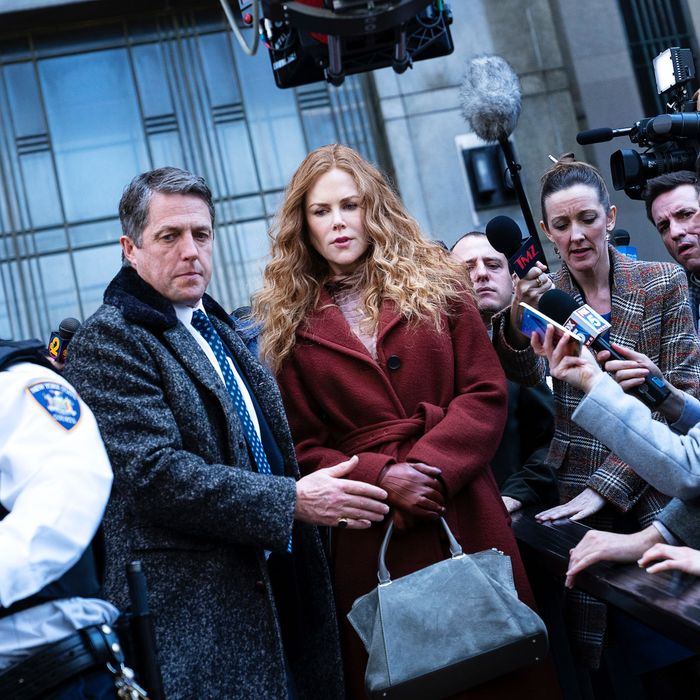
Blurred morality threads through every frame, challenging viewers to parse the grays in a black-and-white whodunit. Relationships here aren’t binaries of good and evil; they’re ecosystems of complicity. Grace’s bond with her father, Franklin—a steely financier portrayed by the indomitable Donald Sutherland—pulses with its own undercurrents of control and conditional love. Sutherland, with his gravelly gravitas and piercing stare, embodies the old-money patriarch whose “guidance” feels like a gilded leash, forcing Grace to confront how inherited expectations have shaped her blindness. Then there’s Henry, the Frasers’ whip-smart son, brought to heartbreaking life by Noah Jupe. At just 12, Jupe shoulders scenes of quiet devastation, his wide-eyed confusion morphing into a steely resolve that mirrors his mother’s. The parent-child dynamic becomes a microcosm of the series’ emotional core: the terror of legacy, the weight of secrets passed down like heirlooms, and the fierce, flawed instinct to protect at any cost.
Supporting players deepen the web without stealing the spotlight. Édgar Ramírez cuts a brooding figure as Detective Joe Mendoza, his methodical intensity a counterpoint to the Frasers’ frenzy, while Lily Rabe’s Sylvia offers a grounded camaraderie laced with her own hidden fractures. Matilda De Angelis, as the enigmatic Elena, haunts the narrative like a ghost in the machine—her brief screen time electric with unspoken longing and defiance, a catalyst whose absence echoes louder than her presence. Even bit roles, like Noma Dumezweni’s formidable defense attorney, pulse with authenticity, reminding us that in this maze, no one is peripheral.
What elevates The Undoing from glossy procedural to nerve-shredding obsession is its mastery of atmosphere. Bier orchestrates tension like a conductor with a baton of fog—misty Central Park jogs that dissolve into nightmares, candlelit dinner parties where laughter rings hollow, and that recurring motif of rain lashing windows like accusatory fingers. The score, a brooding pulse from brothers Evgueni and Sacha Galperine, underscores the unease, while Kidman’s ethereal cover of “Dream a Little Dream of Me” over the credits lingers like a siren’s call, promising solace it never delivers. Production design drips with opulence: cashmere throws on leather sofas, abstract art veiling emotional voids, all shot in a desaturated palette that makes luxury feel like a trap.
Episode by episode, the series tightens its grip, doling out revelations with the precision of a poisoner’s dropper. The premiere lures you in with deceptive calm, a fundraiser gone awry hinting at fissures beneath the facade. By the second hour, paranoia sets in as Grace chases shadows, her therapist’s toolkit useless against personal peril. Mid-season pivots into a full-throated legal thriller, cross-examinations crackling with veiled threats and half-truths that force us to reevaluate every prior glance. And the finale? A powder keg of catharsis, where confessions crash like waves, leaving wreckage in their wake. It’s the sort of payoff that demands rewatches—not for clues missed, but for the emotional shrapnel embedded in every frame.
In a landscape cluttered with true-crime podcasts and procedural binges, The Undoing stands apart by pressing on the bruises of the human psyche: the terror of belated clarity, the ache of love poisoned by doubt, the quiet violence of denial. Kidman’s Grace isn’t just a role; she’s a mirror, reflecting our own vulnerabilities back at us with unflinching grace. Thriller fans, take note—this isn’t passive viewing. It’s an invitation to sit with discomfort, to question the narratives we cling to, and to emerge, perhaps, a little wiser, a little warier. Long after the credits roll and the Hudson’s lights fade, The Undoing clings, a shadow in the corner of your eye, whispering: What if the monster was never outside? What if it was the one you let in? For anyone who savors the slow unraveling of souls, this series isn’t just must-watch television. It’s the kind of obsession that redefines your nights, one chilling twist at a time.