Elizabeth Olsen Just Dropped a True-Crime Nightmare That Makes Gone Girl Look Tame
No warning. No comfort. Just pure dread climbing to the top of Netflix. This quiet, slow-burn series came out of nowhere and is now the most talked-about thriller on the platform. Elizabeth Olsen and Jesse Plemons deliver performances that feel uncomfortably real in a chilling retelling of an actual Texas murder case soaked in secret affairs, ugly betrayals, and a crime so calculated it shattered a whole town.
Every episode tightens the grip. Smiles start to curdle. Trust turns toxic. What begins as a familiar suburban friendship spirals into something vicious and unforgettable. Critics say the tension never lets up. Viewers are calling it the most unsettling Netflix thriller since Mindhunter. Many admit they’re sleeping with the lights on.
In the landscape of true-crime entertainment, few stories grip the audience quite like the tale of Candy Montgomery, a seemingly ordinary housewife whose life unraveled into a nightmare of passion, violence, and courtroom drama. “Love & Death,” the miniseries that has skyrocketed to Netflix’s number one spot in 2025, brings this harrowing real-life saga to life with unflinching detail. Originally premiering on HBO Max in 2023, the show found new life on Netflix this year, captivating a fresh wave of viewers who can’t look away—or sleep soundly afterward.
The series stars Elizabeth Olsen as Candace “Candy” Montgomery, a bubbly, church-going mother of two living in the quiet suburbs of Wylie, Texas, in the late 1970s. Jesse Plemons portrays Allan Gore, her lover and the husband of her close friend Betty Gore, played by Lily Rabe. What starts as a flirtation at a church volleyball game escalates into a clandestine affair, filled with rules to keep emotions at bay. But as the relationship deepens, the boundaries blur, leading to jealousy, confrontation, and ultimately, a gruesome act that shocked the nation.
Without diving into spoilers for those yet to binge, the plot follows Candy’s dissatisfaction with her mundane life. Married to Pat Montgomery (Patrick Fugit), an electrical engineer, Candy craves excitement beyond her roles as a homemaker and Sunday school teacher. Her friendship with Betty, a schoolteacher struggling with postpartum depression after the birth of her second child, provides a veneer of normalcy. But beneath the surface, tensions simmer. The affair with Allan, who is portrayed as a mild-mannered man torn between his family and his desires, adds layers of complexity. As the episodes progress, the narrative shifts from light-hearted suburban scenes to dark psychological territory, culminating in a trial that questions morality, self-defense, and the human capacity for violence.
The miniseries, consisting of seven episodes, is a masterclass in building suspense through everyday interactions. Director Lesli Linka Glatter, known for her work on “Homeland” and “The Walking Dead,” crafts a visually striking period piece, recreating the 1970s and early 1980s with authentic details—from shag carpets and wood-paneled station wagons to the era’s fashion of polyester blouses and feathered hair. The soundtrack, featuring hits from the time like Fleetwood Mac and The Eagles, enhances the nostalgic yet eerie atmosphere, making the horror feel all too relatable.

At the heart of “Love & Death” is the true story of the 1980 ax murder that captivated America. On June 13, 1980, Betty Gore was found dead in her utility room, her body hacked 41 times with a three-foot wood-splitting ax. The scene was horrific: blood splattered across walls, floors, and even the ceiling, with Betty’s face nearly unrecognizable. Her one-year-old daughter, Bethany, was left crying in her crib for hours until neighbors discovered the body. Allan Gore, away on a business trip in Minnesota, called friends to check on his wife after she didn’t answer the phone, leading to the grim revelation.
Candy Montgomery, the last person known to have seen Betty alive, had been at the Gore home that morning to pick up a swimsuit for Betty’s older daughter, Alisa, who was staying with the Montgomerys for a sleepover. Initially, Candy cooperated with police, but suspicions arose when Allan confessed to their affair, which had ended months earlier. The motive seemed clear: jealousy over the infidelity. Candy was arrested two weeks later, charged with murder, and released on bail.
The trial, held in October 1980 in Collin County, Texas, became a media circus. Candy’s defense team, led by attorney Don Crowder—a civil lawyer taking his first criminal case—argued self-defense. Under hypnosis sessions with psychiatrist Dr. Fred Fason, Candy recalled repressed childhood trauma triggered by the confrontation. According to her testimony, Betty accused her of the affair, brandished the ax, and struck first. In a frenzy, Candy disarmed her and retaliated, blacking out during the assault. The jury, after deliberating for just over four hours, acquitted her, accepting the self-defense claim despite the 41 blows—28 to Betty’s head alone.
The verdict stunned the public. How could someone inflict such brutality and walk free? Candy’s composure on the stand, coupled with expert testimony on dissociation, swayed the all-male jury (with two female alternates). Post-trial, Candy and Pat moved to Georgia to escape the backlash, where she briefly worked as a family counselor before their divorce. Today, in her 70s, Candy lives quietly under a different name, avoiding the spotlight. Allan Gore remarried shortly after the trial but lost custody of his daughters to Betty’s parents, who raised them in Kansas. The girls, now adults, have spoken sparingly about the tragedy.
This real-life drama draws from extensive reporting, including articles in Texas Monthly magazine titled “Love and Death in Silicon Prairie” and the book “Evidence of Love: A True Story of Passion and Death in the Suburbs” by Jim Atkinson and John Bloom. Writer and creator David E. Kelley, famous for legal thrillers like “Big Little Lies” and “The Undoing,” infuses the script with his signature blend of domestic intrigue and moral ambiguity. Kelley explores themes of repression in conservative communities, the fragility of marriages, and the dark side of the American Dream in the Bible Belt.
Elizabeth Olsen’s portrayal of Candy is nothing short of mesmerizing. Known for her role as Wanda Maximoff in the Marvel Cinematic Universe, Olsen sheds her superhero persona to embody a complex woman—charming yet calculating, vulnerable yet volatile. Her performance captures Candy’s evolution from a perky extrovert to a haunted figure, especially in the courtroom scenes where her wide-eyed innocence clashes with the gruesome evidence. Critics have hailed it as one of her best, with her ability to convey internal turmoil through subtle expressions making the character both sympathetic and terrifying.
Jesse Plemons, Olsen’s co-star from “Wind River,” brings depth to Allan Gore, portraying him as a passive participant in the chaos, torn by guilt and indecision. His understated acting contrasts Olsen’s intensity, highlighting the power dynamics in their affair. Lily Rabe shines as Betty, infusing the role with raw emotion—depicting a woman battling isolation and mental health struggles in an era when such issues were stigmatized. Supporting cast members, including Krysten Ritter as Candy’s loyal friend Sherry Cleckler, Tom Pelphrey as defense attorney Don Crowder, and Keir Gilchrist as the Montgomerys’ pastor, add layers to the ensemble, making the community feel alive and complicit.
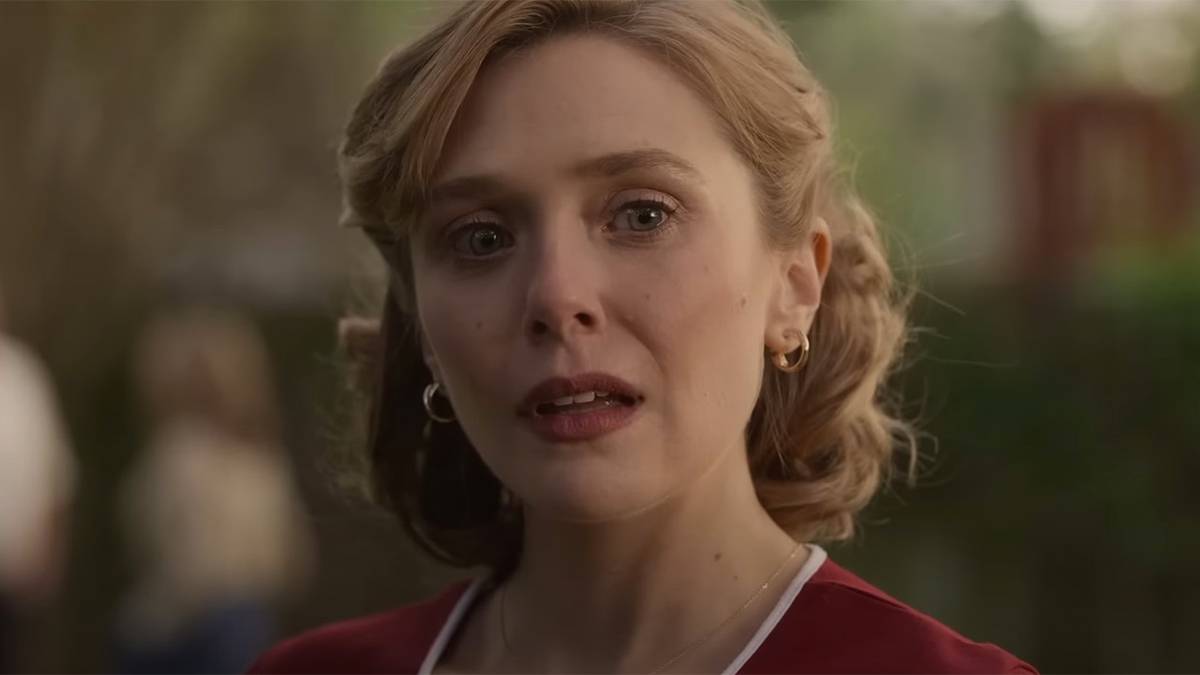
Production on “Love & Death” was meticulous, with filming in Texas to capture the authentic small-town vibe. The team recreated the crime scene with graphic accuracy, using practical effects for the blood and violence that have left viewers reeling. One episode, in particular, depicting the fateful day, is so intense that many report pausing to catch their breath. The series doesn’t shy away from the gore, but it’s the psychological buildup—the lingering shots of uneasy glances and unspoken resentments—that truly unnerves.
Reception has been strong, with the show holding a solid rating on review aggregators. Critics praise its atmospheric tension and stellar acting, though some note it’s the second adaptation of the story in recent years, following Hulu’s 2022 miniseries “Candy” starring Jessica Biel. While “Candy” focused more on the sensational aspects, “Love & Death” delves deeper into relationships and societal pressures, earning comparisons to David Fincher’s “Mindhunter” for its cerebral approach to crime. Viewers on social media echo this, sharing stories of binge-watching sessions that led to nightmares. “I had to turn on all the lights after episode 3,” one fan posted. Another said, “It’s like Gone Girl but real—and way scarier because it actually happened.”
What makes “Love & Death” so disturbing is its relatability. Set in a world of church potlucks, volleyball games, and neighborhood barbecues, it exposes how ordinary people can harbor extraordinary darkness. The series questions trust in friendships and marriages, showing how small deceptions can snowball into catastrophe. In a post-pandemic era where true-crime podcasts and documentaries dominate, this show stands out for its emotional depth rather than mere shock value.
As Netflix’s top thriller, “Love & Death” proves the enduring appeal of stories that blur the line between victim and villain. It’s a reminder that the most terrifying monsters aren’t lurking in the shadows—they’re smiling at you from across the pew. If you’re brave enough, dive in. Just don’t blame us if you leave the lights on tonight.