Picture this: jagged cliffs clawing at a sky bruised purple by Atlantic gales, waves crashing like the fury of forgotten gods, and a man forged in the fires of revolution staggering home to reclaim what war stole from him. That’s the raw, unyielding world of Poldark, the British period drama that’s just crash-landed on Netflix like a rogue cannonball, splintering screens and shattering hearts across the globe. Since its U.S. debut on October 8, 2025—bringing all five seasons of Aidan Turner’s brooding masterpiece to American viewers for the first time—this isn’t just a historical romance dusting off its corsets for a second wind. No, it’s a full-blown emotional hurricane, whipping up tempests of passion, betrayal, and unbridled Cornish fury that have fans howling on social media: “Hits harder than anything on TV this year!” From X threads unraveling like frayed rigging to Reddit confessions of all-nighters, Poldark is the storm you didn’t see coming, the one that leaves you drenched, dazed, and desperately craving more. This isn’t your tidy Jane Austen tea party; it’s a savage symphony of shattered loyalties, forbidden desires, and choices that carve deeper than any miner’s pickaxe. Buckle in, because Ross Poldark’s return isn’t a homecoming—it’s a reckoning, and it’s tearing the internet apart in the best possible way.
At its tempestuous heart, Poldark—adapted from Winston Graham’s sprawling 12-novel saga by showrunner Debbie Horsfield—thrusts us into late-18th-century Cornwall, that rugged peninsula where the land bleeds tin and copper, and the sea devours the unwary. It’s 1783, and Captain Ross Poldark (Aidan Turner, all smoldering intensity and windswept curls) limps back from the blood-soaked fields of the American Revolutionary War, a ghost in his own life. He left a prosperous estate, a doting father, and the promise of Elizabeth Chynoweth’s (Heida Reed) hand in marriage. What awaits him? Ruin. His father dead, his mine flooded and forsaken, his sweetheart betrothed to his smug cousin Francis (Kyle Soller), and a society that views him as a wild Jacobin radical, tainted by colonial rebellion. Ross doesn’t slink away; he charges forward like a Cornish gale, reopening Wheal Leisure mine with sheer grit and a ragtag crew of outcasts, defying the smugglers, speculators, and class vultures circling his legacy. But this is no lone wolf’s tale—it’s a maelstrom of intertwined fates, where every alliance frays and every kiss ignites a powder keg.
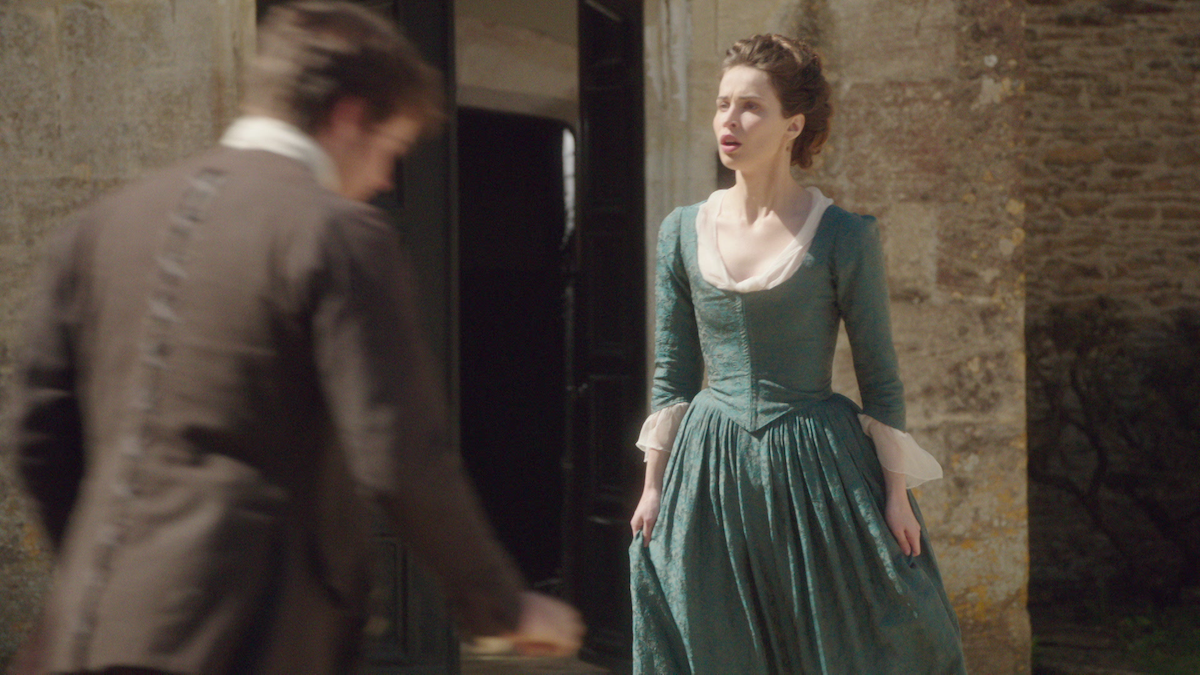
Enter Demelza Carne (Eleanor Tomlinson), the fiery young woman who rises from nothing to rewrite her destiny in strokes of coal dust and unyielding spirit. Hired as Ross’s kitchen maid—a scrawny, redheaded waif from the moors—she blossoms into the beating heart of Nampara, his crumbling estate. Their romance isn’t some powdered-wig fairy tale; it’s forged in the muck of survival, sparked by a beachside dance under starlit skies and tempered by the brutal realities of poverty and prejudice. Demelza’s arc is a thunderclap of empowerment: from illiterate urchin to savvy businesswoman navigating high-society salons, she wields wit sharper than any blade, challenging the gentry who sneer at her “lowborn” roots. Yet her triumphs come laced with thorns—jealous whispers, the shadow of Elizabeth’s porcelain perfection, and the ever-looming specter of Ross’s impulsive heart. Tomlinson infuses her with a feral grace, her wide eyes flashing defiance one moment, vulnerability the next, making Demelza the soul every viewer aches to champion.
Then there’s Elizabeth, the society lady torn between the iron chains of duty and the wild pull of longing, her choices rippling like poison through the Poldark veins. Reed’s portrayal is a masterclass in restrained devastation: the golden girl of Trenwith, promised to Francis out of familial obligation, but haunted by what-ifs with Ross. Her marriage crumbles under Francis’s gambling debts and petty jealousies, pushing her into the viperous arms of George Warleggan (Jack Farthing), the banking magnate whose oily charm masks a predator’s soul. George’s ascent—from outsider upstart to ruthless overlord—fuels the series’ class warfare, his schemes to monopolize Cornwall’s mines a metaphor for the industrial greed devouring the old ways. Elizabeth’s dilemma devastates: does she cling to respectability, sacrificing passion for security, or seize the life her heart demands, dooming those she loves? Her arc spirals into tragedy, choices that birth betrayals no apology can mend, leaving viewers torn between pity and fury.
Every relationship in Poldark trembles on the edge of collapse, a high-wire act over an abyss of human frailty. Ross and Demelza’s love is the eye of the storm—passionate, precarious, punctuated by separations that gut-punch like a rogue wave. Ross’s flirtations with independence (and Elizabeth) test Demelza’s loyalty, while her own hidden depths—smuggling ties, unspoken griefs—threaten to capsize their union. Francis and Elizabeth’s bond frays into resentment, a cautionary tale of privilege poisoned by weakness. Even the fringes crackle: Verity Poldark (Ruby Bentall), Ross’s kind-hearted sister, defies her family’s snobbery for a forbidden romance with Captain Blamey (Henry Richardson), a widower with blood on his hands. Dr. Dwight Enys (Luke Norris) and Caroline Penvenen (Gabriella Wilde) embody the series’ lighter tempests—his idealistic medicine clashing with her haughty wit—but even they drown in waves of loss and longing. Aunt Agatha (Caroline Blakiston), the ancient oracle of Poldark lore, cackles prophecies from her Bath chair, her barbed tongue a weapon against George’s encroachments. These threads weave a tapestry of raw humanity: loyalties snap like storm-lashed sails, desires burn hotter than smelters’ fires, and betrayals—oh, the betrayals—land like cannon fire, splintering families and fortunes alike.
What makes Poldark more than mere escapism is its unapologetic grit, a period drama that doesn’t flinch from the era’s underbelly. Cornwall isn’t a postcard idyll; it’s a battleground where post-war veterans beg in the streets, enclosures displace smallholders, and the French Revolution’s echoes stoke riots in the cobbled lanes. Horsfield’s adaptation amps Graham’s social conscience, spotlighting women’s precarious agency—Demelza’s illiteracy a chain forged by patriarchy, Caroline’s inheritance a gilded cage—and the human cost of empire. Ross’s radicalism isn’t abstract; it’s visceral, seen in his aid to starving tenants or courtroom stands against corrupt justices. The production mirrors this fury: filmed on location in windswept Devon and Cornwall, with crashing surf doubling as emotional underscore, every frame pulses with elemental force. The score—haunting fiddles and Celtic swells—mirrors the characters’ inner squalls, while the costumes, all muddied hems and salt-stiffened wool, ground the glamour in authenticity. It’s raw, romantic, explosive: the kind of story that steals your breath with a lingering kiss on a clifftop, then yanks it away with a courtroom verdict that echoes like thunder.
Viewers aren’t just watching; they’re consumed, and the online explosion proves it. Since Netflix’s drop, #Poldark has surged to global trends, with X ablaze in a frenzy of fan edits, thirst traps (Turner’s infamous shirtless scything scene is meme gold), and raw confessions. “Binged all five seasons in four days—my heart is in tatters on the Cornish shore,” one user wails, while another declares, “Ross and Demelza hit harder than any modern romance; this is soul-deep devastation.” Reddit’s r/PeriodDramas is a war zone of rewatches, with threads dissecting Elizabeth’s fatal choices or George’s Machiavellian glow-up. TikTok overflows with “Poldark glow-ups”—viewers channeling Demelza’s curls and Caroline’s sass—racking up millions of views. International fans, long spoiled in the UK and Europe, welcome U.S. converts with glee: “Yankees, prepare for the emotional whiplash; this isn’t Bridgerton fluff—it’s a Cornish gut-punch.” Critics echo the roar; The Guardian hails its “searing relevance to today’s inequalities,” while Variety crowns it “the period epic that redefined the genre.” Even skeptics succumb: “Thought it’d be dusty drawing-room drivel. Wrong. It’s a wildfire,” admits a fresh binge-watcher. The hype’s no fluke—Netflix’s algorithm is feasting, propelling Poldark into top-10 charts worldwide, outpacing glossy newcomers with its timeless thunder.
Yet amid the adulation, Poldark stirs deeper currents, a mirror to our fractured now. Ross’s fight against entrenched wealth resonates in an age of billionaire barons; Demelza’s rise a beacon for underdogs clawing upward. The series doesn’t preach—it immerses, letting the fury of its world indict our own. Five seasons span decades, from revolutionary sparks to Napoleonic shadows, tracing the Poldarks’ evolution: Ross tempers his fire into wary wisdom, Demelza forges unshakeable strength, Elizabeth’s ghost haunts like a siren’s lament. The finale, a quiet anchor in the storm, leaves no loose ends but endless echoes—love as defiance, loss as legacy. No reboot looms (though fan petitions swirl like sea mist), but its spirit endures in Horsfield’s The Forsytes, carrying Tomlinson’s torch into fresh gales.
So, as Cornwall’s cliffs loom larger on your screen, dive into the deluge. Let Ross’s roguish grin pull you under, Demelza’s fire warm your chills, Elizabeth’s sorrow twist the knife. Poldark isn’t just a period drama—it’s a wild storm that batters your shores, leaving you forever changed. Raw, romantic, explosive: it steals your breath and refuses to give it back. And when the credits roll, one question lingers like salt spray: Whose journey devastated you the most? Ross’s relentless rebellion? Demelza’s defiant bloom? Or Elizabeth’s heartbreaking fall? Spill it in the comments—because in the world of Poldark, no secret stays buried long.