The Netflix series Lead Children (original Polish title: Ołowiane dzieci) has emerged as one of the streaming platform’s most quietly powerful releases of early 2026. This six-part limited series, a Polish-language drama, arrived with little fanfare or aggressive marketing, yet it has rapidly climbed the charts through sheer word-of-mouth momentum. Viewers who stumble upon it often find themselves deeply affected, sharing hushed recommendations online with caveats like “watch at your own risk” or “don’t tell anyone how heavy this gets.” The tone across social media echoes a sense of reluctant awe: people are stunned, shaken, and compelled to discuss it, even as they warn others about its emotional intensity.
What sets Lead Children apart is its basis in a harrowing true story from 1970s Communist Poland. The series centers on Dr. Jolanta Wadowska-Król, a dedicated pediatrician who uncovers a widespread public health crisis in the industrial region of Silesia. Children living near a massive smelting plant begin showing alarming symptoms—developmental delays, neurological issues, anemia, and in severe cases, irreversible damage or death. Through her tireless work, Dr. Jolanta discovers that these are not isolated incidents but the result of chronic lead poisoning from industrial emissions. Lead, a silent toxin, had contaminated the air, soil, and water, seeping into homes and bodies without immediate detection.
In an era when Poland was under Communist rule, environmental and health scandals were often suppressed to protect industrial output and state prestige. Factories were economic lifelines, employing thousands and symbolizing progress. Admitting widespread poisoning would expose systemic failures, negligence, and the prioritization of production over human lives. Dr. Jolanta’s investigation puts her at odds with powerful interests: factory managers, local officials, and even higher authorities who prefer denial and cover-ups over acknowledgment. She risks her career, personal safety, and relationships as she fights to diagnose, treat, and advocate for the affected children and their families.
The narrative unfolds with deliberate pacing, building a slow-burn tension that mirrors the insidious nature of the poisoning itself. Early episodes introduce everyday life in the industrial towns—families struggling to make ends meet, children playing near polluted areas, and a medical system strained by underfunding. As Dr. Jolanta begins connecting the dots through blood tests, patient histories, and quiet observations, the scope of the tragedy becomes undeniable. Scenes of suffering children are portrayed with unflinching realism: small bodies wracked by seizures, parents in despair, and medical staff grappling with helplessness. Yet the series balances despair with moments of quiet determination, highlighting the doctor’s compassion and the resilience of those affected.
Performances anchor the emotional core. Joanna Kulig delivers a standout portrayal of Dr. Jolanta, capturing the exhaustion, moral outrage, and fierce protectiveness of a woman who refuses to look away. Supporting roles, including parents, colleagues, and antagonistic officials, add layers of authenticity, making the bureaucratic resistance feel oppressively real. The atmosphere is oppressive—gray skies, smoky factories, dimly lit hospitals—evoking the drabness of life behind the Iron Curtain. Cinematography and sound design amplify the dread: the constant hum of machinery, distant echoes of children coughing, and the weight of silence when truth is inconvenient.
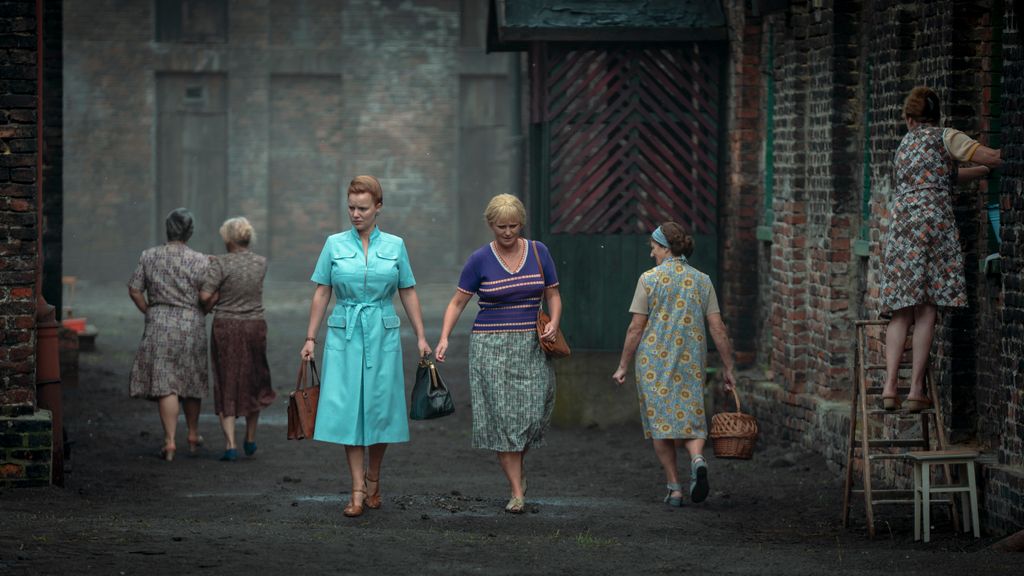
This is where the frequent comparisons to HBO’s Chernobyl arise. Like that acclaimed miniseries, Lead Children examines institutional failure and the human cost of secrecy in a authoritarian system. Both draw from real disasters involving invisible threats—radiation in one, heavy-metal contamination in the other—and both highlight whistleblowers who challenge the status quo at great personal cost. Chernobyl focused on the immediate catastrophe and heroic sacrifices; Lead Children explores a slower, more pervasive poison, where the damage accumulates over years rather than hours. The emotional impact is similar: a lingering sense of horror at how preventable suffering was ignored for political or economic reasons. Critics and viewers note “shades of Chernobyl” in the haunting tone, the meticulous recreation of historical context, and the way it refuses easy catharsis.
The series also resonates with broader themes of environmental injustice and corporate accountability. It joins a lineage of “contamination dramas” that expose how powerful entities prioritize profit or stability over public welfare. Yet it stands out for shedding light on a lesser-known chapter of Polish history. The real Dr. Jolanta Wadowska-Król’s efforts brought attention to the issue, leading to some interventions, though the full scale of the damage remained under-discussed for decades. By dramatizing this, the show educates while it devastates, reminding audiences that such crises are not relics of the past but echoes in ongoing global struggles with pollution and industrial harm.
Social media reactions capture the series’ polarizing pull. Many describe it as “unsettling” and “too intense to binge,” recommending viewing in small doses to process the heartbreak. Others praise its restraint—no exploitative gore, just raw human truth—and its message of courage amid systemic indifference. The quiet rise to prominence feels fitting: without hype, it relies on genuine impact to spread. As one viewer put it, it’s the kind of show that doesn’t entertain so much as confront, leaving you changed.
At around six hours total, Lead Children is compact yet profound. It demands attention and rewards it with a story that feels urgent and necessary. In an age of endless content, this is one series that lingers long after the credits roll—a testament to the power of truth-telling, even when it’s uncomfortable. If you’re drawn to thoughtful, history-rooted dramas that prioritize substance over spectacle, it’s worth the emotional investment. Just be prepared: once you start, the weight of it stays with you.