In the freezing rain-slicked streets of Oslo, where the fjord winds carry whispers of old sins and the midnight sun barely touches the shadows, a man with hollow eyes and a trembling hand lights another cigarette. His name is Harry Hole, and he is broken in ways that no badge can fix. Yet when ritualistic murders begin carving bloody patterns across the city, Harry becomes the only one who can see the devil hiding in the details. Netflix’s Jo Nesbø’s Detective Hole, released on March 26, 2026, has quietly detonated into a global phenomenon. In its first week alone, the nine-episode Norwegian crime thriller amassed a staggering 36.5 million viewing hours, rocketing to the top of Netflix charts worldwide and proving that dark, character-driven Nordic noir still possesses unmatched power to obsess audiences in the streaming age.
Adapted primarily from Jo Nesbø’s fifth Harry Hole novel, The Devil’s Star, the series plunges viewers into a labyrinth of serial murder, institutional corruption, and personal demons. Created and written by Nesbø himself, with direction from Øystein Karlsen and Anna Zackrisson, Detective Hole refuses to soften its edges. It is grim, stylish, and relentlessly twisty — a slow-burn psychological thriller that rewards patience with jaw-dropping revelations and shattering betrayals. Critics have praised its 94% Tomatometer score, calling it “twisty, stylish, and at times gloriously grim,” while fans binge it in single sittings, then immediately dissect every clue in online forums.
At the tormented heart of the story stands Tobias Santelmann as Harry Hole. Santelmann, known for intense roles in Exit and The Arctic Convoy, delivers a phenomenal, career-defining performance. Harry is the quintessential anti-hero: a brilliant homicide detective whose razor-sharp observational skills border on genius, yet he is ravaged by alcoholism, guilt, and unresolved trauma. Santelmann plays him with raw physicality — the slight tremor in his hands, the thousand-yard stare, the way his body seems to collapse inward even as his mind races ahead of everyone else. There is a quiet desperation in his movements, a man who knows he is drowning but refuses to stop swimming toward the truth. Santelmann makes Harry’s self-destruction feel tragically human rather than cinematic cliché. His chemistry with the rest of the cast crackles, especially in scenes where vulnerability briefly surfaces before the walls slam back down.
Opposite him, and stealing nearly every scene he inhabits, is Joel Kinnaman as Tom Waaler — Harry’s long-time adversary and a deeply corrupt fellow detective. Kinnaman, bringing the same dangerous charisma he showcased in The Suicide Squad and Altered Carbon, turns Waaler into a magnetic villain. Suave, ruthless, and always one step ahead in the game of power, Waaler represents everything rotten within the Oslo police force. Kinnaman layers the character with seductive menace; you almost understand why some might be drawn to his dark orbit. The cat-and-mouse tension between Harry and Waaler forms one of the series’ most electric threads, blending professional rivalry with personal hatred in ways that feel visceral and lived-in.
Supporting the leads is a stellar ensemble of Scandinavian talent. Pia Tjelta brings nuanced warmth and complexity as Rakel Fauke, Harry’s on-again, off-again love interest and a lawyer entangled in the chaos. Her performance adds emotional stakes, showing the toll Harry’s demons take on those who dare to care for him. Ellen Helinder as forensic expert Beate Lønn provides quiet intelligence and subtle strength, while actors like Anders Danielsen Lie, Ane Dahl Torp, and others flesh out a world of morally gray colleagues, suspects, and victims. Even pop singer Dagny makes a memorable appearance, adding texture to the ensemble. The entire cast feels authentically rooted in Oslo’s moody atmosphere, where everyone carries secrets and no one is entirely innocent.
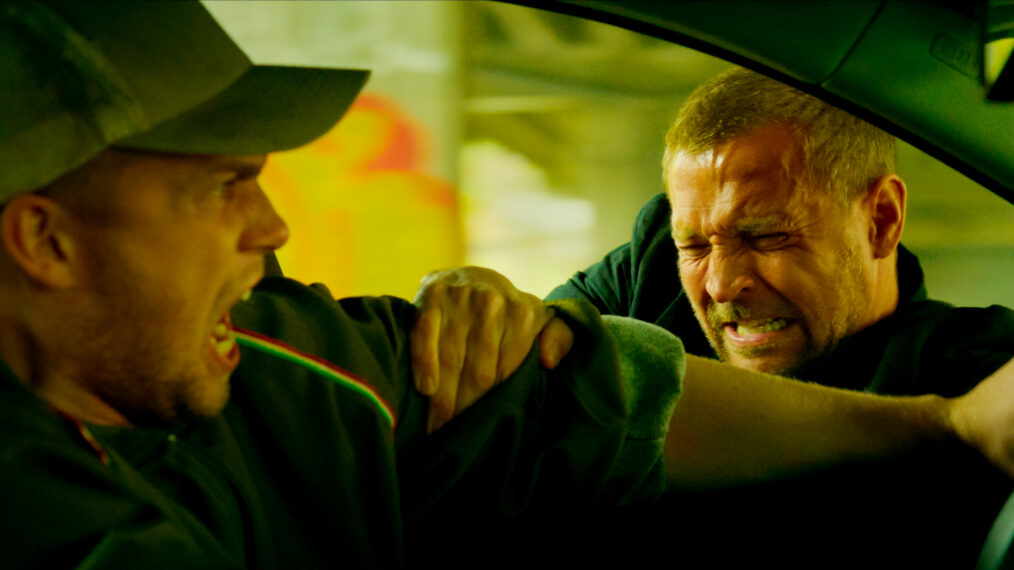
The core narrative unfolds across nine taut episodes. A series of ritualistic killings rocks Oslo: victims marked with eerie symbols, bodies arranged in deliberate, almost artistic patterns. Harry, recently sidelined after a traumatic incident, is pulled back into the fray. What begins as a hunt for a serial killer quickly spirals into something far more insidious — a web of corruption that reaches high into the police department itself. Harry must battle not only the murderer but also Tom Waaler, whose hidden agenda threatens to destroy everything Harry holds dear. The story weaves personal tragedy, professional betrayal, and city-wide terror into a relentless pressure cooker.
What elevates Detective Hole beyond standard Nordic noir are its masterful plot twists and psychological depth. Early episodes build suspense through meticulous procedural work — Harry noticing tiny details others miss, like a misplaced button or an offhand remark that reveals volumes. Then the rug is yanked away. One major revelation reframes an entire suspect pool, turning apparent victims into calculated players. Another exposes the true nature of the “serial” killings: they are not the work of a lone madman driven by ritualistic compulsion, but a meticulously staged cover-up by someone with deeply personal motives. The killer, ultimately revealed as Willy Barli, has orchestrated the murders to mask the killing of his own wife while framing her lover. This twist lands with devastating precision, forcing viewers to reconsider every clue and every interaction.
Even more shocking is the handling of Tom Waaler’s arc. While Willy meets his end in a tense, rain-soaked confrontation, Waaler emerges as the true long-term threat — a corrupt force whose influence lingers like poison. The season finale delivers a brutal cliffhanger that promises even darker territory in future seasons, leaving Harry more isolated and the city more fractured than ever. Betrayals come from unexpected directions; alliances crumble in heartbreaking fashion. The series never relies on cheap shocks — each twist feels organically earned from character choices and carefully planted details.
Visually, Detective Hole is a feast of moody cinematography. Oslo’s icy blues, concrete brutalism, and flickering neon create an oppressive yet beautiful backdrop that mirrors Harry’s fractured psyche. The score, featuring contributions from Nick Cave and Warren Ellis, adds haunting layers of dread and melancholy. Violence is unflinching but purposeful, never gratuitous. Sex and intimacy scenes carry raw emotional weight rather than glamour. The nine-episode structure allows the story to breathe while maintaining breakneck momentum in its latter half.
What makes the series’ explosive success so remarkable is how quietly it built its hype. No massive marketing blitz, no celebrity cameos dominating headlines — just word-of-mouth and the undeniable pull of superior storytelling. In an era of loud, effects-heavy spectacles, audiences have embraced this character-driven thriller that trusts viewers to follow intricate plots and moral ambiguity. The 36.5 million hours watched in week one speak to its bingeability: once you start, the need to know what happens next becomes compulsive.
Santelmann’s Harry Hole joins the pantheon of great tormented detectives — a Nordic cousin to Harry Bosch, yet distinctly his own. Kinnaman’s Waaler is a villain you love to hate and can’t stop watching. Together, they anchor a story about how far one man will go to chase justice when the system itself is rotten. The supporting cast ensures the world feels alive and dangerous, full of people making impossible choices under pressure.
Detective Hole doesn’t offer easy catharsis or tidy resolutions. It leaves you unsettled, questioning who the real monsters are and how much of ourselves we would sacrifice in the name of truth. As the final frame fades on Harry standing alone in the cold Oslo night, cigarette glowing like a dying ember, the message is clear: the devil isn’t always in the shadows — sometimes he wears a badge and smiles like an old friend.
In just one week, Netflix’s dark Norwegian import has shattered expectations and reminded the world why Jo Nesbø’s storytelling continues to captivate. With its jaw-dropping twists, raw performances, and unrelenting suspense, Detective Hole isn’t just another crime thriller. It’s a full-throttle obsession that has hooked millions — and left them desperately craving more. The rain keeps falling in Oslo. Harry Hole keeps hunting. And viewers around the globe can’t look away.
News

“THE ENDING LEFT EVERYONE SHOOK!” — Netflix’s “The Cleaning Lady” Delivers an Emotional Freefall and a Finale That Changes Everything
In the neon-drenched underbelly of Las Vegas, where the desert wind carries the scent of bleach and blood in equal measure, a woman in rubber gloves kneels on a marble…

“The Mentalist” Is Surging on Netflix 11 Years Later — Why Simon Baker’s Charismatic Mentalist and That Slow-Burn Hunt for Red John Still Hook Viewers Like No Other Crime Show
In the golden haze of a California afternoon, where palm trees sway like indifferent witnesses and the Sacramento skyline glimmers with false promises, a man in a rumpled suit leans…

A Dark, Twisted Psychological Thriller Where Jason Bateman’s Slow-Burn Despair Meets David Harbour’s Explosive Rage, With Linda Cardellini as the Dangerously Captivating Woman at the Center of a Marriage-Shattering Disaster.
In the hazy glow of a St. Louis evening, where the Mississippi River whispers secrets to the tired suburbs, two men—lifelong friends bound by the quiet routines of local television—stumble…

“He Was Warned She Didn’t Really Like Him… But He Still Went” — Best Friend’s Chilling Warning Ignored as 15-Year-Old Miles Young Walked Straight Into a Deadly Trap
On the evening of March 12, 2026, in southwest Springfield, Greene County, Missouri, 15-year-old Miles Young climbed into a black Mercedes, excited about what he believed was a long-awaited meet-up…

A Celebrity in the Tent… Then Silence: Why Channel 4 Has Pulled the Scott Mills Bake Off Episode
In the warm, flour-dusted world of The Great British Bake Off, where celebrities swap microphones and spotlights for aprons and rolling pins to raise money for charity, one episode was…

“I Never Thought My Mistake Would Take Such a Beautiful, Talented Girl” — Taxi Driver Breaks Down in Tears Over Lucinta Evans’ Death
In the early hours of 28 March 2026, in the bustling suburb of Martintar near Nadi International Airport in Fiji, a young woman’s life ended in a split-second of chaos…
End of content
No more pages to load