The series, now streaming all three seasons on Netflix after its quiet addition in late 2025, has surged in popularity, climbing charts and sparking heated discussions among true-crime and thriller enthusiasts. Originally premiering on Amazon Prime Video and AXN starting in 2017, Absentia ran for three gripping seasons totaling 30 episodes before concluding in 2020. Its recent Netflix arrival has introduced it to a fresh wave of viewers, many of whom are stunned by the intensity and emotional depth of a show that feels tailor-made for binge-watching marathons.
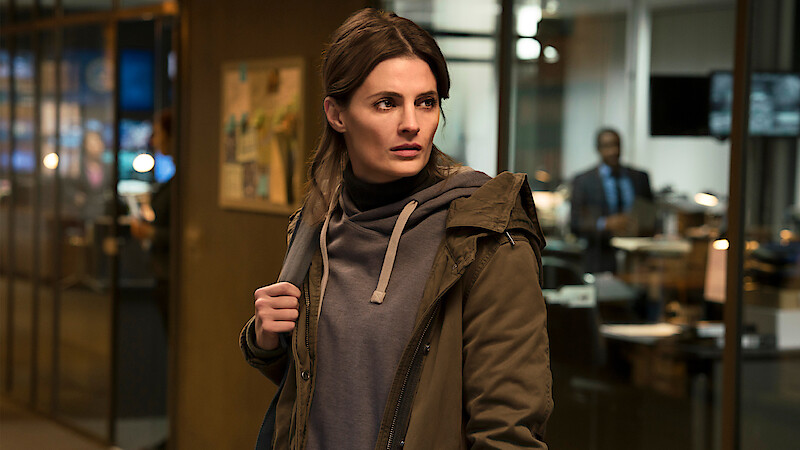
At the center of this tense psychological thriller is FBI Special Agent Emily Byrne, portrayed with fierce intensity by Stana Katic. Best known for her charismatic role as Detective Kate Beckett on Castle, Katic delivers a career-defining performance here as a woman literally pulled back from the dead. The story begins with Emily vanishing while pursuing one of Boston’s most notorious serial killers. Declared dead in absentia after years without a trace, she is presumed gone forever. Six years later, Emily is discovered alive in a remote cabin in the woods—battered, malnourished, and suffering from severe amnesia. No memory of her captivity, no clear recollection of the torment she endured. Her return shatters the fragile new life her husband, Nick Durand (Patrick Heusinger), has built. He has remarried Alice (Cara Theobold), who now helps raise their son Flynn, and Emily’s reappearance unleashes a cascade of grief, confusion, and danger.
The core mystery revolves around who abducted Emily, why they held her for so long, and what twisted agenda drove the years of psychological and physical abuse. As Emily fights to reclaim her identity, family, and place in the FBI, she becomes entangled in a fresh wave of murders that bear eerie similarities to the case she was investigating before her disappearance. Suspicion quickly falls on her—evidence mounts suggesting she might be the killer, or at least connected to the crimes. Forced to go on the run, Emily operates in the shadows, piecing together fragmented memories while dodging both law enforcement and a shadowy enemy who seems always one step ahead.
The series excels in its layered storytelling, blending high-stakes action with deep psychological exploration. Each season escalates the conspiracy: Season 1 uncovers the immediate aftermath of Emily’s return and the shocking identity behind her captor—revealed in a jaw-dropping twist as someone close, masquerading under a false persona. The revenge motive ties back to a childhood trauma Emily unknowingly played a part in, adding a personal, devastating layer to the thriller elements. Viewers are kept guessing through red herrings, unreliable memories, and shifting alliances, with every revelation peeling back another layer of deception.
Season 2 dives deeper into conspiracies involving experimental serums, medical experiments, and betrayals from within Emily’s inner circle. Alice’s role evolves in unexpected ways, blurring lines between victim and accomplice in a subplot that leaves audiences reeling. The tension builds around Emily’s struggle to separate truth from trauma-induced hallucinations, culminating in confrontations that test her sanity and resolve.
By Season 3, the stakes reach their peak. The narrative shifts partially to international waters, with Emily pursuing leads that expose a broader network of corruption and vengeance. The finale delivers one of the most polarizing and talked-about conclusions in recent thriller television. In an elaborate scheme to protect her loved ones from ongoing threats, Emily orchestrates a dramatic fake death for Nick and Flynn via a house explosion. The explosion allows them to escape the danger and start anew, but it forces Emily into permanent separation from her family. She chooses exile, relocating to Europe where she begins a new chapter as a covert operative, hinting at a vigilante future while reconnecting with a potential ally from her past. The final image—Emily walking into an uncertain but empowered tomorrow—leaves fans divided: some praise it as a bold, bittersweet send-off that honors her resilience, while others debate whether it feels earned or abrupt.

Katic’s performance anchors the entire run. She portrays Emily as a complex survivor—relentless and resourceful yet profoundly vulnerable. The physical toll of her captivity is visible in every scene, from trembling hands during interrogations to the haunted look in her eyes when memories surface. Critics and fans alike highlight how Katic balances strength with fragility, making Emily’s journey feel authentic and heartbreaking. Supporting turns, particularly from Heusinger as the conflicted Nick and Theobold as the increasingly complicated Alice, add emotional weight to the family drama at the show’s core.
Production-wise, Absentia was filmed primarily in Bulgaria, standing in for Boston and later European settings. This choice gives the series a gritty, atmospheric edge—claustrophobic cabins, shadowy woods, and urban underbellies feel oppressively real. While not a massive-budget blockbuster (estimates suggest a modest scale compared to high-end Netflix originals), the show’s tight focus on character and suspense makes every dollar count in building tension.
Early reactions to its Netflix resurgence have been electric. Fans describe screaming at the screen during key twists, praising the relentless pacing and shocking betrayals. Many call the ending “mind-blowing” or “devastating in the best way,” with debates raging over character choices and whether Emily’s sacrifice provides true closure. The series’ themes—trauma recovery, fractured families, the cost of justice—resonate deeply, especially in a post-pandemic era where trust and identity feel fragile.
Absentia may not have the glossy production values of Netflix’s biggest hits, but its raw intensity, stellar lead performance, and willingness to embrace dark, unpredictable turns make it a hidden gem that’s finally getting the spotlight it deserves. In a sea of formulaic thrillers, this saga stands out for refusing easy answers and delivering a finale that lingers, forcing viewers to question everything they thought they knew about survival and second chances.