In the rain-slicked shadows of Twickenham Green, where the Thames murmurs secrets to the night, a young French au pair named Amélie Delagrange took her last breath on a summer evening in 2004. Bludgeoned with brutal efficiency, her body lay crumpled amid the dew-kissed grass, a stark punctuation to a life full of promise. No witnesses, no forensics, no mercy—just the echo of a hammer’s swing and the fading pulse of a 22-year-old dream deferred. This wasn’t fiction; it was the grim reality that ignited one of Britain’s most harrowing manhunts, a pursuit that would unearth not one killer, but a serial predator whose shadow stretched across a decade of terror. Fast-forward two decades, and that nightmare has been reborn on screen in ITV’s unflinching true-crime anthology Manhunt, with Martin Clunes— the affable, fish-out-of-water physician from Doc Martin—stepping into the boots of Detective Chief Inspector Colin Sutton. Viewers are reeling, their feeds flooded with declarations of shock: “Clunes isn’t just acting; he’s possessed,” one X post raves, while another gasps, “This is better than Doc Martin—darker, deeper, devastating.” As the series resurfaces on streaming platforms amid a fresh wave of binges, Manhunt isn’t merely a procedural; it’s a gut-wrenching excavation of evil’s banality, a tension-riddled reminder that justice often arrives not with sirens blaring, but with the quiet grind of clipboards and cold calls. And with Clunes at its haunted heart, it’s the British drama everyone’s devouring before the credits demand a reckoning.
Clunes, 63 and still carrying that lanky, everyman awkwardness that made Martin Ellingham such a prickly delight, has long been pigeonholed as comedy’s king of discomfort. From the slobbish antics of Men Behaving Badly in the ’90s to the Cornish curmudgeon of Doc Martin—a role that spanned 18 years and 89 episodes, turning Portwenn into a global guilty pleasure—his screen persona was built on wry exasperation and gentle charm. Fans adored the gruff vulnerability, the way he’d stammer through social niceties only to savage a scalpel. But Manhunt, which bowed in 2019 and returned for a second season in 2021, shatters that mold with the force of a sledgehammer to glass. As Sutton, Clunes vanishes into a man forged in the Met’s unforgiving furnace: tall and unassuming in rumpled suits, nursing endless coffees from a battered thermos, his eyes—those famously squinty portals of sarcasm—now hollowed by the weight of the dead. “It’s like watching a different actor,” a Reddit thread buzzes, with users swapping side-by-sides of Doc’s stethoscope fumbles against Sutton’s stakeout stares. “Martin always had range, but this? It’s raw, it’s relentless. He’s not charming the room anymore; he’s clearing it.”
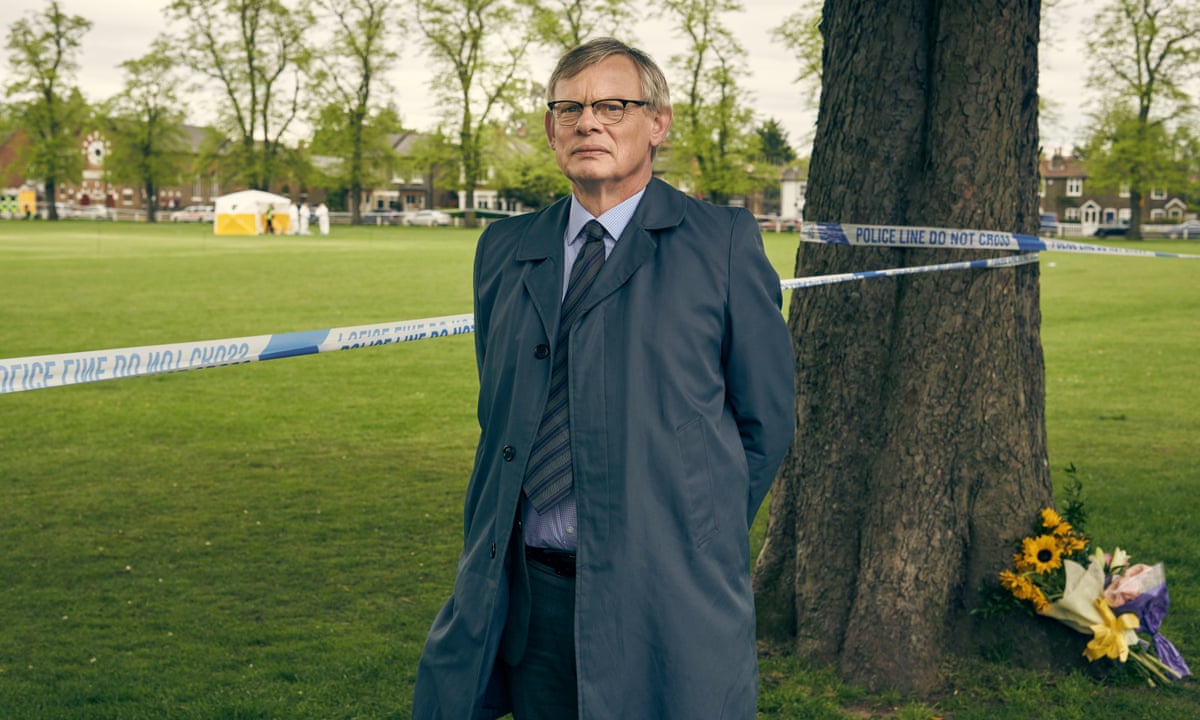
The series, an adaptation of Sutton’s own memoirs penned with the precision of a case file, unfolds across two standalone seasons, each a taut, three- or four-part descent into real-life abyss. Season 1, subtitled simply Manhunt, plunges us into the Delagrange investigation, a case that began as a baffling standalone but snowballed into Sutton’s magnum opus. Appointed Senior Investigating Officer on his first major gig out of the Surrey suburbs, Sutton inherits a void: no DNA, no CCTV goldmine, just a lone witness spotting a white van vanishing into the dusk. What follows is a masterclass in procedural drudgery elevated to pulse-quickening artistry—endless CCTV trawls in dimly lit ops rooms, door-knocks in rain-lashed estates, and the soul-sucking sift through witness statements that yield more red herrings than revelations. Clunes embodies Sutton’s dogged alchemy: turning frustration into focus, as he links Amélie’s fate to two prior unsolved bludgeonings. First, 19-year-old Marsha McDonnell, brained outside a Twickenham bus stop in 2003 while clutching groceries from her waitressing shift. Then, the gut-wrench of 13-year-old Milly Dowler, snatched from a Walton-on-Thames rail station in 2002, her schoolbag found abandoned blocks away, her body weeks later in a Surrey wood.
The horror isn’t sensationalized—no gore-soaked montages or villainous monologues—but rendered with a chilling intimacy that honors the victims. We linger on Amélie’s parents, played with shattering restraint by Ania Marson and Jude Akuwudike, as they plant a tree at the murder site, their grief a silent storm amid the press scrum. Marsha’s family, portrayed by a luminous Sara Gregory, navigates the agony of open-casket planning, their whispers of “She was so full of life” cutting deeper than any chase scene. And Milly? Her arc is the series’ emotional nadir: a bubbly teen sketching dreams of journalism, her disappearance unraveling a nation already raw from post-9/11 paranoia. Sutton’s team— a crackerjack ensemble led by Stephen Wight’s steadfast DS Clive Grace and Katie Lyons’ intuitive DS Jo Brunt—mirrors the real-life grind, their banter a fragile bulwark against burnout. “We’re not chasing ghosts; we’re chasing leads,” Sutton snaps during a midnight briefing, his voice cracking just enough to betray the toll. Clunes nails the quiet heroism: a man who cancels family holidays for stakeouts, whose marriage to the steadfast Louise (Claudie Blakley, all warm steel) frays under the unspoken strain. One scene, where he confesses over a tepid tea, “I see their faces when I close my eyes,” lands like a confession booth whisper, Clunes’s face folding into a map of unspoken scars.
As the net tightens on Levi Bellfield—portrayed with oily menace by Celyn Jones, a chameleon who morphs from wheeler-dealer car trader to predatory phantom—the series pivots from puzzle to predator. Bellfield, a balding brute with a Ford Galaxy van and a grudge against the world, emerges not as a cartoon ghoul but a mundane monster: abusive to his daughters, charming to barmaids, his rage a slow poison seeping into lonely women. Jones’s performance is a slow-burn revelation—his Bellfield smirks through interviews, eyes darting like cornered rats, his denials laced with the casual cruelty of a man who’s always one step from the abyss. The arrest, staged in a Little Mogden sewage works raid at dawn, crackles with restrained fury: Sutton’s team in hi-vis, barking orders amid the stench, Bellfield’s world collapsing in a hail of zip-ties. But victory is bittersweet; the 72-hour interrogation clock ticks like a bomb, forcing Sutton to unearth links to attempted murders and a pattern of predatory prowls. “He’s not done,” Sutton mutters, poring over files till dawn, Clunes’s hands trembling on a cigarette he won’t light. The finale, a courtroom coda laced with victim impact statements, doesn’t glorify closure—it underscores the hollowness, families forever altered, Sutton left staring at rain-streaked windows, wondering if the hunt ever truly ends.
Season 2, The Night Stalker, shifts the spotlight to a different demon: the 17-year reign of Delroy Grant, a silver-tongued Jamaican immigrant who, from 1992 to 2009, terrorized southeast London’s elderly in a spree of burglaries, rapes, and assaults. Over 100 attacks, Grant—known as the Night Stalker for his nocturnal raids—targeted isolated pensioners, slipping through cracked windows like a thief in the fog, his violations leaving survivors shattered in their own beds. Sutton, fresh off the Bellfield triumph, is tapped to review Operation Minstead, a bloated, under-resourced probe that’s burned through millions and yielded zilch. Clunes returns as a wearier Sutton, his thermos now a crutch for insomnia, his marriage a minefield of missed anniversaries. “We’ve been chasing shadows for years,” he growls to his skeptical team, including a returning Wight and new blood like Arsher Ali’s DS Paul Langley, whose fresh eyes spark the revival.
This season delves deeper into institutional rot: budget-slashing brass dismissing DNA leads as “witch hunts,” jurisdictional turf wars hobbling cross-borough pursuits, and the quiet racism that once fixated on a phantom white suspect. Grant, brought to life by an unnervingly affable Paterson Joseph, is a chilling inversion—doting grandfather by day, phantom by night, his attacks a grotesque perversion of care, leaving 90-year-olds like the resilient Dorothy (an unforgettable Eileen Davies) to rebuild from ruins. The horror mounts through survivor testimonies: whispered horrors in care homes, forensic recreations that turn stomachs without spilling blood. Sutton’s breakthrough—a tireless re-canvass yielding a glove print match—unleashes a dragnet of dawn raids and decoy ops, Clunes conveying the exhilaration laced with dread. “He’s human,” Sutton reflects post-arrest, staring at Grant’s mugshot, “and that’s the worst part.” The finale, a montage of convictions and victim reunions, circles back to Sutton’s core creed: “Everyone matters, or no one does.” It’s a mantra Clunes delivers with a quiet ferocity that elevates the series beyond genre tropes.
Critics and fans alike have crowned Manhunt a triumph, its 8.7 million premiere-night viewers for Season 1 making it ITV’s biggest drama launch since Broadchurch. The Guardian lauded its “sober responsibility,” praising Clunes’s “fleetness and lightness of touch” in service of gravity. The Independent hailed Season 2 as “superb, compulsive viewing,” a procedural that humanizes the hunt without cheap thrills. On Rotten Tomatoes, it holds a 100% fresh score for its unflinching authenticity—no glamorized gore, just the grind of good policing amid systemic cracks. Viewers echo the fervor: “Clunes as Sutton is magnetic—methodical, haunted, heroic,” one IMDb review gushes, while another confesses, “Binged both seasons in a weekend; slept with the lights on.” Social media swarms with memes juxtaposing Doc Martin’s misanthropy against Sutton’s stoicism, captions reading “From prescribing pills to prescribing justice.” Even Sutton himself, now retired and campaigning for detective training reforms, has endorsed the portrayal: “Martin’s captured the essence—the boredom, the breakthroughs, the burden.”
Yet Manhunt‘s power lies in its restraint, a deliberate dodge of true-crime sensationalism. Creators Ed Whitmore and James Hawes, drawing from Sutton’s firsthand accounts, prioritize the ensemble over the ego: the analysts poring over maps till their eyes blur, the families whose lives orbit the void. Filmed on location in London’s misty suburbs—Twickenham’s greens now cordoned sets, Walton’s paths echoing with phantom footsteps—the series evokes a palpable unease, its cinematography by Ed Rutherford bathing boardrooms in sickly fluorescents and stakeouts in sodium-lamp gloom. Composer Philip Miller’s score, a sparse thrum of strings and silences, amplifies the dread without overkill. And Clunes? He’s the linchpin, his transformation a revelation that proves comedy’s clowns harbor tragedians’ souls. “I resisted detective roles for years,” he admitted in a pre-premiere chat, “but Colin’s story demanded truth over tropes.” That truth resonates in every furrowed brow, every exhausted exhale—a performance that’s not just better than Doc Martin, but a reinvention.
In an era bloated with glossy whodunnits and podcast-fueled potboilers, Manhunt stands as a beacon of grounded grit, its real-life roots a sobering salve for our binge appetites. As Amélie’s tree sways in the wind, Milly’s laughter haunts the ether, and survivors like Dorothy reclaim their nights, the series whispers a hard-won hope: monsters fall, not with fanfare, but with persistence. Stream it now—on ITVX, BritBox, or Acorn TV—before the algorithm buries it. But beware: once Sutton’s thermos steams on screen, sleep becomes the real suspect. Clunes has left us speechless, not with laughs, but with the weight of what we’ve witnessed. In London’s labyrinth of light and loss, the hunt never truly ends—and neither does the chill.