The season one finale of A Knight of the Seven Kingdoms delivered no grand clash of armies or fiery dragon spectacle. Instead, it closed with a far more devastating weapon: quiet grief, unspoken doubts, and a single, monumental lie. In the aftermath of the brutal Trial of Seven that claimed Prince Baelor’s life, the episode shifted focus to the fractured Targaryen family, particularly Prince Maekar Targaryen, portrayed with steely precision by Sam Spruell. Through his recent reflections, Spruell has illuminated the layers beneath Maekar’s stoic facade, revealing a man not just mourning a brother but confronting the collapse of everything he thought his lineage represented.
Adapted from George R.R. Martin’s The Hedge Knight, the first season follows Ser Duncan the Tall (Peter Claffey), a humble hedge knight, and his young squire Aegon “Egg” Targaryen (Dexter Sol Ansell), the disguised prince who becomes his unlikely companion. The story builds to the infamous tourney at Ashford Meadow, where accusations of assault escalate into a Trial of Seven—a massive melee involving seven knights on each side. Maekar, Egg’s father and a proud, ambitious prince, fights alongside his volatile son Aerion and against Dunk, whom he views with suspicion. Tragedy strikes when Maekar’s mace fatally wounds his elder brother Baelor, the beloved heir apparent, in what Maekar insists was an accident ordained by the gods.
This moment haunts the finale. Maekar, already burdened by raising three troubled sons—Daeron the drunken dreamer, Aerion the cruel showman, and young Egg—now carries the guilt of fratricide. Spruell describes Maekar’s grief as suffocating rather than explosive. It’s not loud sobs or raging outbursts; it’s a heavy, internal weight that cracks the iron discipline he’s maintained throughout the season. Maekar isn’t merely lamenting a lost sibling or the political fallout; he’s grieving the future he once believed was secure. Baelor represented stability, wisdom, and the promise of a strong Targaryen reign. With him gone, Maekar faces the harsh reality that his own line—flawed, fractured, and now tainted by his hand—may never measure up. Everything he touches seems to unravel, leaving him vulnerable in ways his rigid exterior rarely allows.
Spruell emphasizes Maekar’s susceptibility to self-delusion. In conversations with Dunk, Maekar clings to the notion that the gods know the truth, absolving him of intent even as whispers of murder spread. This isn’t outright denial but a desperate rationalization, a way for a man of power to cope with irreversible consequences. The actor notes how rulers throughout history have invoked divine will to justify their actions, and Maekar fits that pattern—corrupt power masking deep insecurity. Yet beneath the justification lies genuine remorse. At Baelor’s funeral, the camera lingers on Maekar’s face, capturing silent tears and a father’s quiet despair as he holds Egg close. It’s a rare glimpse of vulnerability from a character defined by pride and control.
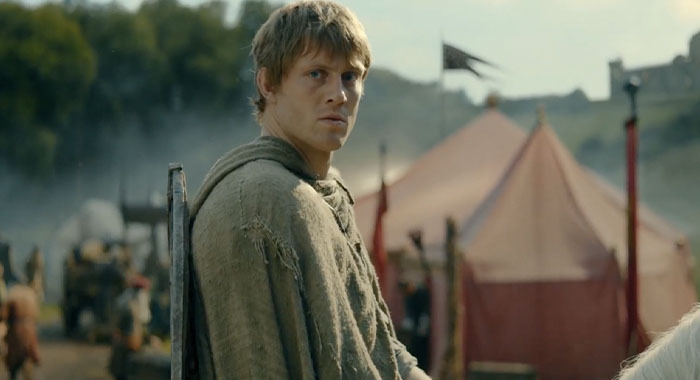
Then comes Egg’s lie—the twist that transforms personal tragedy into potential dynasty-shaking crisis. In the episode’s closing moments, Egg reunites with Dunk on the road, claiming his father has granted permission for him to continue squiring under the hedge knight. Dunk, disillusioned by princely intrigue and determined to teach Egg about the real Westeros beyond castle walls, accepts. But the post-credits scene reveals the deception: Maekar, departing Ashford with his retinue, frantically searches for his missing son before erupting in fury—”Where the fuck is he?” The permission was never given.
Spruell breaks down the profound hurt this betrayal inflicts on Maekar. Egg, his youngest and last real chance at paternal redemption, chooses a lowborn impostor knight over his own blood. This isn’t mere rebellion; it’s a judgment on Maekar’s failures as a father. Spruell explains that Egg sees in Dunk a natural, instinctive wisdom and moral clarity that Maekar can never match. The boy wants to become someone honorable, grounded, and just—not another Targaryen consumed by ambition or madness. By running away and lying about it, Egg rejects the royal path Maekar desperately wants him to follow. For a man already reeling from killing his brother and watching his other sons falter, this abandonment is “unbelievably upsetting.” It’s the final confirmation that Maekar is, in his own eyes, a failure as a parent.
The lie’s implications extend far beyond family drama. In Westeros, where perception shapes power, suspicion alone can ignite conflict. Maekar may not yet know the full extent of Egg’s deception, but Spruell suggests he senses a shift—a hesitation, a fracture in loyalty. That flicker in Maekar’s eyes during their earlier exchanges could be pure grief, or it could be dawning realization. Fans speculate wildly: Did Maekar catch the subtle evasion? Is the anger in the final scene fueled by more than just a missing child? If he uncovers the truth, the fallout won’t be emotional tears; it’ll be political reckoning. Maekar, already positioned as a potential successor after Baelor’s death, might view Egg’s actions as disloyalty that threatens Targaryen unity.
This change from Martin’s novella adds tension. In the original The Hedge Knight, Maekar reluctantly agrees that Egg should travel the realm to learn humility away from court life, though not explicitly under Dunk’s wing in the same way. The show’s version amplifies the drama with Egg’s outright fabrication, creating a cliffhanger that promises consequences. Showrunner Ira Parker has defended the alteration, calling it character-consistent—Egg has a history of running away and bending truths—and assuring fans it will be addressed in future seasons without derailing the broader saga.
Spruell himself won’t return for season two, which adapts The Sworn Sword and focuses more on Dunk and Egg’s independent adventures. Maekar’s arc in the first season feels complete in its tragedy, though his shadow looms large. As future stories unfold, the lie could ripple outward, influencing alliances, inheritances, and the path to the Iron Throne that Egg will one day claim as Aegon V.
The finale’s power lies in its restraint. No dragons roar, no swords clash in vengeance. Instead, silence descends—broken only by Maekar’s anguished shout—and a lie hangs in the air like smoke. It’s a reminder that in Westeros, the most dangerous wounds are often invisible: fractured trust, unspoken guilt, and the quiet choices that redefine destinies. Maekar’s grief simmers beneath his unreadable stare, Egg’s deception sets a new course, and the realm edges closer to the reckonings that define Targaryen history. Season two may not feature Maekar on screen, but his pain—and the fracture it represents—will echo long after the credits roll.