In a year when many believed the peak of atmospheric, childhood-haunted TV horror had passed with Stranger Things, HBO’s IT: Welcome to Derry arrived like a nightmare made flesh, shattering expectations and earning widespread acclaim as the scariest television event of 2025. Premiering on October 26, 2025, on HBO and Max (with weekly episodes through December), this eight-episode first season—developed by Andy Muschietti, Barbara Muschietti, and Jason Fuchs—dives deep into Stephen King’s cursed town of Derry, Maine, set in 1962, 27 years before the events of the 2017 and 2019 IT films. Viewers and critics alike have declared it darker, more brutal, and genuinely terrifying in ways Stranger Things only flirted with—no comforting 80s nostalgia, no safety nets of humor or friendship triumphs, just pure, skin-crawling dread that forces pauses to catch one’s breath.
The series expands on the mythology from King’s 1986 novel It, drawing from Mike Hanlon’s historical interludes to explore Pennywise the Dancing Clown’s (Bill Skarsgård) ancient origins and the town’s cyclic evil. It follows a new ensemble: a Black military family led by Leroy Hanlon (Jovan Adepo) and his wife (Taylour Paige), who relocate to Derry with their young son just as children begin vanishing again. As the Hanlons and a group of local kids confront the supernatural horror, the show weaves in Derry’s long history of disappearances, racism, and denial—portraying a community that has “learned to live with evil,” both otherworldly and human. Pennywise, reprised by Skarsgård in his most unhinged form yet, appears in grotesque disguises (including a zombified Uncle Sam) and unleashes visceral, gore-heavy sequences that subvert expectations.
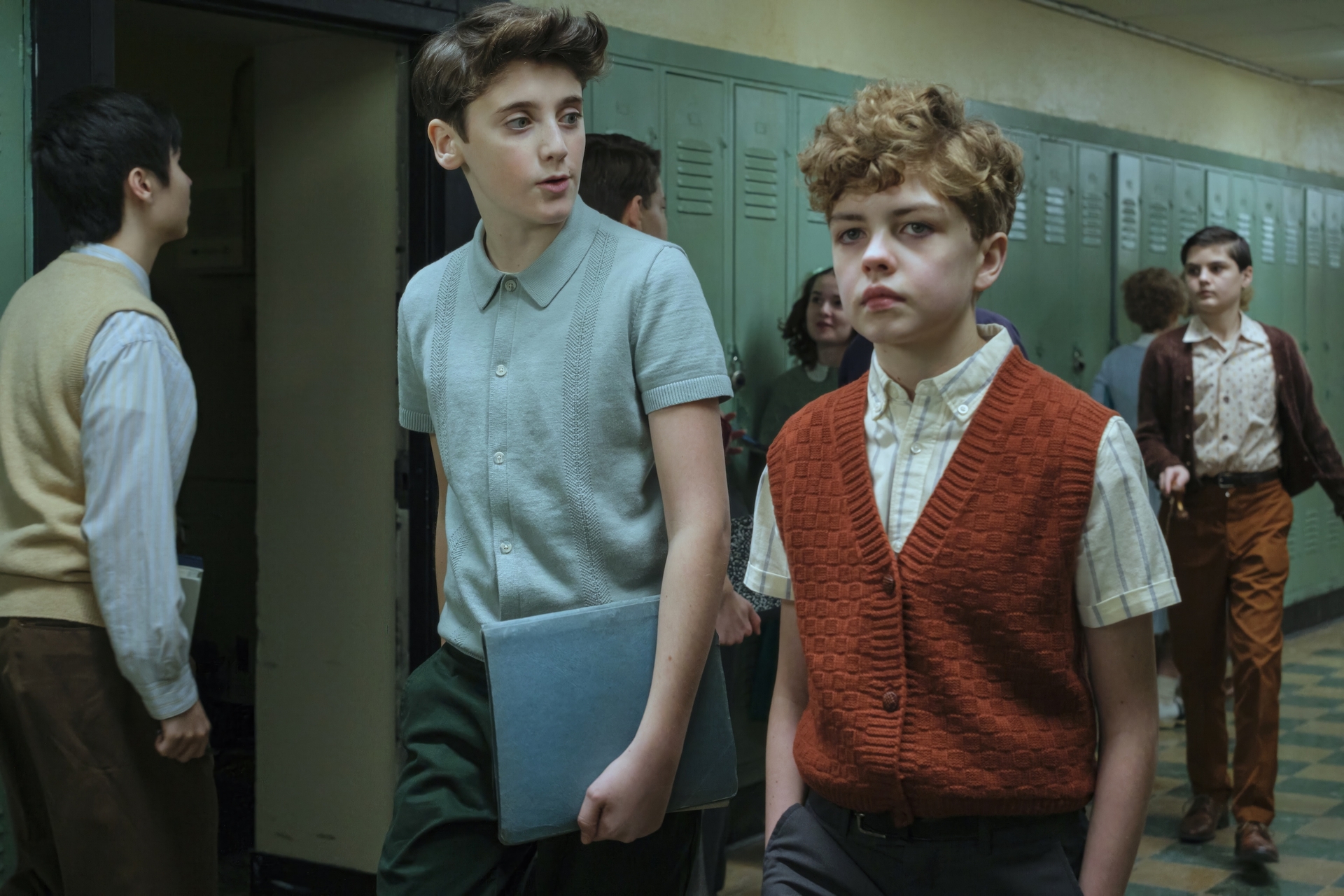
Unlike Stranger Things‘ blend of sci-fi adventure and retro charm, Welcome to Derry commits fully to horror. It features shocking brutality—children are not spared, with early episodes subverting the “lovable kids vs. monster” trope by delivering ruthless kills that echo King’s merciless style. Scenes of sewer chases, graveyard pursuits, and a vigilante attack on the Black Spot (a historical Black nightclub in Derry) build relentless tension, culminating in a snowy, gruesome finale that left audiences stunned. Viewers report pausing episodes to recover, with one describing a particular Pennywise reveal as “the jumpscare to end all jumpscares.” Skarsgård’s performance—creepy smiles, elongated limbs, and psychological torment—has been hailed as generational, elevating the clown beyond the films.
The cast shines: Adepo and Paige bring grounded humanity to the Hanlons, while young performers like Blake Cameron James and Clara Stack capture the terror of facing an ancient entity. Supporting roles from Chris Chalk, James Remar, Madeleine Stowe, and others add depth to Derry’s residents, who ignore or enable the evil. Production values are top-tier—eerie 1960s atmosphere, practical effects mixed with subtle CGI, and a haunting score that amplifies isolation and fear.
Critics have praised its confidence and fidelity to King. Mashable called it a series that “will scare the living daylights out of you,” highlighting its balance of scares and character depth. DiscussingFilm noted it restores what the movie adaptations sometimes lost: true terror rooted in Derry’s history. Metacritic scores reflect “generally favorable” reviews, with audiences on Rotten Tomatoes and IMDb echoing high marks for suspense, atmosphere, and emotional weight. One IMDb reviewer called it “a sophisticated autopsy of the American ‘Shadow,'” while others lauded its pacing and character realism.
Fan reactions have been fervent, especially amid Stranger Things Season 5’s mixed reception (criticisms of CGI overuse and pacing). Comparisons abound: Reddit threads and social media posts debate which is superior, with many arguing Welcome to Derry edges out in pure horror. “Infinitely better than Stranger Things in every way—the atmosphere, writing, horror, and emotional weight hit on a different level,” one Facebook user wrote. Forbes highlighted a standout episode as “better than Stranger Things,” crediting Skarsgård’s unleashed Pennywise. Screen Rant noted how the series subverts Stranger Things-like tropes—bikes, group dynamics—by killing off characters brutally, defying safety for kids in peril.
The show fills a void left by Stranger Things‘ lighter tone, delivering cosmic horror without dilution. It explores racism, denial, and generational trauma in Derry, making the supernatural feel grounded and inescapable. Stephen King himself praised the first episode as “terrifying” pre-premiere, and the finale drew record viewership (6.5 million in the US for one episode).
With Season 1 dubbed “Chapter One” in credits, a second season seems likely, though production timelines suggest 2027 or later. As disappointment lingers over some finales elsewhere, IT: Welcome to Derry has become the horror benchmark of the year—darker, more unflinching, and undeniably scarier. The question isn’t if it’s better than Stranger Things; it’s whether viewers are brave enough to face the dread it unleashes without looking away.