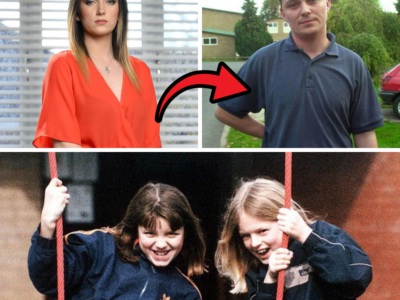
In a development that has reignited public outrage and stirred painful memories of one of Britain’s most notorious crimes, the daughter of Soham child killer Ian Huntley has spoken out about her shock and disgust after being contacted by police regarding potential financial responsibility for her father’s funeral arrangements. Samantha Bryan, 27, the only child from Huntley’s previous relationship, was left stunned when authorities asked if she wished to contribute towards or take on the costs of disposing of the body of the man convicted of murdering two 10-year-old girls in 2002.
Ian Huntley, 52, died on March 7, 2026, after being taken off life support following a brutal attack in HMP Frankland, a maximum-security prison in County Durham. On February 26, 2026, he was allegedly assaulted in the prison’s waste management workshop by fellow inmate Anthony Russell, 43, who has since been charged with his murder. Huntley suffered severe head injuries from repeated blows with a spiked metal pole or similar weapon. He was left in a critical condition, blinded and in a vegetative state, before his family — including his mother — made the decision to withdraw life support.
The Soham murders remain etched in the national consciousness as one of the most shocking cases in modern British criminal history. On August 4, 2002, best friends Holly Wells and Jessica Chapman left a family barbecue in the quiet Cambridgeshire town of Soham to buy sweets. They never returned. Huntley, then a 28-year-old school caretaker living with his girlfriend Maxine Carr (a teaching assistant at the girls’ school), lured the children into his home. He murdered them, hid their bodies in a ditch near RAF Lakenheath, and joined the public search efforts while maintaining his innocence for 13 days. The discovery of the girls’ remains sparked national horror and led to one of the largest manhunts in UK history.
Huntley was convicted in 2003 of the double murder and sentenced to two life terms with a minimum tariff of 40 years. Carr was convicted of perverting the course of justice for providing him with a false alibi. The case exposed serious flaws in vetting procedures for those working with children, prompting the Bichard Inquiry and major reforms to the Criminal Records Bureau (now DBS) system. For the families of Holly and Jessica, and the wider public, Huntley’s name became synonymous with pure evil.
Samantha Bryan has long distanced herself from her father. In the weeks following his death, she publicly expressed relief, telling media outlets that she felt a sense of closure and even suggested his ashes should be “flushed down the toilet.” She has repeatedly stated that he does not deserve any dignity in death, including a funeral or a grave, fearing it could become a site for twisted admirers. “He shouldn’t have the dignity of a funeral and grave. I will not be going. A funeral is pointless for a man like him,” she said. “I don’t want there to ever be any possibility of freaks or weirdos going to a resting place or memorial, to show him some kind of twisted respect.” She added that the “devil is waiting” for him.
Despite her clear stance, police reportedly contacted Samantha about ten days after Huntley’s death to discuss funeral arrangements. According to her account, officers asked whether she wanted to take responsibility for the costs if they exceeded the standard prison contribution. Under Ministry of Justice guidelines, prisons typically offer up to £3,000 towards “reasonable” funeral expenses for inmates who die in custody — covering basic undertaker fees, a coffin, hearse, and cremation or burial, but not extras like headstones, flowers, or wakes. If family members decline or cannot cover any shortfall, the costs can sometimes fall to the state or local authorities.
Samantha described the conversation as deeply upsetting. “They asked if I wanted to take on the responsibility, purely because I am his biological daughter,” she told reporters. She was left “disgusted” by the suggestion, feeling it forced her to confront a man she had nothing to do with in life and wanted nothing to do with in death. “I had nothing to do with him in life and now I want nothing to do with him in death,” she emphasised. She has firmly refused any involvement, stating she will not attend any service or contribute financially.

The possibility of taxpayer money being used for Huntley’s funeral had already sparked widespread anger. A petition calling for no public funds to be spent on the killer gathered tens of thousands of signatures within days. Justice Minister Sarah Sackman publicly denied that the state would automatically pay £3,000, stressing that the family had options and that no decision had been made to use public money. Fears of a “state-funded send-off” for one of Britain’s most reviled criminals fuelled heated debates on talk radio, social media, and in Parliament about the ethics of such policies.
Huntley’s family ultimately declined any state-funded service out of respect for the victims’ families. Reports indicate there will be no formal funeral, no memorial service, and no mourners. Instead, a basic cremation is expected to take place, with his ashes scattered at a secret location chosen by relatives to prevent any possibility of a public grave or shrine. A source close to the matter said: “There will be no service, no memorial, no mourners, nothing. It is as it should be.” His body reportedly remained in hospital for weeks after death while arrangements were finalised.
The episode has highlighted the complex and often uncomfortable realities surrounding the deaths of high-profile prisoners. UK policy aims to treat all deaths in custody with basic dignity and to avoid bodies remaining unclaimed indefinitely, but cases like Huntley’s test public tolerance. Many argue that notorious killers forfeit any claim to taxpayer-supported rites, while others point out that procedural fairness must apply even to the worst offenders to uphold the rule of law.
For Samantha Bryan, a beautician from Cleethorpes, Lincolnshire, the police inquiry reopened old wounds. She has maintained a low profile for most of her life, choosing not to capitalise on her father’s notoriety. Her strong rejection of any involvement underscores the profound impact the Soham murders had not only on the victims’ families but also on those connected — however distantly — to the perpetrator. She has spoken of feeling relief at his death, describing it as the end of a dark chapter.
The victims’ families have remained largely silent in recent weeks, but the renewed media focus on Huntley has inevitably stirred painful memories. Holly Wells and Jessica Chapman’s parents have previously expressed that true justice came with the original conviction and that they simply want to remember their daughters in peace, away from the monster who took their lives.
As arrangements for Huntley’s remains proceed quietly, the story of Samantha’s “disgust” at being asked to contribute financially has resonated widely. It reflects a broader societal sentiment: that some crimes are so heinous that even the most basic post-death formalities feel like an affront to decency and to the memory of the innocent.
In the end, Ian Huntley — the former school caretaker who betrayed a community’s trust in the cruellest way — will leave this world without fanfare, without public mourning, and without any dignity he denied his young victims. His daughter’s firm refusal to engage with the process stands as a final, personal rejection of the man who caused so much suffering.
The case serves as a sobering reminder of the long shadow cast by horrific crimes. Even in death, the Soham killer continues to provoke strong emotions, forcing difficult conversations about justice, forgiveness, public money, and the limits of compassion. For Samantha Bryan and countless others affected by the events of 2002, the priority remains honouring the memory of Holly and Jessica — not granting any final comforts to the man who ended their young lives.
News
Suspect Driver in Rodrigo “Rico” Montes Death Speaks Out: “It Was Just an Accident – I Never Meant to Kill Anyone”
The tragic death of 18-year-old Rodrigo “Rico” Montes, a popular senior and wrestler at River Forest High School in Hobart, Indiana, has shaken the close-knit northwest Indiana community. What began…
“They Were Laughing… Seconds Later It Was Over” — Final Ride of Best Mates Adrian Lai (14) and William Drake (15) Ends in Devastating Crash That’s Shaking Bossley Park
In a heartbreaking tragedy that has left a Western Sydney community reeling, two inseparable teenage best friends — Adrian Lai, 14, and William Drake, 15 — lost their lives in…
So Cute! Cardi B’s Youngest Daughter Blossom Steals Hearts Backstage During Her Second Sold-Out Show at Madison Square Garden in NYC
In a heartwarming moment that has fans melting across social media, Cardi B’s youngest daughter with Offset, Blossom, was spotted backstage at her mother’s second sold-out concert at New York’s…

NICKI MINAJ SHOCKS HIP-HOP WITH SURPRISE $3,000 DONATION TO TASHA K’S GOFUNDME – FUELING THE CARDI B FEUD IN A SAVAGE PLOT TWIST
In one of the most unexpected moves in recent hip-hop drama, Nicki Minaj has thrust herself into the long-running legal and personal battle between Cardi B and controversial blogger Tasha…
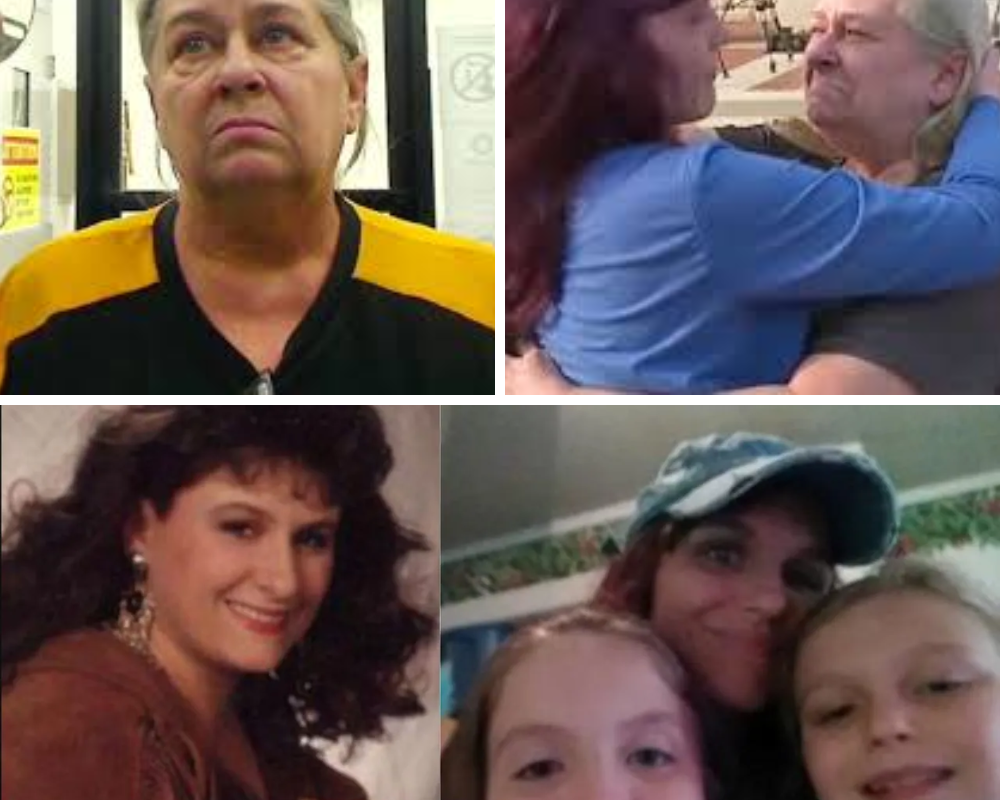
FINALLY TOGETHER: A Heart-Wrenching Reunion as North Carolina Mother Missing for 24 Years Embraces Her Daughter – Tears Flow, But the Emotional Weight Shatters Old Wounds
In a scene straight out of a Lifetime movie yet rooted in raw, complicated reality, Michele Hundley Smith, a North Carolina mother who vanished without a trace more than two…
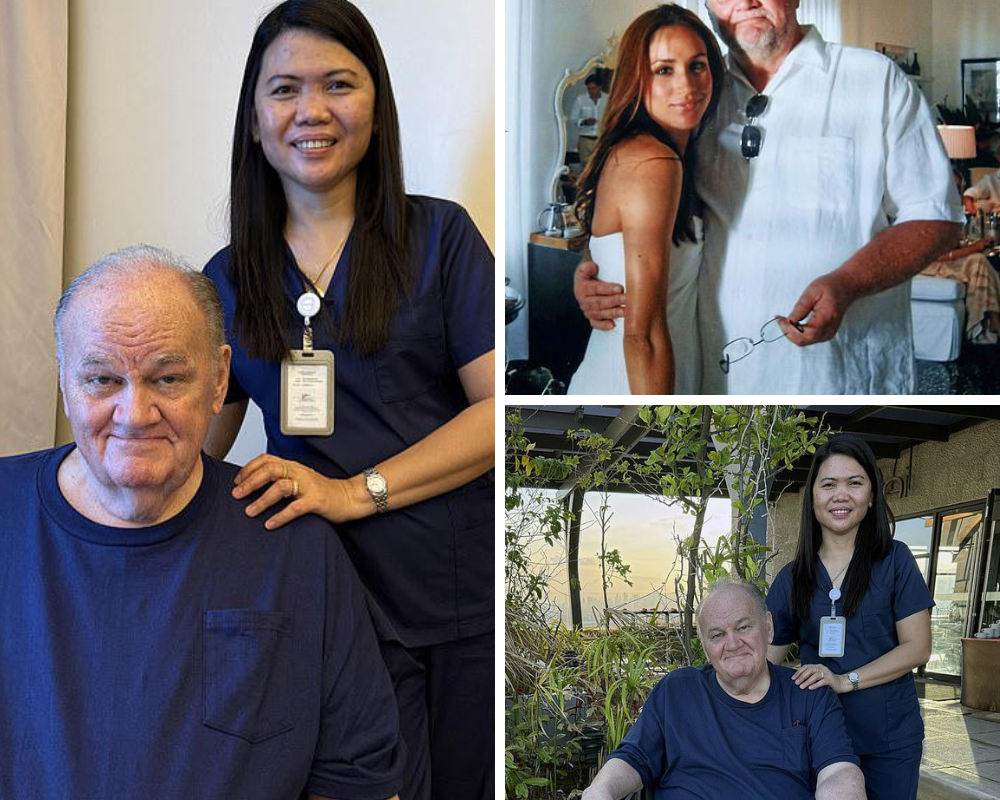
Meghan Markle’s Estranged Father Thomas, 81, Finds Love Again with Filipina Nurse 35 Years His Junior
In a surprising twist that has captured global attention, Thomas Markle, the 81-year-old estranged father of Meghan Markle, has found new love in the Philippines with a 46-year-old Filipina nurse…
End of content
No more pages to load