The voice of Todd James cracked with raw grief as he recounted the last text from his daughter Piper—a simple, cheerful message sent just hours before her life ended on the remote sands of K’gari, the World Heritage-listed sand island off Queensland’s coast. “She said she was heading out for a sunrise swim, that the beach looked magical, and she loved us,” he shared in an emotional interview, tears streaming as he added, “I can’t even say I love her for the last time..!” That ordinary good-morning exchange, filled with the excitement of adventure, became the final thread connecting a devoted father to his 19-year-old daughter, whose body was discovered encircled by a pack of wild dingoes on January 19, 2026.
Piper James, a spirited young firefighter from Campbell River, British Columbia, had been living her dream in Australia for about six weeks. Working at a backpacker hostel on K’gari (formerly Fraser Island), she immersed herself in the island’s breathtaking beauty: crystal-clear freshwater lakes, ancient rainforests, and the vast, vehicle-accessible beaches that stretch for miles along the eastern coast. Friends at the hostel described her as outgoing, fearless, and deeply passionate—qualities that defined her life back home, where she trained as a firefighter and dreamed of one day becoming a pilot like her father.

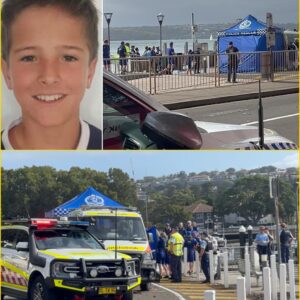
On that fateful Monday, Piper set her alarm for 5 a.m. She told colleagues she wanted to catch the sunrise and take a quick dip in the ocean—a routine she loved for its peace and solitude. The eastern beaches of K’gari are renowned for their isolation and raw power, with strong currents, sudden rips, and unpredictable waves that can turn calm waters treacherous. Piper never returned from her swim. Around 6:35 a.m., two men driving south along the beach near the iconic Maheno shipwreck made the devastating discovery: Piper’s body lay on the sand, surrounded by approximately 10 dingoes. The animals had clearly interacted with her remains, leaving visible marks consistent with bites and interference.
Queensland police responded swiftly, securing the scene and launching an investigation that has gripped both Australia and Canada. Wide Bay Burnett District Inspector Paul Algie addressed the media, noting defensive wounds on Piper’s body that suggested she fought fiercely. Yet the precise cause of death remains undetermined. An autopsy conducted on January 21 revealed injuries aligned with dingo contact, but authorities stress that drowning cannot be ruled out. Three main scenarios are under consideration: Piper may have drowned in the surf, after which dingoes scavenged her body; the pack could have chased her into the water, leading to drowning; or she was directly attacked and killed on the beach. Further scientific testing, including toxicology and detailed wound analysis, is ongoing, with a coroner set to examine all possibilities.
Todd James’s heartbreak centers on that final text—a mundane yet precious snapshot of Piper’s last moments alive. “She was so happy, telling us how much she loved the place, the people, the freedom,” he said, his voice breaking. “We talked about her coming home soon, about all the stories she’d share. I didn’t know it was goodbye.” The family has been left in limbo, waiting for answers while grappling with the unimaginable: their “precious little baby girl,” who once declared at 18, “I’m going, and you can’t stop me,” now silenced forever on a paradise island turned tragic.
Piper’s mother, Angela James, echoed the pain in tributes shared publicly. “She loved life, she was courageous and strong, and I know she fought to the end,” Angela said. “Our hearts are shattered… she was our only baby, our best friend.” Photos circulating online show a beaming young woman—graduation cap tilted jauntily, arms around her parents, or posing amid Canadian forests—capturing the vibrant spirit now lost. Friends remember her infectious laugh, her kindness, and her unyielding determination to chase dreams across the world.
The incident has reignited fierce debate over dingo management on K’gari. Australia’s native wild dogs are protected as part of the island’s unique ecosystem, but human-dingo encounters have grown more frequent and aggressive in recent years, often tied to tourists feeding animals or leaving food unsecured. The last fatal dingo attack on the island occurred in 2001, when a 9-year-old boy was killed, but non-fatal incidents—especially involving children—have increased, prompting calls for change. Traditional owners express frustration with current practices, advocating for better visitor education, seasonal restrictions, and measures akin to bear safety protocols in other parks. Fraser Coast Mayor George Seymour has pushed for banning young children from unfenced camping areas rather than broad culling, emphasizing dingoes’ ecological role while prioritizing human safety.
In response to Piper’s death, Queensland Parks and Wildlife ramped up ranger patrols, temporarily closed nearby campsites, and reinforced “dingo-smart” guidelines: secure all food, never approach or feed dingoes, avoid walking alone, especially at dawn or dusk. Signs warning of risks are plentiful, but critics argue enforcement must strengthen to prevent habituation and attacks.
For the James family, the wait for closure is agonizing. They plan to visit K’gari one day—to see the place Piper loved so deeply and celebrate her life amid its beauty. Donations and tributes have flooded in from across Canada and Australia, supporting funeral costs and memorials in her honor. Piper’s legacy endures in stories of her bravery, her firefighting service, and her fearless pursuit of adventure.
This tragedy serves as a sobering reminder of nature’s dual face: breathtaking yet unforgiving. K’gari’s isolation, combined with its powerful tides and wild inhabitants, can transform wonder into peril in moments. Piper James lived boldly, saving others through her chosen path and inspiring those around her. Her final message—full of joy and love—now haunts her family, a poignant echo of a life cut short. As investigations continue, the world mourns a young woman whose light shone brightly, even if briefly, and whose story urges greater respect for the wild places we visit.