In a move that’s sent shockwaves through the streaming world, Netflix has just unleashed all eight seasons of Homeland, one of the most intense and acclaimed spy dramas in television history. Starring Claire Danes and Damian Lewis in career-defining roles, this series isn’t your average background binge-watch—it’s a heart-pounding rollercoaster of espionage, psychological tension, and moral ambiguity that will keep you glued to the screen long into the night. Released globally on Netflix in November 2025, including in the United States for the first time, Homeland arrives at a perfect moment when audiences are craving smart, edge-of-your-seat storytelling amid real-world geopolitical uncertainties. With 96 episodes packed full of twists, secrets, and high-stakes drama, it’s no wonder the show is already climbing the charts and sparking renewed buzz among thriller fans.
Homeland first premiered on Showtime in October 2011, captivating viewers with its timely exploration of post-9/11 America. Developed by Howard Gordon and Alex Gansa—veterans of hit series like 24 and The X-Files—the show is an American adaptation of the Israeli series Prisoners of War (original Hebrew title: Hatufim), created by Gideon Raff. Raff also served as an executive producer on the U.S. version, ensuring a blend of international intrigue and cultural authenticity. At its core, Homeland delves into the shadowy world of intelligence operations, where loyalty is fluid, trust is a luxury, and the line between hero and villain blurs with every revelation.
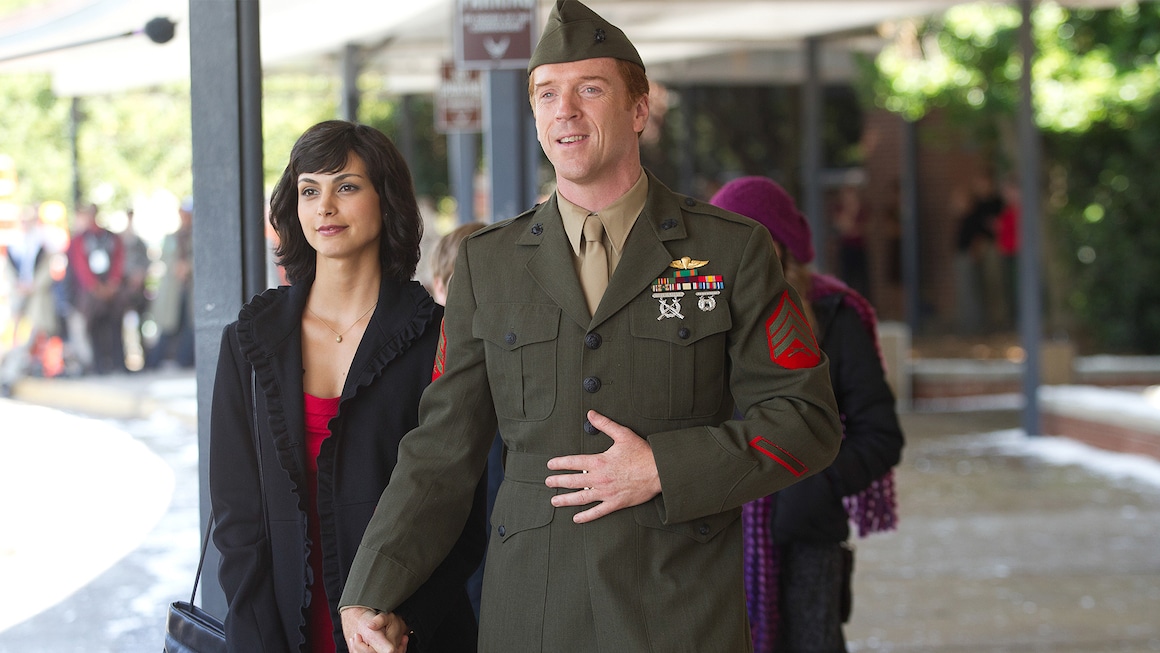
The premise kicks off with a bang: Nicholas Brody, a U.S. Marine scout sniper presumed dead after being captured by al-Qaeda in 2003, is dramatically rescued from a terrorist compound in Afghanistan. Hailed as a national hero upon his return home, Brody (played by Damian Lewis) struggles to readjust to civilian life with his family, including his wife Jessica (Morena Baccarin) and their two children, Dana (Morgan Saylor) and Chris (Jackson Pace). But CIA operations officer Carrie Mathison (Claire Danes) isn’t buying the fairy-tale narrative. Suffering from bipolar disorder, which she manages in secret to avoid jeopardizing her career, Carrie becomes convinced that Brody has been “turned” during his captivity and now poses an imminent threat to American security. Her unauthorized surveillance and relentless pursuit set the stage for a cat-and-mouse game that questions everything from personal motives to national policy.
As the series unfolds across its eight seasons, the narrative expands far beyond this initial setup, evolving into a globe-trotting saga of counterterrorism efforts. Season 1 focuses on Carrie’s investigation in the U.S., blending domestic drama with high-level intelligence work. By Season 2, the story ramps up with Brody’s rising political ambitions—he becomes a Congressman and even a potential vice-presidential candidate—while Carrie grapples with her expulsion from the CIA and a critical mission in Beirut. The tension escalates in Season 3, following a devastating attack on CIA headquarters, forcing Carrie to operate undercover and navigate alliances with Iranian operatives.
Midway through, the show reinvents itself. Season 4 shifts to Afghanistan and Pakistan, where Carrie takes on the role of station chief in Islamabad, overseeing drone strikes and dealing with internal betrayals. This season introduces more fieldwork action, including intense sequences in volatile regions. Season 5 relocates to Berlin, Germany, two years after the previous events, with Carrie leaving the CIA for a private security job at a charitable foundation. Here, the plot dives into European hacking scandals and jihadist threats, highlighting the show’s ability to adapt to contemporary issues like cybersecurity.
The later seasons bring Carrie back to the U.S. In Season 6, set in Brooklyn, New York, she aids Muslims facing discrimination amid a presidential transition from election to inauguration. Political intrigue dominates, with themes of media manipulation and executive overreach. Season 7 returns to Washington, D.C., where Carrie lives with her sister Maggie (Amy Hargreaves) and challenges a corrupt administration to free detained intelligence agents. The final Season 8, which aired in 2020, wraps up in Afghanistan and Russia, with Carrie recovering from her own imprisonment and assisting her mentor Saul Berenson (Mandy Patinkin) in peace negotiations with the Taliban. Throughout, the series maintains its signature style: episodes brimming with suspense, where every conversation could be a clue and no character is safe.
Central to Homeland‘s success are its richly drawn characters and powerhouse performances. Claire Danes delivers a tour-de-force as Carrie Mathison, a brilliant but flawed operative whose bipolar disorder adds layers of vulnerability and intensity. Danes’ portrayal earned her multiple Emmys, capturing the chaos of manic episodes and the sharp focus of her investigative genius. Damian Lewis shines as Brody, a man torn between his past traumas and present loyalties, making viewers question his every move. Mandy Patinkin, as Saul Berenson—Carrie’s steadfast mentor and eventual National Security Advisor—provides the moral anchor, with his nuanced performance blending wisdom and weariness.
The supporting cast is equally stellar. Rupert Friend joins in Season 2 as Peter Quinn, a black-ops specialist whose arc becomes one of the show’s most tragic and compelling. F. Murray Abraham’s Dar Adal, a shadowy CIA veteran, adds intrigue with his ambiguous alliances. Other standouts include Sarita Choudhury as Mira Berenson, Saul’s wife; Tracy Letts as Senator Andrew Lockhart; and Elizabeth Marvel as President Elizabeth Keane in Seasons 6 and 7. The ensemble evolves with each season, introducing fresh faces like Nimrat Kaur as a Pakistani ISI agent and Linus Roache as a White House chief of staff, keeping the dynamics dynamic and unpredictable.
Production-wise, Homeland was a ambitious undertaking. Filmed primarily in Charlotte, North Carolina for the early seasons to stand in for Washington, D.C., the show later ventured to real international locations for authenticity. Season 2 included shoots in Tel Aviv and Beirut, while Season 4 used Cape Town, South Africa, to double for Islamabad. Berlin featured prominently in Season 5, New York in Season 6, and Morocco stood in for Afghanistan in Seasons 3, 6, and 8. The creators consulted with real intelligence experts, including former CIA directors like Michael Hayden and generals like Stanley McChrystal, through “Spy Camp” sessions to ensure realism. This attention to detail extended to in-universe elements, like fictional websites and even audio stories such as Phantom Pain, which bridges gaps between seasons.
Critically, Homeland was a juggernaut from the start. Seasons 1 and 2 garnered near-universal praise, with Rotten Tomatoes scores of 100% and 93%, respectively, and Metacritic ratings in the 90s. Reviewers lauded its addictive pacing, complex characters, and relevance to real-world events like the War on Terror and election interference. The show swept awards, winning Golden Globes for Best Drama Series in 2012 and 2013, and Primetime Emmys for Outstanding Drama in 2012. Danes took home Lead Actress Emmys in 2012 and 2013, Lewis in 2013 for Lead Actor, and the series earned a Peabody Award in 2012. Overall, it amassed 64 wins and 185 nominations, cementing its status as a prestige TV landmark.
Viewership started strong, with the pilot drawing 1.08 million viewers and peaking at 2.36 million in Season 2. While numbers dipped in later years—the finale attracted 1.26 million—it maintained a loyal fanbase. On IMDb, it holds an 8.3/10 rating from over 360,000 users, with top episodes like Season 4’s “There’s Something Else Going On” scoring 9.5/10. Fans often highlight the early seasons’ thriller elements but appreciate the later ones’ deeper political commentary, though some note a perceived dip in quality post-Season 3.
Not without controversy, Homeland faced criticism for its portrayal of Muslims and Middle Eastern cultures. Detractors, including journalists like Laila Al-Arian, accused it of perpetuating stereotypes and Islamophobia by simplifying militant groups and glorifying U.S. interventions. Lebanon even threatened legal action over inaccurate depictions of Beirut, and Amnesty International criticized scenes implying torture’s effectiveness. Creators defended the show as challenging prejudices, pointing to nuanced characters like Iranian operatives and critiques of American policy. Despite these debates, its cultural impact is undeniable—praised by figures like Barack Obama and Hillary Clinton, and ranked among the greatest TV shows by outlets like Variety.
In 2025, Homeland‘s arrival on Netflix feels eerily prescient, echoing ongoing global tensions from cyber threats to political instability. Whether you’re a first-time viewer or revisiting, the series offers more than thrills—it’s a mirror to the complexities of loyalty, mental health, and power. With episodes that twist like a knife and characters who linger long after the credits, Homeland proves why spy drama remains timeless. Trust no one, question everything, and dive in—because once you start, there’s no turning back.