In the early hours of January 1, 2026, the upscale Swiss ski resort of Crans-Montana was shattered by one of the deadliest nightclub fires in recent European history. Le Constellation, a popular basement bar known for its lively atmosphere and appeal to younger crowds, erupted in flames during a packed New Year’s Eve celebration. What started as festive sparklers on champagne bottles turned into an inferno, claiming 40 lives—mostly teenagers—and injuring 116 others, many with life-altering burns.
Amid the chaos and heartbreak, a story of extraordinary bravery emerged: that of Paolo Campolo, a 55-year-old Swiss-Italian banker and father, who rushed into the danger after a panicked phone call from his daughter. His actions saved at least ten young lives, turning him into a symbol of heroism in a night defined by loss.
Paolo Campolo lives just 50 yards from Le Constellation, a venue that had long been a local favorite in the glamorous Alpine town. On New Year’s Eve, he was at home celebrating quietly with his fiancée when fate intervened in the form of a brief family visit. His 17-year-old daughter, Paolina, who attends high school in Geneva but was home for the holidays, stopped by unexpectedly. She planned to meet her boyfriend and friends at the bar for the countdown but lingered to toast with her parents and share traditional Italian panettone.
That delay proved lifesaving—for her, at least. As Paolina prepared to leave, the fire broke out around 1:30 a.m. Witnesses and investigators later confirmed that staff, in a common celebratory gesture, carried champagne bottles topped with lit sparklers aloft—some even hoisting waitresses on shoulders for dramatic effect. The sparks ignited flammable acoustic foam on the ceiling, installed during a 2015 renovation. Flames spread across the ceiling in seconds, fueled by the non-fire-retardant material, creating dense toxic smoke and intense heat.
Paolina, still outside or en route, heard what many described as a “big bang”—likely explosions from bottles or the rapid combustion—and panicked. She called her father in distress, alerting him that her boyfriend and friends were trapped inside. Campolo looked out his window and saw the glow of flames. Without hesitation, he raced to the scene.
“I heard the desperation in her voice,” Campolo later recounted from his hospital bed in Sion, where he was treated for smoke inhalation. “Her boyfriend was inside, her friends—kids I knew. I couldn’t stay back.”
Arriving at the burning bar, Campolo found pandemonium. Partygoers were smashing windows, trampling in narrow stairways, and piling up at blocked exits. The basement design, with its single narrow staircase and limited emergency doors, turned the venue into a deatrap. Reports later revealed that one emergency exit was reportedly kept shut to prevent access to an adjacent building, and fire extinguishers were allegedly locked away.
Campolo spotted a jammed side emergency door and, with sheer strength and adrenaline, pried it open. Footage circulated online shows a figure—believed to be him—forcing the door as flames roared behind. One by one, panicked teenagers scrambled through the opening to safety. “They were young, screaming, some burned already,” he said. “I pulled them out, told them to run. At least ten came through that door because of it.”
Among those he helped were friends of Paolina, including possibly her boyfriend, who survived. Campolo didn’t stop there; he joined others in assisting the injured outside. Nearby bars, like the ‘1900’, transformed into impromptu aid stations, with staff helping victims breathe and stay conscious. “Amidst the horror, I will never forget that humanity,” Campolo reflected. “Strangers helping strangers—it was extraordinary solidarity.”
What Campolo witnessed inside and around the bar haunted him deeply. “The looks,” he told reporters. “The lucid desperation of those who know they’re dying. Burned people looking at you and asking you not to leave them there. It’s something that never goes away.” He inhaled heavy smoke during the rescue, collapsing later and requiring hospitalization, but he expressed no regrets. “They could have been my children,” he said simply.
The tragedy’s toll was devastatingly young: 26 of the 40 victims were teenagers, the youngest just 14—a Swiss girl and a French citizen. Nationalities included 21 Swiss, nine French, six Italians, and others from Belgium, Portugal, Romania, Turkey, and beyond. Identification took days due to severe burns, with all victims accounted for by January 5. A silent march on January 4 drew thousands, and national mourning was declared in Switzerland.
Investigations revealed troubling lapses. Le Constellation, owned by French couple Jacques and Jessica Moretti since 2015, hadn’t been inspected for fire safety since 2019, despite requirements. Prosecutors launched a criminal probe into negligence, involuntary homicide, and fire causation. Experts criticized the flammable foam and lack of sprinklers or alarms, echoing past disasters like the 2003 Station nightclub fire in the US.
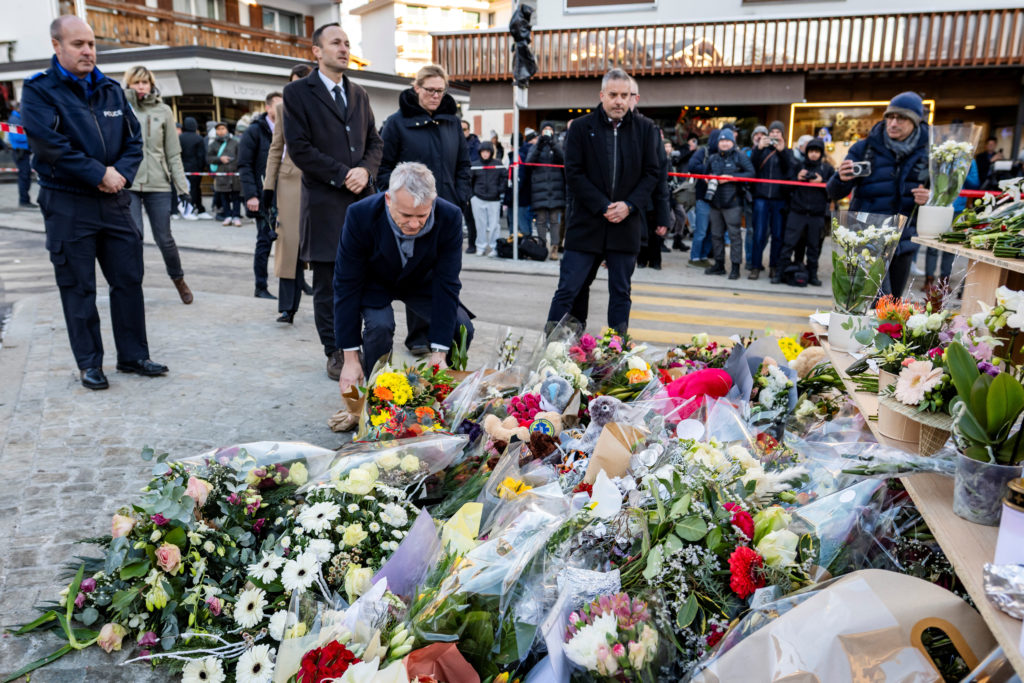
As Crans-Montana grieves—memorials of flowers and candles piling up outside the sealed site—Campolo’s story offers a glimmer of hope. Paolina’s fortunate delay not only spared her but enabled her father’s heroism. In interviews, he downplayed his role: “I did what any parent would.” Yet locals and survivors hail him as a true hero, a man who turned a father’s instinct into lives saved.
The community vows change: stricter inspections, bans on indoor sparklers, better enforcement. For the families of the lost—many just starting adulthood—the pain endures. But in Paolo Campolo’s courage, amid the ashes, there’s a reminder of human resilience and the unbreakable bond between parent and child.