Harry’s Defiant Declaration: “I Will Always Be Part of the Royal Family” — A Statement That Has Ignited Fresh Debate Across the Monarchy
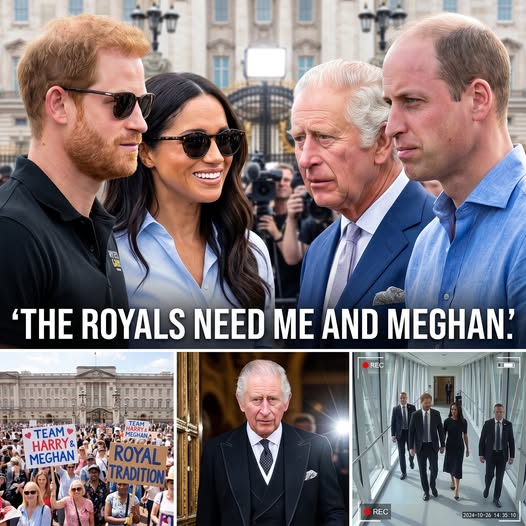
In the ever-evolving saga of the British royal family, Prince Harry has once again thrust himself into the headlines with remarks that resonate far beyond their surface. During a high-profile visit to Ukraine in late April 2026, the Duke of Sussex delivered a clear and confident message when asked about his status: he remains, and will always remain, deeply connected to his royal roots. While sensational headlines have amplified interpretations suggesting Harry believes “the royals need me and Meghan,” the reality stems from his straightforward assertion of identity and purpose amid ongoing global humanitarian work. This latest chapter has polarized opinions, with supporters viewing it as a principled stand and critics seeing it as another layer of tension in an already strained family dynamic.
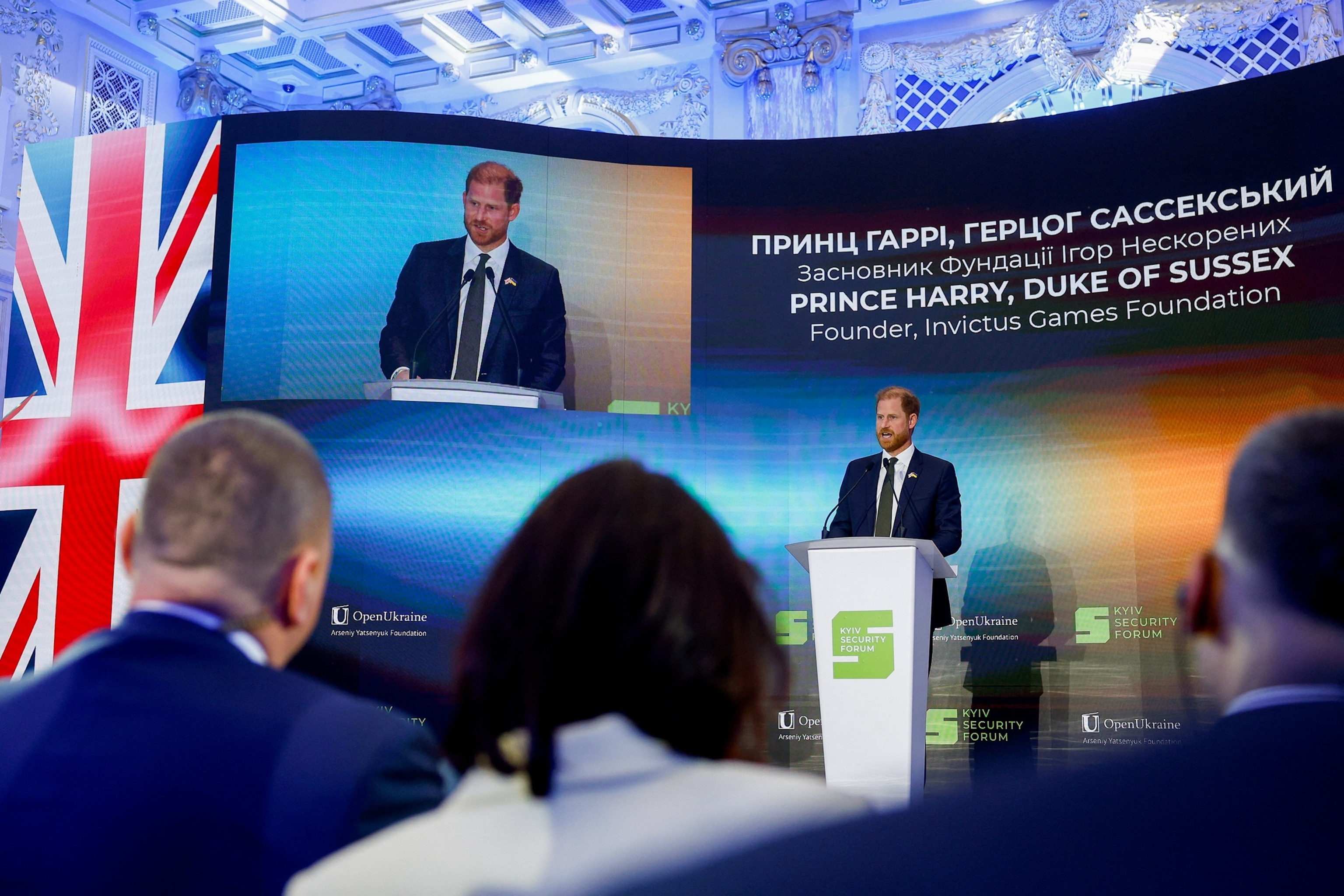
The comments came during an exclusive interview with ITV News’ royal editor Chris Ship at the end of Harry’s two-day trip to Ukraine. There, Harry engaged with military personnel, visited sites impacted by the ongoing conflict, and spoke at the Kyiv Security Forum. When pressed on whether he recognized descriptions of himself as “not a working royal,” Harry responded firmly: “No. I will always be part of the royal family and I’m here working, doing the very thing that I was born to do. And I enjoy doing it.” These words, delivered with evident conviction, have been interpreted by some as a subtle claim on relevance, fueling viral social media narratives that exaggerate them into declarations of indispensability for the institution.
Six years after Harry and Meghan stepped back as senior working royals in 2020, this statement carries significant weight. It reaffirms Harry’s self-perception not as an outsider but as someone whose royal heritage continues to inform his public service. His Ukraine visit exemplified this: meetings with wounded soldiers, support for the HALO Trust’s demining efforts (echoing his mother Princess Diana’s legacy in Angola), and a pointed speech urging accountability from world leaders, including direct appeals regarding the war’s human cost. Harry positioned himself as a soldier, humanitarian, and friend of Ukraine, emphasizing that the conflict is about values, sovereignty, and global principles rather than mere territory.
The timing and context of these remarks have amplified their impact. With King Charles III navigating health challenges and the core royal family focused on stability, Harry’s independent diplomatic-style engagements raise questions about the boundaries of royal identity in a post-Megxit world. Buckingham Palace has maintained its characteristic silence on the personal aspects, choosing instead to focus on institutional continuity. This approach has left room for speculation, dividing royal watchers into two camps: those who cheer Harry’s independence and global advocacy, and those who argue it complicates the monarchy’s carefully managed narrative.
Harry’s journey since 2020 has been one of reinvention. Relocating to California with Meghan, the couple has built Archewell, pursued media projects, and championed causes from mental health to environmental issues and veterans’ support through the Invictus Games. Yet Harry has repeatedly expressed a desire for reconciliation with his family. In earlier interviews, he spoke of loving his father and hoping for healing, while acknowledging the practical barriers—particularly security concerns—that make full returns to the UK difficult for his wife and children. His latest comments in Ukraine blend this personal continuity with a public assertion of ongoing purpose, suggesting that stepping back from official duties did not sever his innate sense of royal responsibility.
:max_bytes(150000):strip_icc():focal(749x0:751x2)/Prince-Harry-and-Meghan-100925-3-195a50bf150046a5bcb59c7adfc787d7.jpg)
For supporters, Harry’s words represent authenticity and resilience. They highlight a man who refuses to be defined solely by past conflicts or tabloid portrayals. His humanitarian work in conflict zones demonstrates a commitment to service that transcends titles. Meghan, too, has carved her own path, balancing advocacy, production work, and family life. Together, they represent a modern model of influence—unshackled from protocol yet still drawing on the platform their royal connection provides. Fans on social media have praised Harry’s confidence, seeing it as empowerment rather than entitlement.
Critics, however, view the remarks as tone-deaf or provocative. Some royal commentators argue that by emphasizing his birthright while operating independently, Harry risks blurring lines that the institution has worked hard to clarify. The monarchy under King Charles has streamlined its working members, prioritizing fewer, more focused public roles. Harry’s global interventions, while well-intentioned, occasionally intersect with sensitive geopolitical moments, prompting concerns about unintended diplomatic ripples. The viral exaggeration into “the royals need me and Meghan” reflects broader frustrations with the Sussexes’ narrative, where personal agency is sometimes perceived as a challenge to tradition.
This divide mirrors deeper societal conversations about legacy, duty, and modernity. The British monarchy has endured by balancing heritage with adaptation. Harry embodies one vision of that evolution—outspoken, globally oriented, and media-savvy—while the core family upholds a more reserved, domestically focused approach. His Ukraine trip, coming amid other international efforts, underscores how he leverages his unique position: a former senior royal with military experience who can access forums and conversations that might otherwise be restricted.
King Charles has not publicly responded to the latest comments, consistent with the Palace’s strategy of rising above personal frictions. Sources close to the family describe a preference for quiet diplomacy over public rebuttals. Yet the absence of dialogue fuels ongoing speculation about reconciliation prospects. Harry has hinted at wanting more family time and has made occasional solo visits to the UK, but trust remains fragile on all sides. The addition of grandchildren—Prince Archie and Princess Lilibet—adds emotional complexity; Harry has spoken poignantly about his children’s disconnection from their British heritage.
Public reaction has been predictably split. Polls and social media trends show a portion of the audience applauding Harry’s humanitarian focus, particularly younger demographics who value authenticity over protocol. Others express fatigue with the perpetual drama, longing for unity or at least a respectful distance. Media coverage ranges from sympathetic profiles of Harry’s evolving role to sharp critiques questioning the sustainability of his current path.
Ultimately, Harry’s declaration is less a bombshell demand and more a reaffirmation of identity. In a world where royal figures increasingly navigate personal and public spheres, he is asserting that his royal blood and sense of service endure, regardless of official status. Whether this strengthens or strains the monarchy long-term remains to be seen. For now, it keeps the Duke of Sussex in the conversation—not as a peripheral figure, but as one whose choices continue to shape discussions about what royalty means in the 21st century.
As Harry balances fatherhood, advocacy, and his unbreakable link to the family firm, his words serve as both a bridge and a boundary. They invite reflection on belonging, purpose, and the enduring power of legacy. In declaring his place within the royal family while forging his own, Harry highlights the institution’s greatest strength: its capacity to encompass complexity, even amid division. The coming months and years will reveal whether these statements open doors for healing or widen existing gaps. For a family defined by duty across generations, the conversation Harry has reignited is far from over.