Fans Are Binge-Watching This ‘Gorgeous And Compelling TV’ Spy Thriller Starring Tom Hiddleston & Olivia Colman Non-Stop — Sitting At A Strong 91% On Rotten Tomatoes
A British spy drama is quietly surging back onto streaming platforms in the UK and beyond, pulling viewers into a world of luxury hotels, covert missions, and deadly double lives where nothing is ever what it seems. With its sleek visuals, razor-sharp tension, and magnetic performances, The Night Manager has become a benchmark for modern television thrillers, blending the intellectual depth of classic espionage with glossy, high-stakes drama.
What begins as an undercover operation inside a high-end hotel quickly escalates into an international game of intelligence warfare involving arms dealers, secret agencies, and betrayals that keep cutting deeper at every turn. Adapted from John le Carré’s 1993 novel and updated for a contemporary audience, the six-episode miniseries first aired in 2016 and continues to captivate new generations of viewers drawn to its sophisticated storytelling and impeccable cast.
At the center of it all is Jonathan Pine, portrayed with brooding intensity by Tom Hiddleston. A former British soldier turned night manager at a luxury hotel in Cairo, Pine is a man of quiet competence and hidden scars. His world shifts dramatically when he becomes entangled with a mysterious woman connected to the shadowy underbelly of international arms trading. Witnessing violence and corruption up close, Pine is recruited by British intelligence operative Angela Burr, played by the brilliant Olivia Colman, to infiltrate the inner circle of Richard “Dicky” Roper — a charismatic yet ruthless billionaire arms dealer masterfully brought to life by Hugh Laurie.
Roper, with his lavish lifestyle, private estates, and veneer of legitimate business success, represents the ultimate moral corruption. Laurie’s performance is a standout: equal parts charming host and calculating predator, he makes Roper dangerously appealing even as his dealings in weapons of mass destruction threaten countless lives. The contrast between Hiddleston’s principled but tormented Pine and Laurie’s suave villain drives much of the series’ emotional and psychological tension.
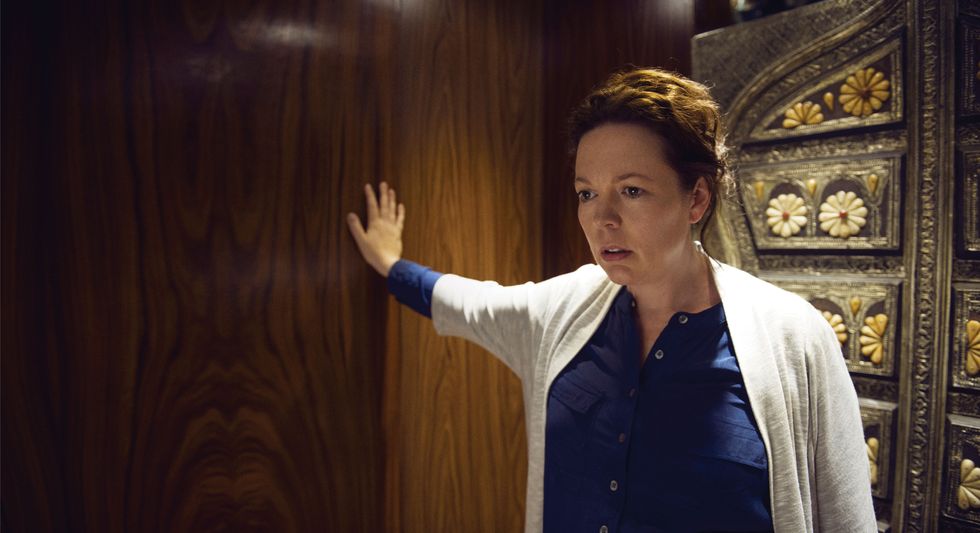
Olivia Colman’s Angela Burr serves as the moral anchor and driving force behind the operation. Pregnant during much of the filming, Colman infuses Burr with steely determination, bureaucratic frustration, and quiet humanity. As the head of a small Foreign Office task force, she battles institutional inertia and personal risks to expose the dangerous alliance between arms traders and elements within the intelligence community itself. Her performance earned widespread acclaim and contributed to the show’s impressive award haul.
The series excels in its globe-trotting production values. From the bustling chaos of Cairo during the Arab Spring to the sun-drenched luxury of Mallorca and the sleek boardrooms of London, the locations feel like characters in their own right. Director Susanne Bier crafts a visually stunning series that rivals big-screen thrillers, with elegant cinematography, tense close-ups, and sweeping aerial shots that heighten the sense of opulence masking brutality. The score, haunting and understated, perfectly underscores the moral ambiguity at the story’s core.
As Pine embeds himself deeper into Roper’s world, adopting a criminal persona to gain trust, the narrative tightens like a noose. He must navigate dangerous liaisons, including a passionate connection with Jed Marshall (Elizabeth Debicki), Roper’s glamorous but vulnerable girlfriend. Debicki brings nuance and fragility to a role that could easily have been superficial, highlighting the human cost of living in Roper’s orbit. Supporting players like Tom Hollander as Roper’s slippery right-hand man Corky and David Harewood add layers of intrigue and betrayal.
Every episode tightens the pressure as trust collapses, alliances shift, and survival becomes the only goal in a world where one wrong move changes everything. The adaptation by David Farr smartly updates le Carré’s novel to reflect modern concerns — the privatization of warfare, the blurred lines between legitimate business and criminal enterprise, and the personal toll of espionage. Unlike more action-heavy spy fare, The Night Manager thrives on psychological cat-and-mouse games, whispered conversations in opulent settings, and the slow erosion of identity under cover.
Fans and critics alike praise its cinematic style and gripping performances. With a strong 91% score on Rotten Tomatoes for the first season, the series earned comparisons to classic le Carré adaptations while standing out for its accessibility and visual flair. Many viewers describe it as “addictive” and “impossible to pause,” with binge-watching marathons becoming common as the plot hurtles toward its explosive conclusion. The chemistry between Hiddleston and Laurie crackles with unspoken menace and reluctant respect, while Colman’s grounded intensity provides a necessary counterbalance to the glamour.
The show’s success lies in its refusal to simplify complex issues. Pine’s journey is not a straightforward hero’s arc; he grapples with revenge, desire, and the seductive pull of wealth and power. Roper’s operation reveals how corruption reaches the highest levels of society, implicating politicians, intelligence agencies, and corporations. This moral grayness feels refreshingly adult in an era of often simplistic streaming content.
Stylish, intense, and relentlessly gripping, this remains one of those rare series that pulls viewers in completely and doesn’t let go until the very end. Its influence extended beyond television, sparking renewed interest in le Carré’s work and even fueling speculation about Hiddleston as a potential James Bond — a role that seemed tailor-made after his suave, capable turn as Pine. The series also garnered significant awards recognition, including Golden Globes for Hiddleston, Colman, and Laurie, along with Emmys and BAFTAs, cementing its status as a prestige television landmark.
A decade later, the show’s resurgence on streaming platforms highlights its timeless appeal. In a world still wrestling with questions of ethics in global politics and the arms trade, The Night Manager feels as relevant as ever. Its exploration of loyalty, identity, and the price of justice resonates deeply, especially as audiences seek sophisticated stories amid formulaic action thrillers.
Elizabeth Debicki’s Jed, in particular, emerges as a compelling figure whose arc challenges traditional spy genre tropes. The romantic entanglements are never mere distractions but integral to the characters’ motivations and vulnerabilities. Pine’s internal conflict — balancing duty with emerging feelings — adds emotional weight that elevates the series beyond mere plot mechanics.
Production details further contribute to its allure. The attention to detail in depicting luxury — yachts, private jets, and exclusive compounds — contrasts sharply with the grim realities of the weapons trade’s victims, a juxtaposition le Carré himself often highlighted. This visual storytelling makes the moral questions more visceral.
For those new to the series, the slow-burn first episodes build masterfully toward increasingly tense confrontations. Viewers familiar with le Carré’s novels will appreciate how the adaptation captures the author’s signature cynicism about institutions while delivering more immediate thrills. The supporting cast, including Alistair Petrie and Tobias Menzies, rounds out a world filled with ambiguous figures whose allegiances are never entirely clear.
Ultimately, The Night Manager succeeds because it treats its audience as intelligent participants in the unfolding drama. It rewards close attention with clever twists and character revelations rather than relying on cheap shocks. The performances anchor what could have been a glossy but empty spectacle into something profoundly human.
As streaming algorithms push endless sequels and reboots, the enduring popularity of this 2016 gem reminds us of the power of strong source material, top-tier acting, and confident direction. Whether you’re revisiting it or discovering Pine’s dangerous mission for the first time, the series delivers on every promise of glamour, suspense, and emotional depth.
In an age where spy thrillers often prioritize spectacle over substance, The Night Manager stands tall as a masterclass in the genre. It is gorgeous, compelling television that lingers long after the final credits, inviting reflection on the true cost of secrets and the fragile line between hero and pawn. Fans continue to binge it non-stop for good reason — it is simply one of the best spy dramas ever made for the small screen.