In the dim glow of a suburban Chicago truck stop, under the harsh flicker of sodium lamps on a crisp November night, a ghost from America’s darkest internet folklore resurfaced. It was November 23, 2025, when Morgan Geyser, now 23, lay curled on a concrete sidewalk, her breath fogging the chill air, beside a 43-year-old man named Chad. The pair, disheveled and drowsy from exhaustion, had traversed nearly 170 miles from a Madison, Wisconsin, group home where Geyser had been granted fragile freedom just months earlier. When Illinois officers roused her and demanded identification, her response sliced through the night like a blade: three words, laced with defiance and delusion—”Just Google me.” In that flippant command lay the weight of a decade’s infamy, a nod to the crime that etched her name into the annals of true horror. Geyser, one half of the duo who, as 12-year-olds, nearly murdered their classmate to appease the faceless specter known as Slender Man, had severed her ankle monitor and fled into the unknown. Her recapture, swift but surreal, reignites questions about redemption, mental fragility, and the perilous grip of online myths on young minds—a saga that began in the innocent woods of Waukesha and now echoes across state lines.
The roots of this nightmare trace back to a humid May afternoon in 2014, in the quiet enclave of Waukesha, Wisconsin, a Milwaukee suburb where children pedaled bikes under leafy canopies and families grilled burgers in cul-de-sacs. Three inseparable sixth-graders—Morgan Geyser, Anissa Weier, and Payton Leutner—embodied the untroubled bloom of preadolescence. Sleepovers were sacred rituals: pillow forts, whispered secrets, and midnight feasts of popcorn and soda. Geyser, with her wide eyes and quirky humor, was the group’s dreamer, sketching fantastical tales in spiral notebooks. Weier, more intense and bookish, fueled their imaginations with ghost stories. Leutner, the athletic blonde with a infectious laugh, grounded them in games of tag and backyard soccer. They were, by all accounts, a trifecta of normalcy—until the internet’s underbelly seeped in, birthing a monster from pixels and paranoia.
Slender Man emerged in 2009 from the creative cauldron of Something Awful forums, the brainchild of artist Eric Knudsen, who photoshopped a tall, suit-clad figure with elongated limbs and a blank, porcelain face into mundane snapshots of children at play. What started as a hoax for a paranormal thread exploded into viral lore: Slender Man stalked the web in creepypastas, YouTube videos, and fan art, a boogeyman for the digital age. No mouth to whisper threats, no eyes to pierce the soul, yet he embodied primal fears—abduction, the unknown, the loss of control. By 2014, his tentacles had wrapped around tween culture, spawning games and comics that blurred fiction with fervor. For Geyser and Weier, he transcended entertainment; he became a deity demanding sacrifice. In their fevered minds, stabbing a friend would grant them servitude in his shadowy realm, shielding their families from his wrath. It was a delusion as ancient as ritual offerings, repackaged in memes.
The plan coalesced over weeks of hushed obsession. Geyser smuggled a five-inch kitchen knife from her family’s utensil drawer, its blade glinting like a talisman. Weier pored over maps, plotting a pilgrimage to Slender Man’s supposed mansion in the Nicolet National Forest, 300 miles north. Leutner, oblivious, arrived at Geyser’s birthday sleepover on May 31, clad in pajamas, clutching a sleeping bag monogrammed with her initials. The night unfolded with deceptive joy: board games, birthday cake smeared with frosting fights, and a screening of Beauty and the Beast. As dawn crept in, the trio slipped out, feigning a game of hide-and-seek in the nearby Davidson Park—a sylvan patch of oaks and underbrush where dog walkers ambled and joggers pounded trails.
The betrayal unfolded in seconds that stretched into eternity. Under the guise of “it,” Weier led Leutner deeper into the woods, her voice a coaxing lilt: “Lie down here; it’s part of the game.” As Leutner complied on a carpet of leaves, Geyser lunged from the shadows, knife flashing. Nineteen strikes: slashes to the arms that carved crimson rivers, stabs to the legs that buckled her stance, punctures to the torso that pierced muscle and missed vital organs by millimeters. Leutner screamed, a guttural plea that dissolved into gasps, her body convulsing in the dirt. Weier stood sentinel, urging, “You can do it; he’s waiting.” Blood pooled like spilled ink, soaking the forest floor. Geyser later recounted the metallic tang in the air, the warmth on her hands, as if dissecting a science project gone awry. Convinced their deed divine, the attackers abandoned their “sacrifice” and trudged toward the highway, packs slung with water bottles and dreams of eternal allegiance.
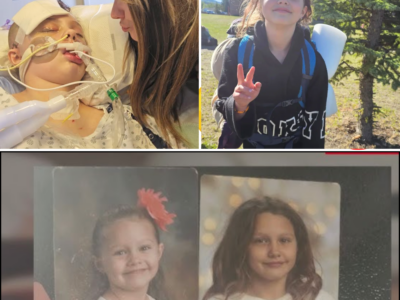
Leutner’s survival was a miracle etched in grit. Bleeding profusely, she dragged herself 60 yards through brambles, each inch a war against shock and severance. Emerging onto a bike path, she collapsed in plain view, her whimpers drawing a Good Samaritan—a bicyclist named Greg Steinberg, out for his morning spin. “Help me,” she rasped, her white tank top a Rorschach of red. Steinberg dialed 911, his voice fracturing as he cradled her head. Paramedics airlifted her to Children’s Hospital of Wisconsin, where surgeons marveled at her resilience: one blade path grazed her carotid artery by a hair’s breadth, another nicked her liver without rupture. She endured hours under the knife, emerging scarred but sentient, her 12-year-old frame a testament to tenacity. “I didn’t want to die,” she would later testify, her voice steady despite the phantom pains that lingered.
Meanwhile, Geyser and Weier trudged along Interstate 94, thumbs out in futile hitchhiking, their sneakers caked in mud and malice. Apprehended within hours by Waukesha County deputies, they confessed with chilling candor. “We did it for Slender Man,” Geyser said flatly, as if reciting homework. Weier elaborated: the stabbing as initiation, the march to his lair as pilgrimage. Detectives, hardened by domestic horrors, recoiled at the banality of evil in pigtails. The case rocketed global: headlines screamed “Slender Man Stabbing,” spawning debates on internet radicalization, shared psychosis, and the perils of folklore in the feed. Knudsen himself mourned, his creation a Pandora’s box of unintended terror. Waukesha, a bastion of Midwest wholesomeness, became synonymous with the sinister, its parks patrolled anew.
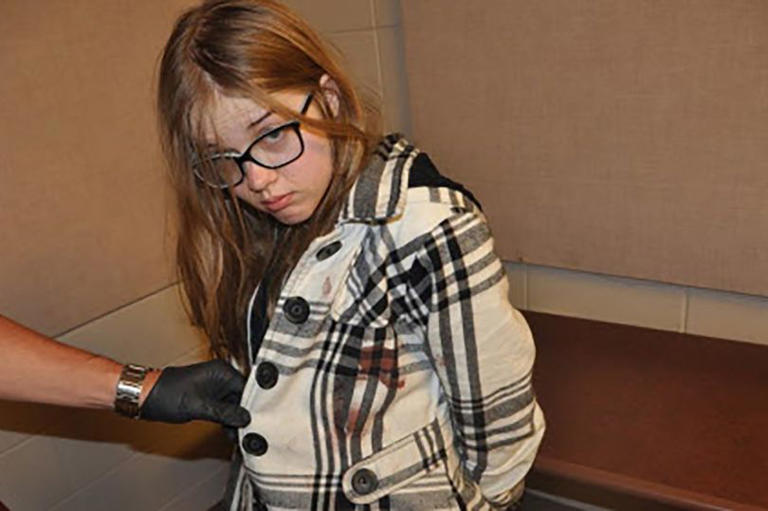
The legal odyssey was labyrinthine, a clash of culpability and compassion. Charged as adults with first-degree attempted homicide—facing life sentences—Geyser and Weier navigated a courtroom carousel of pleas and psych evals. Geyser, diagnosed with early-onset schizophrenia, pleaded guilty in 2017, her vacant stare haunting sketches. Weier followed suit on a lesser count, her remorse a tear-streaked veil. Yet verdicts veered: not guilty by reason of mental defect, a nod to brains besieged by hallucination. Geyser drew 40 years in institutional custody, confined to the Winnebago Mental Health Institute’s sterile halls. Weier, 25 years, but her trajectory tilted toward leniency. Leutner, the spectral survivor, testified in shadows, her words a scalpel: “I trusted them. They were my best friends.” Her family, pillars of quiet fury, advocated for justice tempered by mercy, haunted by “what ifs” in sleepless nights.
Institutional life reshaped them, a slow alchemy of therapy and time. Geyser, once a wisp of a girl sketching proxies, delved into art therapy—canvases splashed with elongated shadows, therapy logs charting her dissociation. Medicated for schizophrenia’s specters, she earned her GED, volunteered in the facility library, and penned essays on regret’s weight. “Slender Man isn’t real,” she wrote in a 2020 letter, her script neat but trembling. “But the pain I caused is.” Weier, transferred to a youth ward, journaled poetry of fractured bonds, her sessions unpacking the folie à deux that fused their fates. Released conditionally in 2021 at 19, she relocated to her father’s home under GPS tether, her days a regimen of counseling and community college. By 2023, her monitor dissolved, a fragile phoenix in Waukesha’s wary wings.
Geyser’s liberation came harder, a decade’s penance yielding to cautious hope. In January 2025, a Waukesha County judge greenlit her transfer to a Madison group home—Winnebago’s gates ajar after seven years. The facility, a nondescript brick bastion amid cornfields, promised structure: group therapy circles, vocational training, and the ankle monitor’s unblinking eye. Geyser, 23 now, had blossomed into quiet competence—braiding hair for peers, mastering baking, her laughter a rare but genuine ripple. Yet cracks spiderwebbed: isolation from the outside, rules chafing like irons. Enter Chad, a 43-year-old drifter with a rap sheet of petty thefts and a penchant for online forums. Their bond, forged in digital whispers, veered illicit—he scaling her window like a forbidden Romeo, visits a violation veiled in secrecy. “He made me feel seen,” Geyser confided in sessions, her voice a mix of thrill and torment.
The rupture ignited on November 22, 2025. Evening fell over Madison’s snow-dusted streets, the group home’s common room humming with TV static. Geyser, stewing over Chad’s latest ban—”He’s not safe,” counselors decreed—snipped her monitor with kitchen shears, the beep silenced in a drawer. “I’m done being caged,” she scrawled in a note, left for staff. With Chad, rendezvoused in shadows, she bolted into the night—hitchhiking south, a patchwork plan to Nashville’s neon anonymity. Alerts pinged at 8 p.m.: malfunction detected. But bureaucracy lagged; Madison PD learned of her absence at dawn, a 12-hour void that propelled her across borders. Security cams caught her last: hoodie-clad, backpack slung, vanishing into the bus terminal’s throng.
Panic rippled nationwide. Amber alerts flashed Slender Man’s ghost—Geyser’s mugshot, a far cry from the pigtailed perpetrator, beamed on billboards and apps. Waukesha’s wounds reopened; Leutner’s family, in a terse statement, voiced vigilance: “We’re aware, and grateful for swift action.” Her attorney, Anthony Cotton, pleaded via video: “Turn back, Morgan. This path hurts everyone.” Online, the case curdled into conspiracy—Slender proxies trolling forums, true-crime pods dissecting her psyche. By Sunday dusk, in Posen’s truck stop—a desolate oasis off I-294—she and Chad slumbered, oblivious to sirens. Officers, tipped by a trucker’s hunch, approached: “Name?” Silence. Then, with a smirk that chilled: “Just Google me.” Recognition dawned; cuffs clicked.
Interrogation peeled layers: Geyser’s grievances spilled—unfair restrictions, Chad’s “love” a lifeline in loneliness. Nashville? A whim, she shrugged, scissors’ snip a cry for autonomy. Chad, mumbling complicity, faced harboring charges. Extradited to Wisconsin, Geyser awaits hearings—revocation looming, her conditional freedom a revoked reverie. Leutner, now 23 and thriving—a college athlete with scars as badges—offered no comment, her silence a sovereign shield. Weier, stable in anonymity, echoed support for therapy’s tether.
Geyser’s triad taunt—”Just Google me”—resonates as archetype: the criminal’s wry wink at notoriety, a digital-age “Et tu?” It underscores the irony: Slender Man, born of the web, now her inescapable shadow. A decade on, the stabbing endures as cautionary codex—on memes’ menace, mental health’s margins, friendship’s fragility. Waukesha’s woods whisper still: innocence inverted, where hide-and-seek hid horrors. As Geyser navigates revocation’s rift, perhaps those words mark not defiance, but despair—a plea parsed through pixels, begging the world to see beyond the search results to the girl who once dreamed in doodles, now adrift in the data stream’s unforgiving glare.