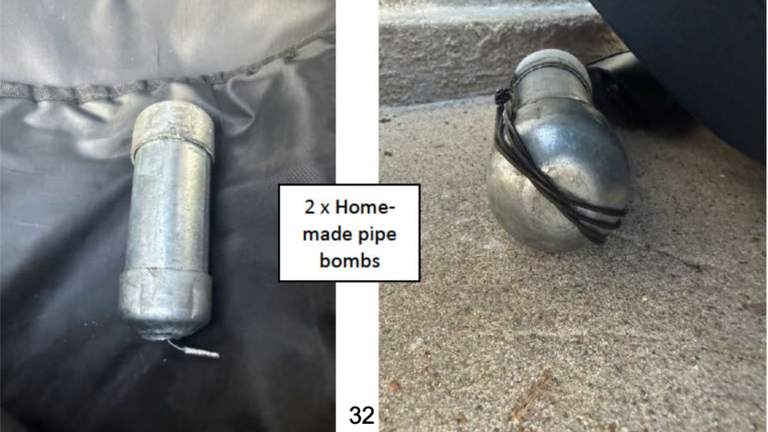
The horrific terrorist attack at Bondi Beach on December 14, 2025, which claimed 15 lives during a Hanukkah celebration, has taken an even darker turn with the release of court documents detailing meticulous planning by the father-and-son suspects. Newly disclosed evidence reveals that Sajid Akram, 50, and his son Naveed Akram, 24, threw four homemade explosive devices—including three pipe bombs and a bizarre “tennis ball bomb”—at the crowd moments before opening fire. Miraculously, none detonated, despite being deemed fully viable by investigators. Additionally, videos recovered from Naveed’s phone show the pair practicing shooting in a rural area and recording an Islamic State-inspired manifesto justifying their actions.
The attack unfolded on a warm summer evening as families gathered in Archer Park near Bondi Beach for “Hanukkah by the Sea,” a joyful community event marking the festival’s first night. Around 6:50 pm, the Akrams allegedly parked on Campbell Parade, displayed IS flags in their vehicle windows, and armed themselves with long firearms. From a nearby footbridge, they launched their assault, targeting the predominantly Jewish crowd below. Sajid was fatally shot by police at the scene, while Naveed was critically injured and later charged with 59 offenses, including 15 counts of murder, one count of committing a terrorist act, and 40 counts of attempted murder.
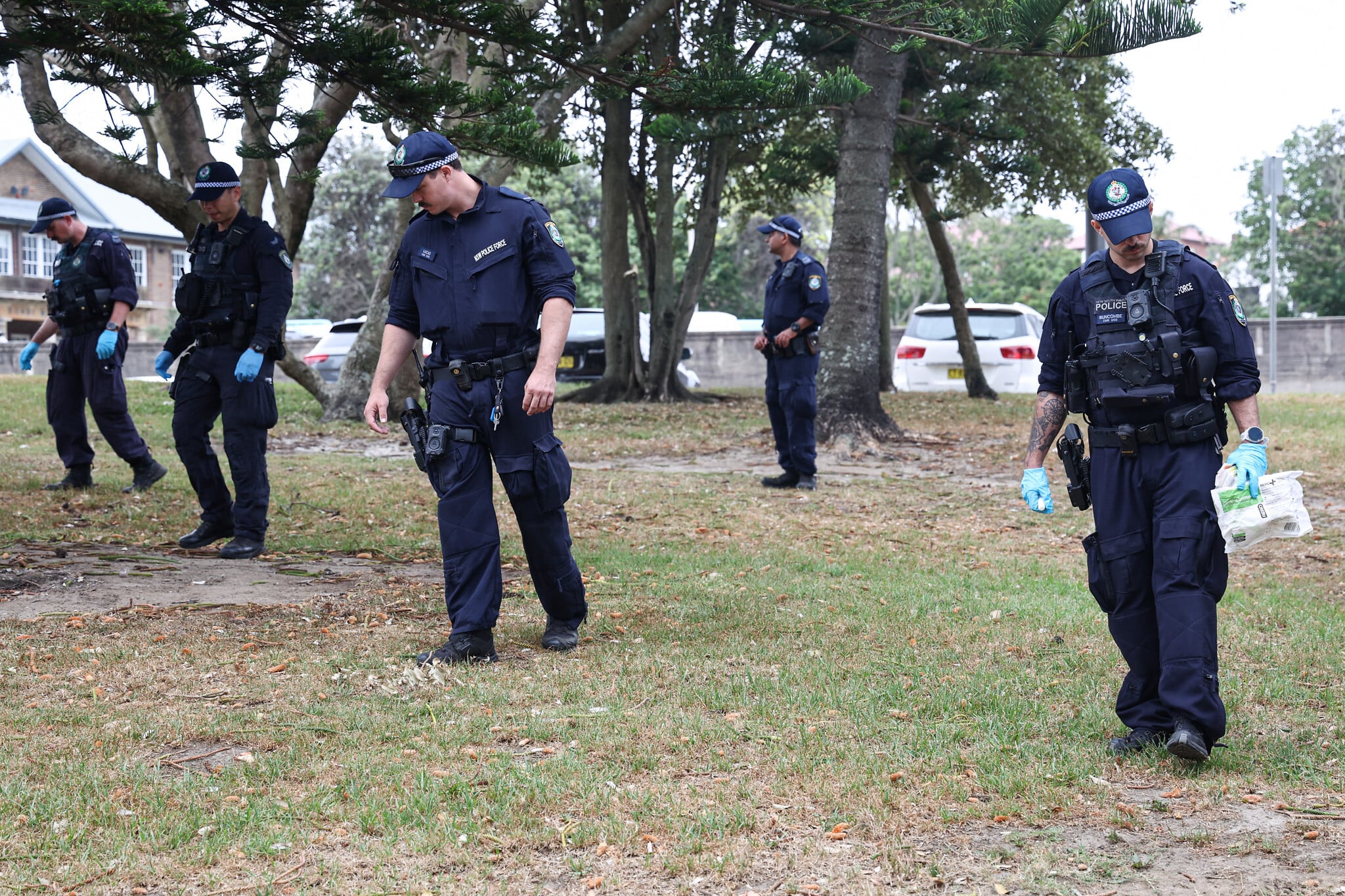
Police at the scene of the attack, where emergency services responded to chaos and devastation.
Court documents, released after a partial suppression order was lifted, paint a picture of months-long preparation fueled by religiously motivated violent extremism. Police allege the duo conducted reconnaissance two days prior, visiting the footbridge from which they would later fire. CCTV captured them scouting the location, evidence described as clear signs of planning a terrorist act.
Perhaps most disturbing are the videos found on Naveed’s phone. One clip, filmed in late October in a rural New South Wales location, shows the pair undergoing firearms training. They are seen firing shotguns and moving tactically, honing skills that would prove deadly. Another video, recorded in front of an Islamic State flag, features the Akrams reciting passages and delivering statements in English condemning “the acts of Zionists.” Authorities say it serves as a manifesto summarizing their justification for the Bondi attack, aligning with IS ideology.
Court-released images depict Naveed Akram during alleged firearms training sessions.
The explosives add another layer of horror. Upon arriving at the scene, the suspects allegedly removed three pipe bombs and a tennis ball bomb from their vehicle, along with firearms. They threw four devices toward the crowd before commencing the shooting. Though none exploded, bomb squad experts confirmed they were operational improvised explosive devices (IEDs). A fifth suspected bomb was discovered in the car’s trunk. Raids on properties linked to the Akrams uncovered additional bomb-making materials, ammunition, 3D-printed firearm parts, a longbow with arrows, and Qurans with highlighted or earmarked pages.
Suspects in antisemitic terrorist attack were inspired by ISIS
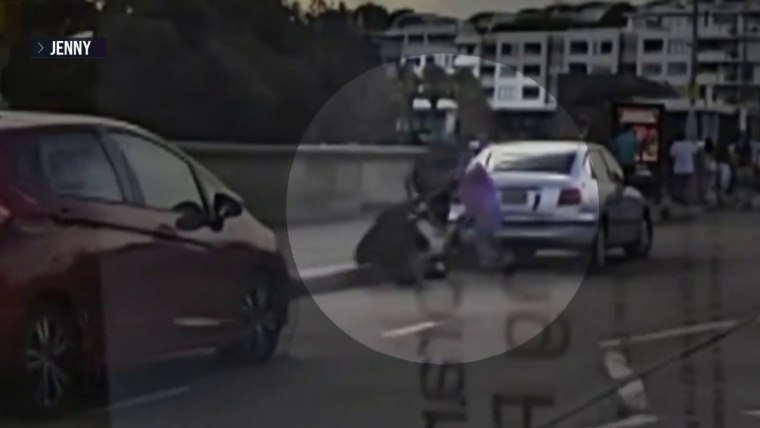
Dashcam and eyewitness footage captured the early moments of panic as shots rang out.
The attack has been officially classified as Australia’s worst terrorist incident, motivated by antisemitism and inspired by Islamic State propaganda. Prime Minister Anthony Albanese described it as an “act of evil,” targeting Jewish Australians during a sacred holiday. Fifteen victims, including a child, lost their lives, with dozens more injured, some critically. Acts of bravery emerged amid the terror: civilians attempted to disarm the gunmen, and lifeguards rushed to aid the wounded.
Investigators believe the planning spanned months. The Akrams traveled to the Philippines in November, staying mostly confined to a hotel room, raising questions about potential radicalization or further preparation. Upon return, they rented a property in Campsie, where CCTV showed them loading wrapped items—likely weapons—into their car hours before the attack.
Naveed, recovering in hospital before transfer to custody, appeared via video link in court. His charges reflect the scale of devastation. Sajid legally owned several firearms, highlighting debates over Australia’s strict gun laws and potential loopholes.
The Jewish community in Bondi, one of Sydney’s largest, has been profoundly shaken. Vigils and memorials have drawn thousands, with heavy security including snipers. Floral tributes line the promenade, and projections of candles illuminated landmarks in solidarity.
These revelations underscore the attack’s premeditated nature. The undetonated bombs could have amplified the carnage exponentially, turning a mass shooting into an even deadlier explosion. The training videos demonstrate commitment to violence, while the manifesto reveals ideological drivers tied to global extremism.
Australia, long proud of its relative safety from such atrocities, now grapples with rising antisemitism amid international conflicts. Security reviews are underway, and calls for stronger counter-terrorism measures intensify. The Philippines leg of the investigation explores possible overseas links.
As funerals proceed under tight protection, the nation mourns. Heroes like the couple who tried disarming a gunman and first responders embody resilience. Yet the chilling details—thrown bombs, practice sessions, a recorded justification—serve as a stark reminder of the threat’s depth.
This tragedy has united communities in grief and determination. Bondi Beach, symbol of Australian leisure, now bears scars of hatred. Healing will take time, but the failed detonations offer a grim silver lining: fate spared even greater loss on that fateful night.