When the 2016 NFL season kicked off on NBC’s Sunday Night Football, viewers weren’t just tuning in for the gridiron action—they were drawn into a cinematic spectacle that elevated the entire broadcast. Carrie Underwood, already a country music powerhouse, had solidified her role as the anthem of America’s premier weekly sports event. By her fourth year performing the opening theme, Underwood had become synonymous with the excitement of primetime football, her powerful vocals and commanding presence turning every Sunday night into something ceremonial and unforgettable.
The Dawn of a New Era in 2016
That year marked a bold shift. Underwood debuted a fresh theme song titled “Oh, Sunday Night,” a reworking of her 2014 duet with Miranda Lambert, “Somethin’ Bad.” Collaborating with the original songwriters—Chris DeStefano, Brett James, and Priscilla Renea—she crafted lyrics tailored to the NFL’s high-stakes drama. The result was an energetic, attitude-filled anthem that pulsed with modern country edge, departing from the traditional adaptation of Joan Jett’s “I Hate Myself for Loving You” (previously titled “Waiting All Day for Sunday Night”).
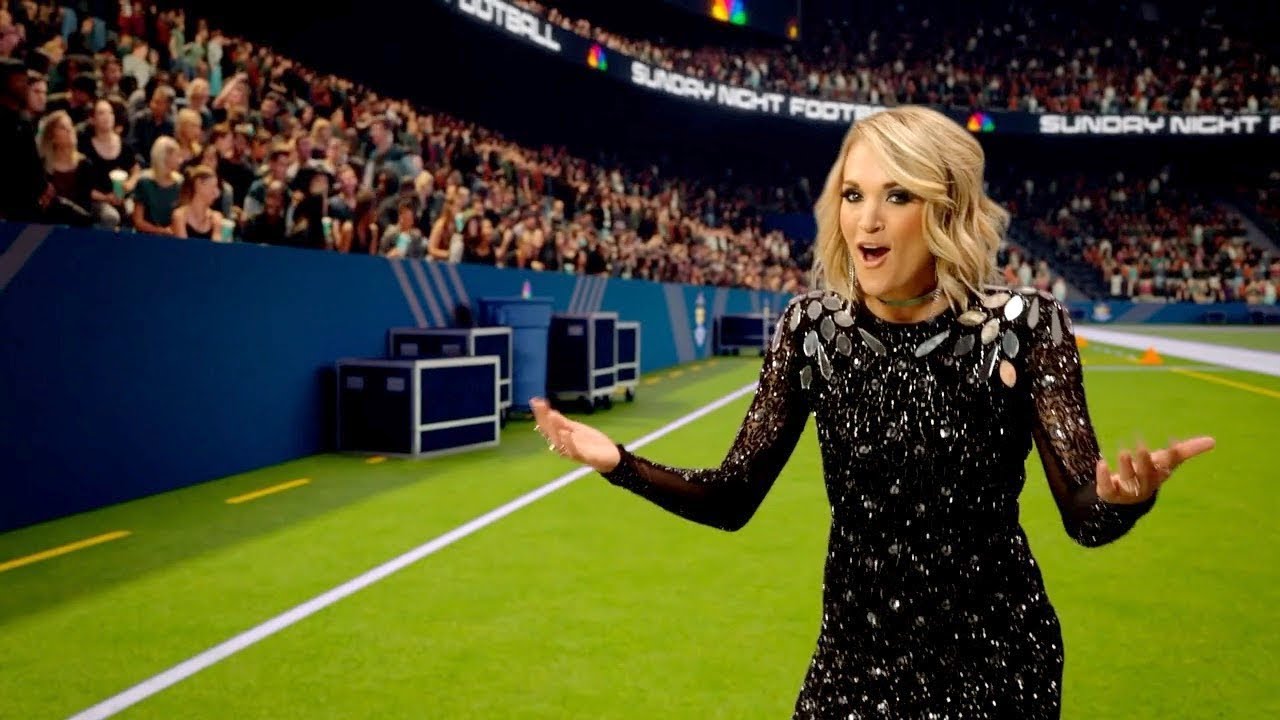
The opening sequence was a visual masterpiece. Underwood appeared in a sleek black sequined dress, striding confidently through locker rooms and onto the field as players prepared for battle. Explosive fireworks lit the night sky, massive LED screens flashed team logos in vibrant colors, and cheerleaders synced to the beat. Players emerged from tunnels like gladiators, pads gleaming under floodlights, their intense gazes captured in slow-motion glory. At the center stood Underwood—poised, unflinching, radiating authority in a space built to intimidate even the fiercest athletes.
The production fused cinematic flair with raw energy: quick cuts between roaring crowds, pyrotechnics bursting overhead, and Underwood’s dynamic performance. Her voice soared over the orchestration, building anticipation as the song name-dropped matchups and hyped the night’s showdown. It wasn’t mere introduction—it was immersion, pulling millions from their living rooms into the stadium’s electric atmosphere.
Underwood’s Unshakable Command
By 2016, Underwood was no longer the fresh-faced American Idol winner from 2005. She was a multi-platinum artist with Grammy wins, sold-out tours, and a reputation for powerhouse vocals that could fill arenas. NBC’s trust in her was evident: she wasn’t overshadowed by the spectacle; she owned it. Calm amid the chaos of fireworks and thundering crowds, Underwood delivered with precision and passion, her presence a steady anchor in the frenzy.
This role suited her perfectly. Growing up in Oklahoma, Underwood was a lifelong football fan, understanding the ritual of Sunday nights. Her performances resonated because they felt authentic—blending country grit with pop polish, appealing to diverse audiences from hardcore gridiron enthusiasts to casual viewers drawn by the glamour.
A Tradition Built on Evolution
Underwood took over in 2013 from Faith Hill, who had held the spot for six years after P!nk’s brief stint. The theme’s roots traced back to Joan Jett’s rock classic, adapted for football since 2006. But 2016’s refresh injected new life, proving NBC’s willingness to innovate while honoring tradition. “Oh, Sunday Night” ran for two seasons before fan demand brought back the familiar “Waiting All Day for Sunday Night” in 2019—a testament to Underwood’s versatility.
Each year, she records countless variations in marathon sessions, customizing lyrics for every possible matchup, including playoffs. Filmed in high-production settings—often theaters or studios mimicking stadium grandeur—the opens feature evolving visuals: from virtual realities to behind-the-scenes player shots.
Why It Felt Bigger Than Football
“You hear her, and suddenly Sunday night feels bigger than football.” That sentiment captured the magic. Underwood’s openings weren’t background noise; they were the gateway, setting an emotional tone of anticipation, unity, and exhilaration. In a divided world, millions gathered around screens, bonded by her voice bridging living rooms and stadiums.
Her calm command amid overwhelming spectacle symbolized resilience—much like the players she hyped. Fans felt the scale: fireworks symbolizing bursts of glory, pulsing lights echoing heart-pounding plays, and Underwood’s voice rising above it all, unbothered and unbreakable.
An Enduring Legacy
Over a decade later, Underwood remains the voice of Sunday Night Football, her performances evolving yet timeless. The 2016 open stands as a pinnacle—bold, innovative, and emblematic of her transformative impact. It didn’t just announce games; it celebrated them, turning routine broadcasts into events.
Carrie Underwood made Sunday nights sacred, her presence a reminder that great voices can elevate any stage—even one shared with titans of sport. From the first note to the final firework, she owned the moment, proving why NBC’s faith in her was unwavering.