What should have been an ordinary afternoon stroll home from school on a quiet January day turned into a parent’s worst nightmare — a senseless, random stabbing in broad daylight that has left a nation reeling and questioning if anywhere is truly safe for children anymore.
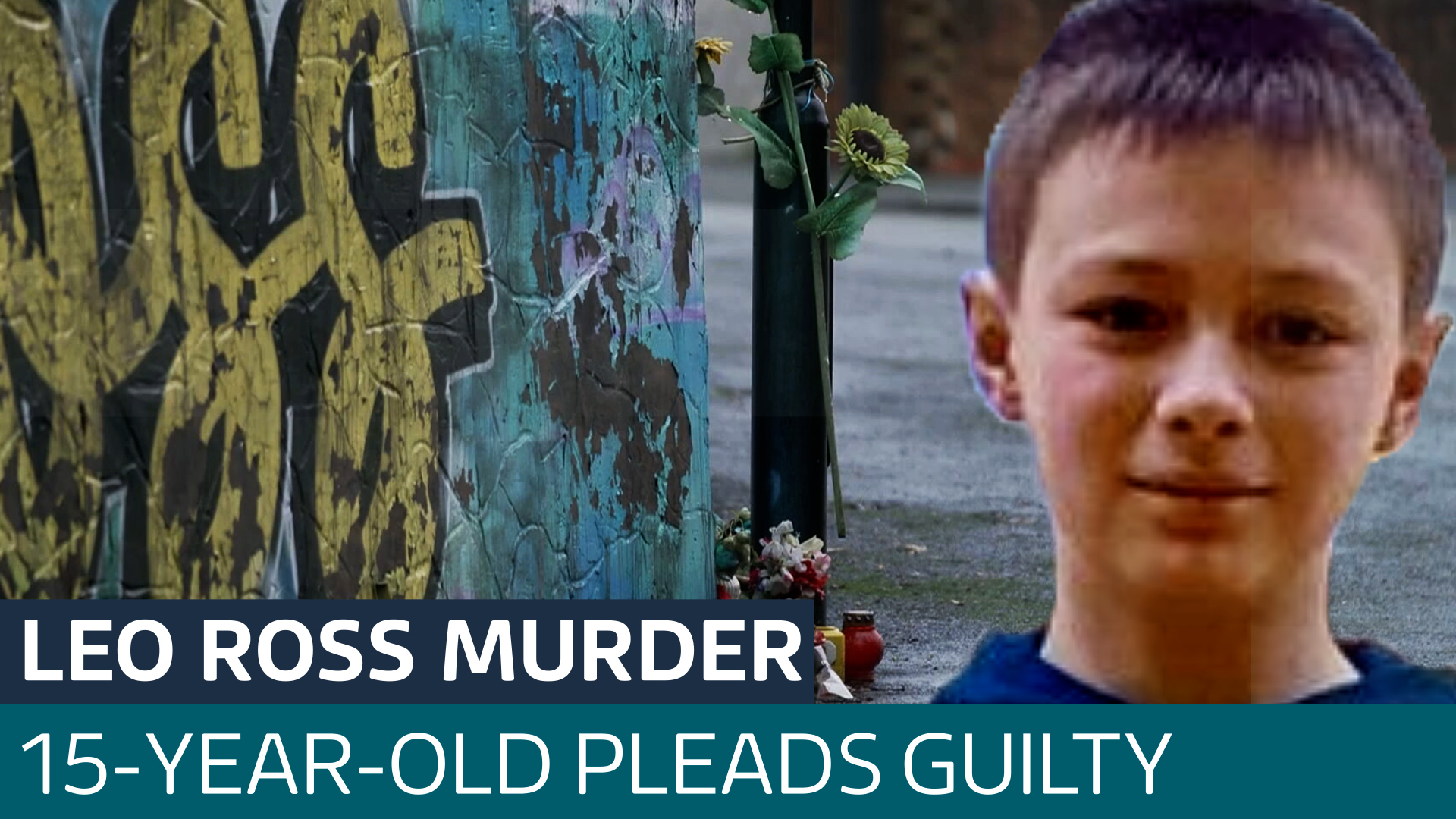
On January 21, 2025, 12-year-old Leo Ross — described by his foster family as an “amazing, kind, loving boy” who always put others first — set off from Christ Church Church of England Secondary Academy in Yardley Wood, Birmingham. He was chatting on the phone with a friend, making plans to meet near a familiar tree in the peaceful green expanse of Trittiford Mill Park (part of Shire Country Park), a short 10-minute riverside path he walked every day. Bright, full of dreams, and just beginning to navigate the world, Leo had his whole life ahead of him. He never made it to that meeting point.
Instead, a 14-year-old boy — now 15 and unnamed for legal reasons — approached him without warning. In a completely random, unprovoked attack, the teenager plunged a knife into Leo’s stomach, inflicting a catastrophic wound. Leo collapsed on the riverside footpath, bleeding out as members of the public rushed to his aid and frantically called emergency services. Despite desperate efforts, he was pronounced dead in hospital around 7:30 p.m. that evening. At just 12 years old, Leo is believed to be the youngest victim of knife crime ever recorded in the West Midlands — a heartbreaking milestone that has shattered communities and sparked furious calls for change.
The killer didn’t flee far. CCTV footage later revealed the chilling truth: he lingered near the crime scene, even pretending to be a concerned bystander who had “stumbled” upon the injured boy. When police arrived, he spoke to officers, feigning innocence. But local enquiries quickly unraveled his lies. Arrested at his home later that evening, the teenager was charged with murder. On January 29, 2026, he pleaded guilty at Birmingham Crown Court — not only to Leo’s killing, but also to a string of prior violent assaults in the same area on January 19, 20, and earlier on the 21st. He admitted two counts of causing grievous bodily harm with intent (against elderly women pushed to the ground and struck), one count of assault occasioning actual bodily harm, and possessing a bladed article on the day of the murder.
Detectives have painted a terrifying portrait of the attacker: a youth who “enjoyed hurting people” and deliberately targeted vulnerable victims “for violence’s sake.” Before zeroing in on Leo, he had rampaged through the neighborhood, attacking others in what appeared to be escalating cruelty. Yet no intervention came in time to stop the final, fatal strike. How many red flags were missed? How many chances to stop a knife-wielding teen from claiming an innocent life?
Leo’s foster family, the Westons, released a statement that breaks hearts: “Not a day goes by where we don’t think about Leo. He was the sweetest, kindest boy who put others before himself.” They spoke of a child whose life was stolen too soon, whose warmth touched everyone he met. Tributes have flooded social media and the streets of Yardley Wood — flowers, candles, and messages at the park entrance reading “RIP beautiful boy” and “Justice for Leo.” The community is in shock: this wasn’t a gang dispute or late-night trouble; it was a random daylight horror on a path kids use daily.
The case has ignited furious debate over Britain’s knife crime epidemic. Politicians, police, and grieving families demand tougher sentences, better youth intervention, and an end to anonymous protections for killers who destroy lives while shielding their own identities. Why can society name a 12-year-old victim but not the teen who ended him? Critics argue the law protects the perpetrator more than the innocent, allowing future risks to remain hidden.
As sentencing looms in February 2026, the nation confronts a grim reality: Leo Ross’s walk home ended in blood because a knife was carried, a vulnerable child was chosen, and violence was unleashed without reason. His story isn’t just a tragedy — it’s a stark warning. A quiet street, a routine walk, a bright future extinguished in seconds. Parents across Britain now wonder: Could this happen to my child?
The pain is raw, the questions endless. Leo was kind, bright, full of dreams — a boy whose life had barely begun. Now, his memory fuels a desperate cry: When will Britain finally make its streets safe for the next generation?