The winds of anticipation have whipped into a gale across the digital skies, and the earth itself seems to tremble with seismic hype. On December 9, 2025, Netflix dropped a cryptic poster for Avatar: The Last Airbender Season 2—a stark, silhouette-shrouded image of the blind earthbender Toph Beifong, her feet planted defiantly amid cracking stone, captioned simply: “Toph has arrived.” The teaser trailer follows hot on its heels today, December 10, a two-minute maelstrom that’s already shattering servers and splintering timelines in the fandom’s collective psyche. For devotees of the Nickelodeon legend—a saga that has endured for two decades as a beacon of elemental wonder and wartime wisdom—this isn’t just a sequel; it’s a seismic resurgence. The live-action adaptation, which redeemed its 2024 debut from M. Night Shyamalan’s cinematic misfire with 96% audience scores on Rotten Tomatoes, now hurtles toward its second act, promising deeper dives into the Earth Kingdom’s fractured fortresses and the Avatar’s unyielding quest for mastery. As Aang, Sokka, Katara, and their ragtag crew barrel toward the eclipse of Book Two: Earth, the excitement isn’t exploding—it’s erupting, a volcanic blast of memes, fan theories, and unbridled glee that reaffirms Avatar‘s status as pop culture’s unquenchable Appa.
To understand the fervor, one must first revisit the whirlwind that birthed this phoenix from the ashes. The original Avatar: The Last Airbender, a 2005-2008 Nickelodeon masterpiece created by Michael Dante DiMartino and Bryan Konietzko, wasn’t mere animation; it was alchemy. Over three seasons and 61 episodes, it wove a tapestry of East Asian-inspired lore—drawing from Inuit, Tibetan, and Chinese influences—around a 12-year-old airbender’s odyssey to end a century-long Fire Nation conquest. Aang (voiced by Zach Tyler Eisen), the last of his kind frozen in ice, awakens to a world scorched by imperialism, allying with waterbender Katara (Mae Whitman) and warrior Sokka (Jack DeSena) to harness the four elements: water, earth, fire, air. What elevated it beyond kiddie fare was its layered profundity—tackling genocide, imperialism, and PTSD through humor, heartbreak, and heart. Episodes like “The Tales of Ba Sing Se” wrung tears with haiku elegies, while “The Day of Black Sun” orchestrated invasions with operatic tension. Its finale, “Sozin’s Comet,” drew 5.6 million U.S. viewers, a record shattered only by its 2020 Netflix resurgence, which amassed billions of minutes watched and spawned a legion of cosplayers, scholars, and even a UN honor for promoting cultural understanding.
Shyamalan’s 2010 film trilogy, however, was a comet’s tail of disappointment—whitewashed casting, stilted CGI, and a $310 million global gross that masked a critical evisceration (7% on RT). Enter Netflix’s 2024 gambit: a faithful eight-episode reimagining helmed by showrunners Gabriel Iglesias, Rose McIver, and Justin Sun, with DiMartino and Konietzko as executive producers before their mid-2023 exit amid creative clashes. Directed by a troika including Jabbar Raisani and Jessica Yu, the series leaned into practical effects—water tanks for bending ballets, LED walls for sprawling landscapes—and a diverse cast that honored the source. Gordon Cormier, a 13-year-old Vancouverite with Filipino roots, embodied Aang’s buoyant goofiness with balletic grace, his glider staff twirling through aerial skirmishes that evoked Crouching Tiger‘s wire-fu poetry. Kiawentiio as Katara channeled maternal ferocity, her water-whips cracking like thunder, while Ian Ousley’s Zuko smoldered with royal torment, his scar a map of inner exile. The ensemble—Dallas Liu’s snarky Sokka, Lizzy Yu’s scholarly Suki—breathed fresh fire into the fray, their chemistry a campfire glow amid siege warfare.
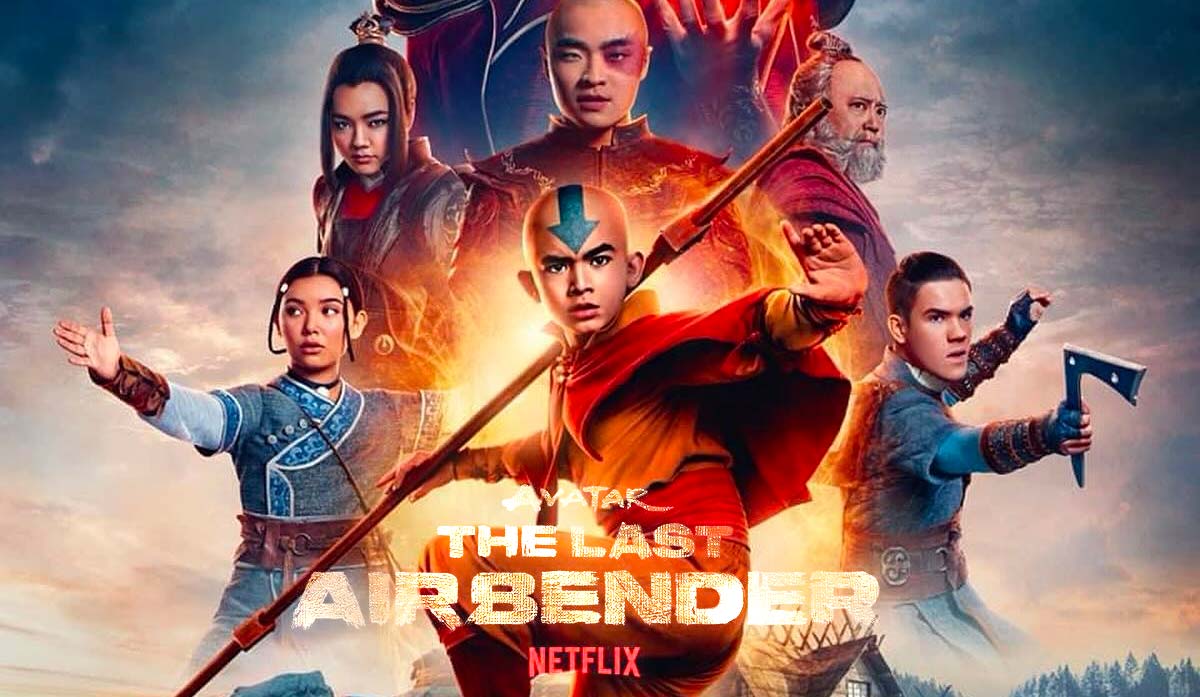
Season 1, streaming to 47 million households in 17 days, climaxed on a razor-wire: Aang’s eclipse invasion thwarted by Fire Lord Ozai’s cunning, Zuko’s redemption flickering like a dying ember, and the comet’s shadow looming. Critics, once wary, warmed: 65% on RT praised its “respectful reverence,” while audiences hailed it as “the adaptation we deserved.” But the true litmus? Fandom’s roar. TikTok exploded with bending tutorials—users “earthbending” furniture with green-screen illusions—while Reddit’s r/TheLastAirbender surged 40%, threads dissecting Aang’s pacifism in a post-Ukraine world. Now, with the Season 2 poster—a minimalist masterpiece of ochre earth tones and Toph’s unseeing gaze—Netflix has fanned those flames into a bonfire.
Miya Cech’s Toph is the talisman, a blind 12-year-old earthbending prodigy whose seismic sass and subterranean savvy redefined “tough love” in the original. Voiced by Jessie Flower with gravelly glee, cartoon Toph was a force of nature—literally—her “I see with earth” mantra birthing fan-favorite feats like metalbending’s dawn. Cech, 18 and a The Astronauts alum with a gymnast’s poise, was announced in July 2025 after a grueling Vancouver audition where she “bent” a prop boulder with seismic stomps. “Toph doesn’t need eyes to see bullshit,” Cech quipped in a Tudum interview, her freckled grin belying a performance that’s already teased in set leaks: foot-first fisticuffs in Ba Sing Se’s underbelly, her seismic sense mapping enemy tremors like a human sonar. The poster’s reveal—her silhouette against a crumbling colossus—has birthed a meme tsunami: “Toph vs. My WiFi Signal” edits, or Photoshop battles pitting her against Thanos. X lit up overnight, #TophHasArrived amassing 1.2 million mentions, users like @AvatarFanatic declaring, “Cech’s Toph is about to earthbend my expectations into oblivion.”
The trailer’s drop today— a 90-second sizzle of seismic shocks and eclipse omens—only amplifies the quake. Clocking in at dawn’s crack, it opens on Aang’s Appa soaring over the Great Divide, the camera plunging into fog-choked canyons where Team Avatar grapples with Appa-loss trauma. Cut to earthbending boot camp: Aang’s arrows fizzling against unyielding stone, Katara’s fluid grace clashing with rigid rock, until Toph’s arrival—a dust-devil whirlwind that levels a training ground with a single stomp. “Keep your feet on the ground,” she snarls, voice echoing like gravel in a blender, as Zuko’s ship breaches the horizon, his uncle Iroh (C. Thomas Howell, a grizzled sage with tea-steeped wisdom) murmuring prophecies over jasmine steam. Fire Nation intrigue simmers: Azula’s silhouette slinking through shadows, her blue flames licking like serpents, while Sokka’s boomerang whirls through a library siege that nods to Wan Shi Tong’s fox-spirit fury. The score, a thunderous remix of Jeremy Zuckerman’s original motifs by composer Takeshi Furukawa, swells with taiko drums and erhu wails, underscoring a voiceover from Aang: “The ground doesn’t give; it takes.” No release date beyond “2026,” but insiders peg Q1, post-Season 3’s back-to-back wrap in March 2026.
Production’s odyssey mirrors the elements’ fury: Filming ignited October 7, 2024, in Vancouver’s sodden sprawl—codename “Diner Bear S2,” a cheeky anagram—under LED volumes that conjured Ba Sing Se’s tiered terrors and Omashu’s sand-swept slides. Wrapping May 2025 after 23 weeks of monsoon mayhem and SAG breaks, it bridged to Season 3’s July start, ensuring Cormier’s Aang ages seamlessly from tween to teen. New faces flesh out the fray: Terry Chen as the deserter Jeong Jeong, his firebending a reluctant inferno; Dolly de Leon as the scheming Lo and Li, twin whispers in Ozai’s ear; Lily Gao as the veiled Ursa, Zuko’s lost mother; Dichen Lachman as Avatar Yangchen, her air-spirit hauntings a spectral seminar in legacy’s lash. Returning stalwarts like Adrian Kobayashi’s sly Prince Siddiq add intrigue, while stunt coordinators—vets from Shang-Chi‘s ring—choreograph bending as martial ballet: Toph’s seismic waves rippling like Dune‘s sandworms, Katara’s bloodbending teases a moral maelstrom.
Thematically, Season 2—adapting Books 2.1-2.10—shifts from water’s flow to earth’s unyielding core, probing rigidity’s romance. Aang’s earthbending block, a metaphor for grief’s grip, forces confrontations with impermanence; Zuko’s Ba Sing Se exile unearths honor’s hollow ring; Toph’s introduction shatters ableism’s facade, her blindness a superpower in a sighted world’s stumble. In 2025’s echo chamber—amid climate cataclysms and geopolitical quakes—Avatar‘s anti-war ethos resonates raw: the Fire Nation’s expansionism a scalpel to empire’s excuses, the Avatar’s balance a balm for polarized souls. Fandom’s frenzy? A four-nation symphony. X’s algorithm buckles under 2.5 million #AvatarS2 posts since the poster, threads like @BendingChaos’s “Toph Theories: Metalbend Gatecrash?” dissecting seismic subplots. TikTok’s duets sync trailer clips with original OSTs, racking 100 million views; Reddit’s r/ATLA surges 300%, polls pitting “Best New Bender” with 80% Toph sweeps. Cosplay cons overflow with earth-kingdom garb, while scholars at NYU’s 2025 Avatar Symposium laud its “decolonial depth.” Even skeptics—scarred by Shyamalan’s sins—thaw: “If Toph nails the twinkletoes takedown, I’m all in,” one viral tweet concedes.
Yet beneath the hype hums a harmonic tension: fidelity versus flair. DiMartino and Konietzko’s departure birthed fan schisms, but new showrunners—hailing from The Umbrella Academy‘s ensemble enigmas—vow “source-true with soul.” Expansions beckon: deeper dives into the Dai Li’s brainwashing bureaucracy, a Hama waterbending origin that amplifies Katara’s feminist fire. VFX wizards at DNEG, fresh from Dune: Part Two‘s deserts, promise earth-shattering spectacles—colossi crumbling in slow-mo symphonies, eclipse eclipses blotting blood-red skies. At $150 million per season, it’s Netflix’s prestige gamble, banking on Avatar‘s evergreen appeal to rival The Witcher‘s watch hours.
As December’s chill yields to 2026’s dawn, Avatar: The Last Airbender Season 2 doesn’t just bend elements—it bends expectations, forging a bridge from cartoon cradle to live-action colossus. Toph’s arrival isn’t arrival; it’s avalanche, her unyielding stance a rallying cry for a fandom forged in fire and frost. Stream the trailer, stock the tea, and brace: the eclipse approaches, and with it, a wave of bending chaos that could reshape streaming’s shores. In the words of a monk long lost: The elements may war, but harmony awaits those who listen to the ground’s growl. The fandom’s roar? It’s already deafening.