In the misty gray light of a Scottish harbor, where the Clyde whispers secrets to the sea and the wind carries the faint echo of gulls crying like distant warnings, Detective Inspector Annika Strandhed stands alone on the deck of a police boat. The water below hides more than sunken wrecks and forgotten cargo. It conceals bodies, motives, and truths sharp enough to cut through the toughest armor. BBC’s most unsettling crime thriller has returned, and this time Annika dives deeper into darkness than ever before, delivering twists that leave viewers reeling and a central performance that burns with quiet, ferocious intensity.
Nicola Walker returns as the enigmatic DI Annika Strandhed, head of Glasgow’s Marine Homicide Unit (MHU). With her signature fourth-wall-breaking asides—dry, literary, and laced with black humor—she pulls the audience straight into her fractured world. Annika doesn’t just solve crimes washed up from Scotland’s unforgiving waterways. She narrates them like chapters from a novel that refuses to end happily, drawing parallels to everything from Dr. Jekyll and Mr. Hyde to ancient Scottish ballads and Orwellian nightmares. Her wry observations cut through the horror, but they also reveal the cracks in her own carefully constructed life.
Season Two opens with a chilling discovery: a mobile phone handed in to police containing footage of a brutal drowning. The victim’s final moments, captured in shaky, horrifying detail, set the tone for a series of murders more complex, more personal, and more psychologically twisted than anything the MHU has faced before. One episode plunges the team into the glittering yet deadly world of a Scottish millionaire found floating in his own shark tank. Another drags them to the rugged Hebridean Isles and the bustling streets of Edinburgh, where bodies surface in rivers, canals, and remote streams. Each case feels like a fresh descent into the abyss—victims include a recently released prisoner, a former police officer whose death hits uncomfortably close to home, and others whose secrets refuse to stay submerged.
The crimes are not mere puzzles for clever detectives to unravel. They are mirrors reflecting the ugliest parts of human nature: jealousy that festers for years, revenge served ice-cold, and the terrifying ease with which ordinary people can become monsters. Walker’s Annika navigates these horrors with her trademark blend of sharp intellect and emotional vulnerability. She breaks the fourth wall to share literary insights that illuminate the case while simultaneously exposing her own inner turmoil. One moment she is dissecting a killer’s psyche with clinical precision; the next, she is quietly falling apart over the secrets that have finally come home to roost.

Because this season, the real storm rages not only in the waters but inside Annika’s personal life. The bombshell revelation from the end of Season One—that DS Michael McAndrews (Jamie Sives) is the biological father of her teenage daughter Morgan (Silvie Furneaux)—hangs over every interaction like a gathering squall. Annika delays telling Michael the truth, torn between protection and honesty. Morgan, brilliant and complex, senses the shifting dynamics without knowing the full story. As the season progresses, long-buried family wounds reopen. Annika’s estranged father Magnus (Sven Henriksen) arrives, bringing decades of resentment and complicated love that force her to confront who she really is beneath the detective’s badge.
The reappearance of Jake Strathearn (Paul McGann), the therapist from Season One with whom Annika shared a spark, adds another layer of emotional turbulence. Their reconnection offers moments of warmth and banter that feel like rare sunlight breaking through perpetual Scottish cloud cover. Yet even these tender scenes carry an undercurrent of danger—Annika’s inability to fully let anyone in threatens to sink every relationship she values.
The supporting team around her evolves in compelling ways. Katie Leung’s DC Blair Ferguson grapples with her own life-changing news, while new addition Harper Weston (Varada Sethu) injects fresh energy and perspective into the unit. Jamie Sives’ Michael balances professional duty with the growing personal entanglement, creating scenes heavy with unspoken tension. The ensemble chemistry crackles, making the quieter moments between cases as gripping as the high-stakes investigations.
What sets Annika apart—and makes it darker and grittier than many of its contemporaries—is its refusal to offer easy comfort. The murders are visceral and inventive: a body encased in ice, a drowning captured on video, deaths that blur the line between accident and calculated evil. Director and writers lean into the moody Scottish landscapes—fog-shrouded coasts, rain-lashed cities, remote islands—to amplify the sense of isolation and dread. The crimes feel personal, not just for the victims but for the investigators who must wade through moral gray zones while their own lives unravel.
Viewers who tuned in for the procedural elements find themselves hooked by something deeper: the slow-burn exploration of how trauma, secrets, and love collide. Annika’s habit of addressing the camera directly creates an intimate, almost confessional tone. She shares observations that are funny, poignant, and sometimes painfully honest, turning the show into a hybrid of dark comedy and psychological drama. One episode might open with a literary riff on duality and monstrosity, only to reveal how that theme plays out in both the killer and the detective herself.
As the season builds toward its finale, the stakes escalate dramatically. Team dynamics shift under pressure. Personal revelations threaten to derail investigations. And one final twist—delivered with devastating precision—leaves everything hanging in a way that feels both shocking and inevitable. It is the kind of jaw-dropping moment that lingers long after the credits roll, forcing viewers to reevaluate everything they thought they knew about Annika and the people closest to her.
Nicola Walker’s performance anchors it all. She brings a magnetic mix of vulnerability, wit, and quiet steel to the role. Annika is neither flawless hero nor broken anti-hero; she is a deeply human woman trying to hold her world together with intellect and dark humor while the tide pulls relentlessly at her feet. Walker makes every fourth-wall break feel natural, every emotional crack visible yet never overplayed. It is television acting at its most compelling—raw enough to hurt, sharp enough to dazzle.
In a crowded field of crime dramas, Annika stands out for its willingness to be uncomfortable, funny, and heartbreaking in the same breath. The cases are more intricate, the personal stakes higher, and the overall atmosphere denser with dread. It doesn’t just ask viewers to solve whodunits; it invites them to sit with the uncomfortable truths about family, identity, and the monsters we carry inside.
The waters of Scotland have never looked more treacherous. Bodies keep surfacing. Secrets keep rising. And DI Annika Strandhed, talking directly to us with that knowing half-smile, leads us deeper into the murk than we ever expected to go.
BBC’s darkest thriller has returned with a vengeance. The twists you won’t see coming are only the beginning. Once you dive in, there is no coming up for air until the final, haunting frame.
News

Caught on Camera: The Viral Video Sparking A$AP Rocky Cheating Rumors with Rihanna — What Really Happened Backstage at AWGE
In the glittering haze of a New York City fashion show backstage, where mirrors reflected endless flashes of cameras and the air hummed with the buzz of creative chaos, A$AP…

Rihanna Recalls the Terrifying Moment Gunshots Ripped Through Her Home While A$AP Rocky and Their Three Young Children Were Inside
In the soft, filtered sunlight of a quiet Sunday afternoon in Beverly Hills, the sprawling colonial-style mansion stood as a sanctuary of luxury and family warmth. Inside its gates, the…

From Big-Sister Lesson to Sweet Surprise: Blossom Stuns Cardi B with Her First Piano Performance After Quality Time with Offset and Kulture
In the warm glow of a luxurious Atlanta living room, where afternoon sunlight filtered through tall windows and danced across polished wood floors, a tender family moment unfolded that melted…

Blue Ivy Carter Stuns in Paris: Rocking Her Own “Déjà Blue” Cowboy Carter Tour Merch While Shopping Like a True Icon
In the soft golden light of a Parisian afternoon, where the Seine glimmers like liquid silver and the air carries the faint scent of fresh croissants and expensive perfume, a…
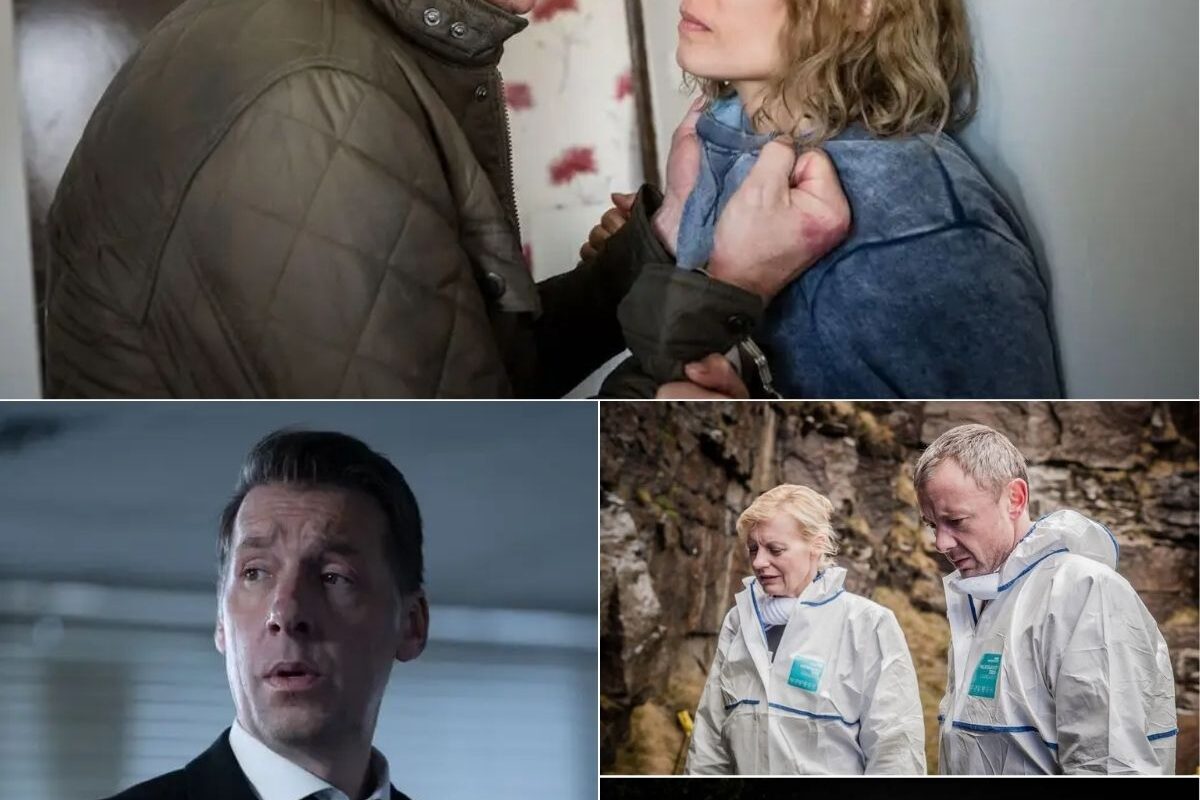
“Gripping” Crime Thriller on Netflix: John Simm’s Explosive Manhunt in Prey Leaves Viewers Speechless and Unable to Stop Watching
In the rain-slicked streets of Manchester, under a sky the color of bruised steel, a man crawls from the wreckage of a crashed police van, blood on his hands and…

“Wait… Are They Even Allowed To Say That?” — How One Village People Invasion Turned SNL’s Weekend Update Into Glorious, Boundary-Pushing Chaos
In the pulsing neon haze of Studio 8H, where the air crackles with live-wire energy and the faint scent of stage makeup hangs like fog over a disco floor, Saturday…
End of content
No more pages to load