Fans of period dramas have been flocking to watch the 2020 romantic film on BBC — but viewers are being warned that the captivating drama will soon disappear from the platform. Starring Kate Winslet and Saoirse Ronan, the film tells a quietly powerful love story that has left many audiences completely mesmerised. Rather than relying on grand spectacle, the movie unfolds with subtle emotion and intimate performances that critics and viewers alike have praised. One viewer described it as “an understated love story,” adding that the performances from the film’s female leads were delivered with remarkable subtlety and depth. Another fan admitted that trying to explain the emotional impact would “ruin the enjoyment,” calling it a truly unforgettable experience.
Ammonite emerges like a rare fossil unearthed from the rugged shores of Lyme Regis — weathered by time, layered with history, and revealing unexpected beauty upon closer inspection. Directed and written by Francis Lee, the 2020 romantic drama takes loose inspiration from the real-life 19th-century palaeontologist Mary Anning, reimagining her solitary existence through a speculative lens of forbidden desire and quiet transformation. Now streaming on BBC iPlayer, the film has experienced a gentle resurgence among British audiences drawn to its atmospheric restraint and powerhouse performances. Yet with its availability on the platform nearing its end, fans are racing to experience — or revisit — this mesmerising tale before it slips away like the tide.
Set in the 1840s along the windswept coastline of Dorset, Ammonite follows Mary Anning (Kate Winslet), a self-taught fossil hunter whose groundbreaking discoveries helped shape early palaeontology. In the film’s reality, Mary’s glory days of unearthing ichthyosaurs and plesiosaurs have faded. She now scrapes by selling common ammonites and other curios to tourists from a modest shop she shares with her ailing mother, Molly (Gemma Jones). Mary’s days are defined by physical labour: bending against harsh winds, digging into slippery cliffs at low tide, and meticulously cleaning her finds. Her life is one of proud independence tempered by isolation, poverty, and the quiet resentment of a male-dominated scientific world that often claimed credit for her work.
The disruption arrives in the form of Roderick Murchison (James McArdle), a wealthy gentleman geologist eager to learn from Mary’s expertise. He pays her to guide him on fossil hunts, but soon departs for Europe, leaving his fragile young wife, Charlotte (Saoirse Ronan), in Mary’s care. Charlotte arrives melancholic and withdrawn, recovering from the emotional toll of a miscarriage or infant loss. Her husband believes the sea air will restore her vitality; instead, the arrangement forces two women from vastly different social worlds into reluctant proximity.

At first, the pair clash. Mary, blunt and self-sufficient, views Charlotte as a delicate burden — another reminder of the class divide that limits her own opportunities. Charlotte, sheltered and listless, struggles with the raw physicality of Mary’s existence. Their early interactions are laced with awkward silences and subtle friction, captured through Lee’s deliberate pacing and minimalist dialogue. The film trusts its audience to read the unspoken: a shared glance during a storm, the careful way hands brush while handling a fossil, the gradual softening of guarded expressions.
As Charlotte falls ill with hypothermia after venturing into the sea, Mary nurses her back to health in the modest family home. This forced intimacy becomes the catalyst for connection. Their bond deepens through shared routines — beach walks, fossil cleaning, quiet evenings by candlelight. What begins as companionship evolves into something far more profound: an intense romantic and sexual relationship that awakens both women. Charlotte rediscovers passion and purpose, while Mary allows herself vulnerability she has long suppressed. The love scenes are raw, explicit, and refreshingly honest — devoid of romantic gloss, they emphasise physicality, tenderness, and mutual discovery in a society that offered women like them little space for such expression.
Kate Winslet delivers what many consider one of her finest performances. Her Mary is a study in restrained power: weathered hands, a stoic gaze, a body shaped by years of labour. Winslet conveys volumes through silence and small gestures — the tightening of a jaw, the flicker of longing in her eyes, the careful precision with which she works on fossils. There is no vanity here; Mary feels lived-in, grounded, and achingly human. Saoirse Ronan matches her beat for beat as Charlotte. Starting from a place of pale fragility, Ronan’s performance blooms with luminous energy as her character regains strength and agency. The chemistry between the two leads crackles with authenticity — never rushed, always earned — turning what could have been a conventional period romance into something deeply sensual and emotionally layered.
Supporting roles add texture without overshadowing the central dynamic. Gemma Jones brings quiet dignity to Molly, whose declining health underscores the precariousness of Mary’s world. Fiona Shaw appears as a local figure who provides subtle commentary on societal expectations. The film’s male characters, including Roderick, serve more as catalysts than fully fleshed individuals, highlighting the patriarchal structures that confine the women.
Director Francis Lee, whose previous work God’s Own Country explored rural queer romance with similar restraint, crafts Ammonite with exquisite sensory detail. The cinematography lingers on the harsh beauty of the Dorset coast: crashing waves, muddy cliffs, overcast skies that mirror the characters’ inner storms. Sound design amplifies the physicality — the scrape of tools on rock, the howl of wind, the intimate rhythm of breath and touch. Production design feels authentically spare: threadbare clothing, dim candlelit interiors, and the ever-present fossils that symbolise both ancient endurance and hidden beauty. The score is sparse, allowing the natural sounds of the sea and the weight of silence to carry emotional weight.
Thematically, Ammonite delves into several profound ideas. At its core, it is a meditation on loneliness and the transformative power of connection. Mary’s solitary existence reflects the real historical challenges faced by women in science — their contributions often erased or undervalued. The film subtly critiques class and gender barriers of Victorian England without heavy-handed preaching. Charlotte’s journey from passive melancholy to awakened desire represents a quiet rebellion against marital and societal constraints. Their relationship, though fictional, speaks to the universal longing for understanding in a world that demands conformity.
The title itself is richly symbolic. Ammonites — spiral-shaped fossils — represent resilience through time, hidden treasures revealed only through patient excavation. Just as Mary chips away at stone to uncover ancient life, the women gradually peel back emotional layers to reveal their true selves. The film also explores the tension between personal fulfilment and societal duty. By its ambiguous conclusion, viewers are left contemplating whether love can truly alter entrenched realities or if it remains a fleeting, precious interlude.
Many BBC viewers have described the experience as “life-changing” or “entrancing,” praising its understated elegance. Unlike lavish costume dramas filled with balls and intrigue, Ammonite finds power in restraint. Its emotional impact builds slowly, rewarding patience with scenes that linger in the memory. The film’s explicit yet tender intimacy has sparked discussion, with some calling it brutally honest in its portrayal of desire between women. Others appreciate how it honours Mary Anning’s legacy while imagining a richer inner life for a historical figure whose personal relationships remain largely unknown.
As the film quietly climbs viewing charts on iPlayer, the warning is clear: time is running out. With its departure from the platform imminent, audiences are urged to seize the opportunity to immerse themselves in this spellbinding drama. Ammonite may not offer sweeping plots or easy resolutions, but it delivers something rarer — a deeply felt exploration of human connection set against the timeless backdrop of sea, stone, and sky.
In an era of fast-paced streaming content, Lee’s film stands as a reminder of cinema’s capacity for quiet intensity. Winslet and Ronan’s performances elevate it into something transcendent, making Ammonite not just a period romance but a profound reflection on love, loss, resilience, and the fossils we leave behind — both literal and emotional. For those who discover it in these final days on BBC, the experience is likely to feel as enduring as the ancient spirals Mary once unearthed: subtle at first, then impossible to forget.
News
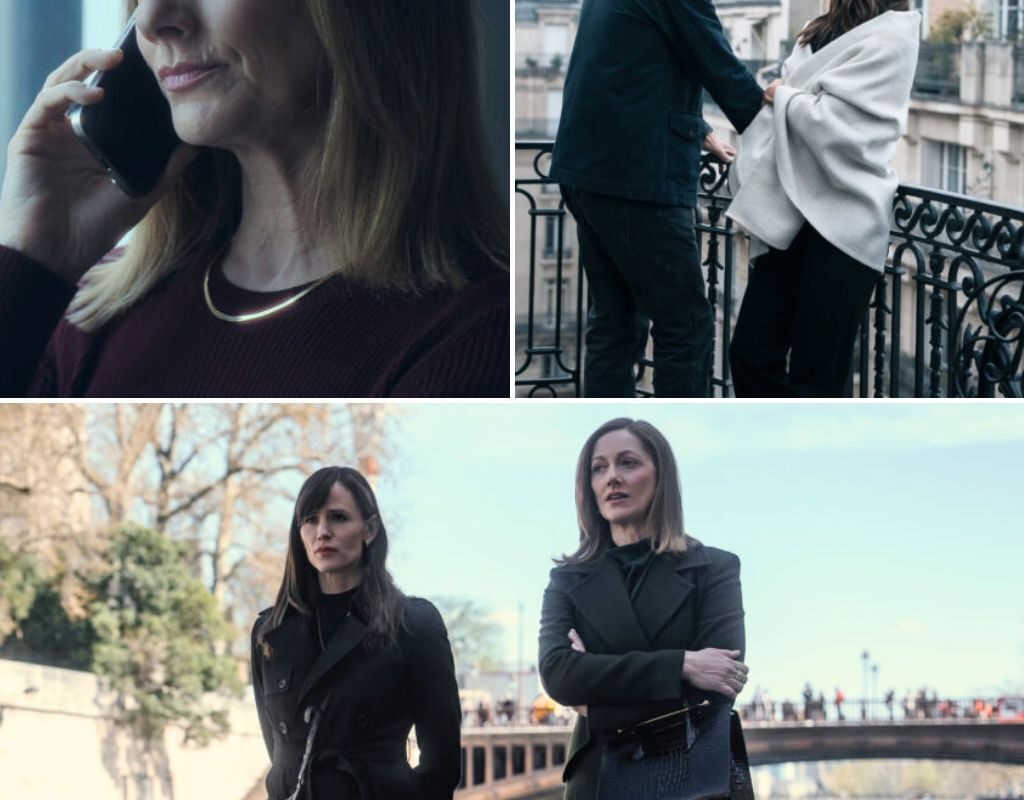
“THE FINAL REVEAL CHANGED EVERYTHING!” — The Last Thing He Told Me Season 2 Finale Drops the Truth About Kate’s Death as Jennifer Garner and the Cast Break Down the Shocking Ending and That Massive Cliffhanger!
Fans of The Last Thing He Told Me were left stunned after the Season 2 finale finally revealed the long-hidden truth surrounding Kate’s death — a twist that instantly reshaped…

‘DARLING… PLEASE TELL ME THIS IS A JOKE’ — Saturday Night Live COLD OPEN GOES FULL CHAOS AS Melania Trump’S ‘EPSTEIN PRESS CONFERENCE’ IDEA SENDS US President INTO PANIC: ‘YOU’RE MAKING IT WORSE… STOP TALKING!’!
“Darling… I gotta be honest, this sounds a little insane.” That’s how James Austin Johnson’s version of the US President kicked off the chaos during the latest cold open on…

NETFLIX VIEWERS CAN’T BREATHE DURING ‘PHENOMENAL’ SURVIVAL THRILLER — ‘I WAS TENSE ALL THE WAY THROUGH’ AS SHOCKING NEW SHARK HORROR STORMS TO #1 WORLDWIDE!
Netflix viewers are completely hooked on a “phenomenal” new survival thriller that’s leaving audiences watching from behind their hands. Starring Bridgerton actress Phoebe Dynevor, the film has quickly surged to…

“I Pressed Play Once… and Didn’t Sleep” — Netflix Viewers Are Calling This New Family Crime Saga a Total Trap
It starts quietly, almost harmless — a family, a home, a sense of normalcy that feels carefully rehearsed. Then the first secret slips out, and everything fractures. With each episode,…

No one saw this slow-burn thriller coming — and now everyone is talking about it.
Netflix has quietly pushed a chilling neo-Western crime drama back into the spotlight, and viewers are completely hooked. Starring Kevin Costner and Diane Lane, this haunting 2020 film is climbing…

Cardi B Reaches Out to Estranged Husband Offset After Casino Shooting as Gambling Debts Pile Up
Offset’s latest brush with violence has once again thrust the Atlanta rapper into the spotlight, this time with layers of personal, financial, and relational drama unfolding in rapid succession. On…
End of content
No more pages to load