The BBC has unleashed a five-episode juggernaut that is leaving viewers breathless, sleepless, and utterly terrified: The War Between the Land and the Sea — a pulse-pounding Doctor Who spin-off where ancient oceanic horrors rise from the depths, cities teeter on the brink of drowning, and humanity’s survival hangs by a thread! This isn’t just sci-fi drama; it’s a full-blown apocalyptic nightmare disguised as prestige television, and Russell Tovey stands at the epicenter as the reluctant everyman thrust into the role of humanity’s last hope.
Premiering on BBC One and iPlayer with a double-bill on December 7, 2025 (and rolling out internationally on Disney+ in 2026), the miniseries wastes no time plunging audiences into chaos. Created by Russell T Davies, the mastermind behind modern Doctor Who, the show resurrects the Sea Devils—those iconic, reptilian aquatic villains from classic Who lore—now rebranded as “Homo Aqua,” a fearsome, ancient species reclaiming the planet they believe was stolen from them. Rising dramatically from the ocean in a global reveal, these amphibious beings trigger an international crisis that threatens to drown the world in war, rising tides, and buried secrets older than civilization itself.
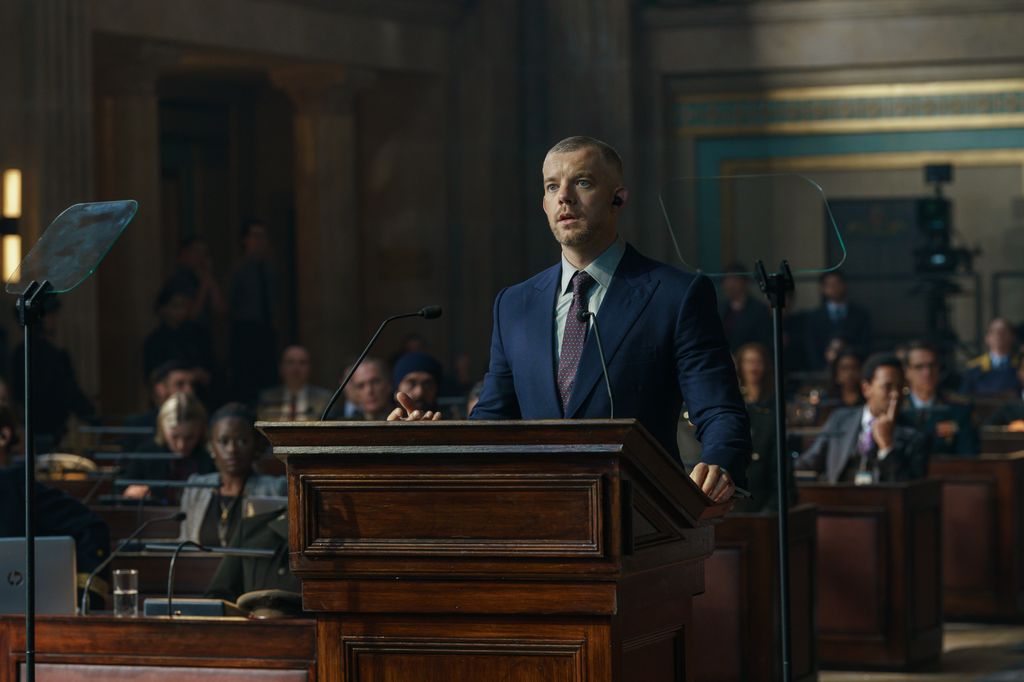
At the heart of the storm is Barclay Pierre-Dupont, played with raw intensity by Russell Tovey. A low-level UNIT logistics manager—basically a paper-pushing nobody—Barclay’s ordinary life explodes when an administrative mix-up catapults him into the role of humanity’s ambassador. Suddenly, he’s the face of negotiations with an enraged underwater civilization, staring down extinction while grappling with fear, doubt, and unexpected defiance. Tovey’s performance is electric: wide-eyed terror giving way to fiery determination, capturing the everyman’s panic as the world fractures around him. Critics rave that he carries the series on his shoulders, turning a reluctant bureaucrat into a symbol of fragile human resilience.
Opposite him stands Gugu Mbatha-Raw as Salt, the enigmatic leader of the Homo Aqua. With eerie calm and chilling poise, Salt emerges as a formidable force—part diplomat, part harbinger of doom. Her presence deepens the dread; every measured word hints at millennia of resentment and secrets lurking beneath the waves. Mbatha-Raw’s performance is a masterclass in understated menace, making Salt both sympathetic and terrifying. Is she a villain seeking vengeance for humanity’s destruction of the seas, or something far more complex? The tension between Barclay and Salt crackles with every confrontation, blending diplomacy, betrayal, and existential horror.
Supporting the leads is a powerhouse UNIT ensemble. Jemma Redgrave reprises her iconic role as Kate Lethbridge-Stewart, the steely commander-in-chief desperately trying to hold the line against global panic. Ruth Madeley as scientific advisor Shirley Bingham and Alexander Devrient as Colonel Ibrahim add layers of military strategy and scientific urgency, while Colin McFarlane returns as General Austin Pierce (a Torchwood veteran from Children of Earth), bringing gravitas to the high-stakes response. The cast chemistry is electric—frantic war-room debates, underwater confrontations, and quiet moments of despair all feel painfully real.
The plot unfolds like a ticking bomb across five taut episodes. It begins with the shocking emergence of the Homo Aqua during a routine maritime incident, escalating into a full-blown global crisis as coastal cities flood, governments collapse into chaos, and UNIT scrambles to prevent all-out war. Rising waters symbolize climate catastrophe; awakening ancient forces evoke primal fear. Davies and co-writer Pete McTighe weave in timely themes—environmental devastation, diplomacy vs. aggression, humanity’s hubris—without preaching, letting the terror speak for itself. Episodes like “Homo Aqua” and “Plastic Apocalypse” build a slow-burn dread that explodes into action-packed spectacle, culminating in a finale fans are already calling “unpreparable.”
Visually, the series is a triumph. Underwater sequences are claustrophobic and breathtaking, with CGI Sea Devils (Homo Aqua) that feel truly otherworldly—sleek, menacing, and ancient. Cities drowning under surging tides, UNIT bases in panic, and intimate ambassadorial showdowns create a palpable sense of apocalypse. The score throbs with oceanic menace, sirens wailing as the land and sea collide.
Critics hail it as “the BBC’s most terrifying slow-burn in years”—a proper Doctor Who spin-off with climatological stakes, verve for sci-fi fans and emotional depth for broader audiences. Fans on social media are losing sleep: “That finale wrecked me,” “Salt is terrifyingly calm—chills!” “Tovey deserves awards for carrying the fear.” Some debate the “cold war” pacing vs. all-out battles, but the consensus is overwhelming: this is event television that haunts long after the credits roll.
The War Between the Land and the Sea isn’t just a spin-off—it’s a monster of a miniseries that redefines stakes in the Whoniverse. Sirens wail, waters rise, ancient forces awaken, and one ordinary man stands between us and extinction. Russell Tovey anchors the terror; Gugu Mbatha-Raw deepens the dread. The planet is fracturing—will humanity survive the war between land and sea?
Stream it now on BBC iPlayer (UK) or brace for Disney+—but be warned: once the tides draw you in, there’s no escaping the nightmare.