Imagine clawing your way back from the void, only to find the world you fought for has rewritten you out of existence. That’s the gut-wrenching hook of Absentia, the ferociously addictive psychological crime series now storming Netflix’s charts like a nor’easter off the Boston coast. Stana Katic, channeling the unyielding fire that made her a Castle icon, returns not as a quippy detective but as a shattered force of nature—Emily Byrne, an FBI agent presumed dead for six years, emerging from captivity with scars that run deeper than skin and memories that fracture like glass under pressure. It’s the kind of role that demands everything: raw vulnerability one moment, feral determination the next, all laced with a quiet rage that simmers until it erupts. Viewers aren’t just watching; they’re trapped in Emily’s nightmare, hearts pounding through 30 episodes of escalating dread that blend the small-town paranoia of Broadchurch with the visceral, mind-bending horror of Hannibal—but colder, more intimate, and utterly relentless.
Absentia isn’t your standard procedural chase; it’s a descent into the marrow of trauma, where every recovered fragment of the past unearths a fresh betrayal. Created by Gaia Violo and Matthew Cirulnick, and helmed primarily by director Oded Ruskin, the series unfolds across three seasons, each a meticulously layered labyrinth of secrets. What starts as a personal resurrection spirals into a web of serial killings, institutional corruption, and familial fractures that question the very essence of identity. Emily’s odyssey begins in the dim, dripping confines of a forest cabin, where she’s discovered—emaciated, unresponsive, a ghost in her own life. The years she vanished? A black hole, filled only with hallucinatory flashes: a bleeding eye, the metallic tang of fear, the echo of screams that might be hers or someone else’s. As she stumbles back to Boston, the city that once cradled her ambitions now feels like a predator, its fog-shrouded alleys and rain-slicked streets closing in like jaws.
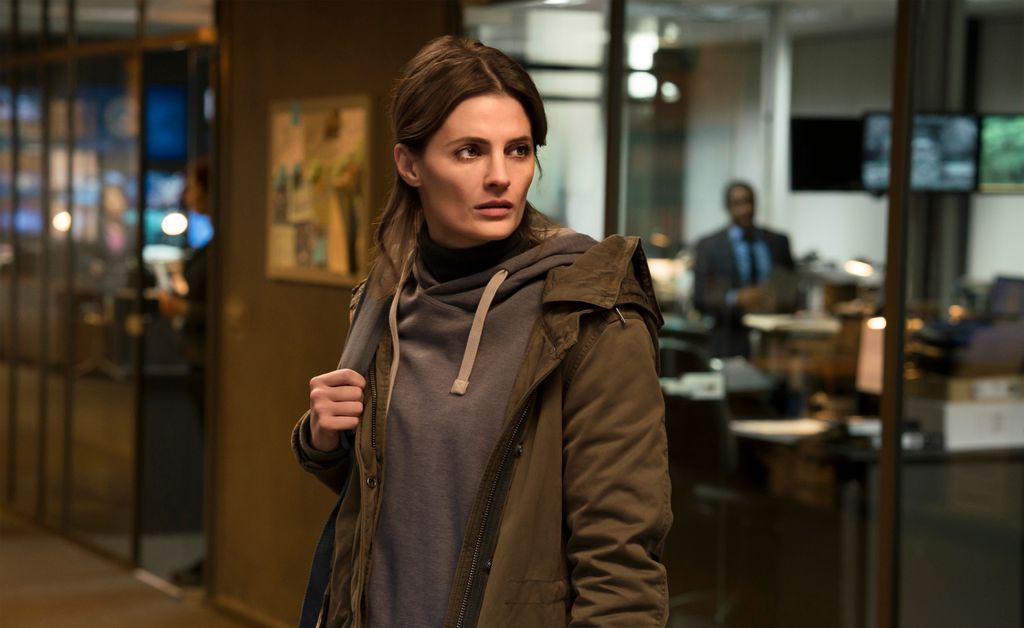
Katic’s Emily is the series’ electrifying core, a performance so viscerally authentic it borders on exorcism. Gone is the polished charm of her procedural past; here, she’s a woman hollowed out by unimaginable ordeals, her eyes—those piercing, storm-gray windows—betraying a perpetual war between fragility and fury. In the opening episodes, Katic navigates Emily’s reentry with heartbreaking precision: the hesitant touch of her son’s hand, the way her fingers tremble around a coffee mug during a therapy session, the involuntary flinch at a slammed door. It’s in these quiet fissures that Katic shines, embodying the PTSD-riddled survivor who advises on resilience while her own psyche splinters. But as the plot accelerates, so does her transformation—Emily evolves from victim to vigilante, her movements gaining a predatory grace, her voice dropping to a husky growl during interrogations. One standout sequence, midway through season one, has her cornering a suspect in a derelict warehouse, the camera lingering on her sweat-beaded brow and clenched jaw as fragmented memories bleed into the present. Katic doesn’t just act the part; she inhabits it, making Emily’s unraveling feel like a live wire, unpredictable and impossible to ignore.
The world Emily crashes back into is a masterstroke of domestic horror, where the familiar becomes weaponized. Her husband, Nick Durand—portrayed with brooding intensity by Patrick Heusinger—is no longer the devoted partner she remembers but a man who’s rebuilt his life on her grave. Heusinger nails the conflicted everyman: warm smiles masking gnawing guilt, his broad shoulders slumping under the weight of divided loyalties. Nick’s new wife, Alice (Cara Theobold, all brittle poise and veiled resentment), has seamlessly assumed the role of mother to their son, Flynn (the wide-eyed Patrick McAuley), turning their cozy brownstone into a minefield of awkward silences and territorial glances. Theobold’s Alice is a revelation— not a villainous interloper, but a fiercely protective woman whose own scars from loss make her empathy curdle into suspicion. Their interactions crackle with unspoken accusations: a shared glance over breakfast that lingers too long, a bedtime story interrupted by Emily’s shadow in the doorway. Flynn, caught in the crossfire, tugs at the heartstrings; McAuley’s subtle performance captures a child’s confusion, his tentative “Mom?” laced with the ache of dual realities.
Layered into this familial maelstrom is the procedural pulse that keeps the adrenaline spiking. Emily’s return coincides with a rash of gruesome murders—bodies drained of blood, eyelids meticulously removed, echoing the signature of the serial killer she was hunting when she vanished. As evidence mounts implicating her—fibers from her old jacket at crime scenes, blurry CCTV footage of a figure matching her silhouette—the FBI turns on its own. Enter the supporting ensemble, each adding shades of moral ambiguity. Neil Jackson’s Jack Byrne, Emily’s brother and a recovering alcoholic, brings gravelly warmth and quiet desperation; his arc from sidelined enabler to reluctant ally grounds the chaos in sibling bonds tested by fire. Angel Bonanni’s Detective Tommy Gibbs is the dogged everyman cop, his rumpled trench coat and world-weary drawl hiding a growing obsession that blurs professional lines. And in later seasons, Matthew Le Nevez’s Cal Isaac emerges as Emily’s steadfast partner-in-crime, a former Navy SEAL whose haunted eyes hint at shared darkness, their chemistry a slow-burn anchor amid the frenzy.

Thematically, Absentia is a scalpel to the soul, dissecting how trauma reshapes not just the survivor, but everyone orbiting them. Memory—or its cruel absence—is the narrative engine, with Emily’s amnesia serving as both plot device and psychological scalpel. Flashbacks, triggered by innocuous scents or sounds, erupt like seizures: the sterile gleam of a surgical lamp, the sting of needles piercing flesh, whispers of experiments that suggest her captivity was no random abduction but part of something orchestrated, sinister. The series probes the unreliability of recollection, blurring truth and hallucination until viewers question every reveal. One hallucinatory motif, the “bleeding eye,” recurs like a fever dream— a crimson tear symbolizing suppressed horrors that demand release, forcing Emily (and us) to confront the cost of forgetting.
Family, too, is no sanctuary but a battlefield of loyalty and loss. Emily’s desperate bid to reclaim her place exposes the fragility of bonds: Nick’s remarriage isn’t betrayal but survival, Alice’s hostility a shield for her own grief. The show unflinchingly charts the collateral damage—Flynn’s nightmares, Jack’s relapses—reminding us that resurrection comes at the price of ripping open old wounds. Crime elements amplify the stakes, evolving from lone-wolf killings to sprawling conspiracies: human trafficking rings in season two, organ-harvesting syndicates in three, all laced with FBI corruption that erodes trust in institutions. It’s a commentary on systemic failures, where power protects predators, and the lone wolf like Emily must bare her teeth to survive. Moral ambiguity reigns; heroes make monstrous choices, villains harbor glimmers of humanity, echoing Hannibal‘s gourmet depravity but grounded in Broadchurch‘s community unraveling.
Visually, Absentia is a feast of shadows and suburbia, filmed in Bulgaria’s stark landscapes doubling as Boston’s brooding underbelly. Ruskin’s direction favors tight, claustrophobic shots—cramped therapy offices, fog-choked bridges, rain-lashed windows—that mirror Emily’s constricted world. The palette is desaturated grays and blues, punctuated by visceral reds: arterial spray, the glow of crime-scene tape, Emily’s lipstick as war paint. Nami Melumad’s score throbs like a migraine—low cello drones building to staccato percussion—while sound design weaponizes silence, broken only by Emily’s ragged breaths or a distant siren. Episode structure masterfully ratchets tension: season one’s ten installments pivot from intimate homecoming to fugitive frenzy, each cliffhanger a gut-punch (a mid-season betrayal that reframes everything). Season two dives deeper into conspiracy, introducing international chases and personal guttings—like a suicide that shatters the core team—while three’s organ-trade plot globe-trots to Europe, culminating in a finale of pyrrhic victories and lingering threats.
What hooks you isn’t just the whodunit—though the twists land like sniper shots, subverting expectations without cheap gimmicks—but the emotional aftershocks. Absentia lingers because it doesn’t glorify survival; it brutalizes it. Emily’s triumphs are Pyrrhic, stained with the blood of compromises and the ghosts of what was lost. Katic’s tour de force elevates the material, turning a solid thriller into something transcendent, her Emily a feminist anti-heroine who redefines resilience not as unbroken strength, but as piecing yourself together with jagged edges. Critics may quibble over procedural tropes, but fans rave about the binge compulsion: “edge-of-your-seat addictive,” “Katic’s best work,” a pulse-racer that demands you unravel it all.
In a streaming sea of forgettable chills, Absentia is the one that haunts, the series that whispers long after the screen fades: What if coming back is the real horror? What if erasure was the kinder fate? For thriller devotees craving that cold-spine shiver, this is your inescapable obsession—three seasons of shadows tightening, allegiances snapping, and a woman who rises, broken but unbroken, to burn it all down. Dive in, but brace yourself: once Emily opens her eyes, there’s no closing them on the darkness ahead.