Avengers: Doomsday – The Heartbreaking Fate of Captain America and His Son in Marvel’s Tragic Showdown
The Marvel Cinematic Universe is preparing for one of its most emotionally devastating moments yet in Avengers: Doomsday. New details emerging from the production have sent shockwaves through the fan community, revealing a deeply personal and tragic storyline for Steve Rogers, portrayed once again by Chris Evans. In what is shaping up to be one of the saddest losses in the entire Multiverse Saga, Captain America will reportedly fail to protect his young son — the child he shares with Peggy Carter — in a confrontation with Robert Downey Jr.’s Doctor Doom. This gut-wrenching sequence promises to deliver raw emotion alongside the film’s massive-scale action.
The story builds on Steve’s choice at the end of Avengers: Endgame. After returning the Infinity Stones, Steve traveled back in time to live out his life with Peggy Carter. That decision, while offering him the happy ending he deserved after years of sacrifice, has major multiversal consequences. According to the latest reports, there is a roughly 10-year time jump between the birth of their son and the main events of Doomsday. This places the young boy — reportedly named James or Jim Rogers — at around 10 years old during the film’s central conflict, old enough to understand the stakes and brave enough to try helping his father.
In the pivotal battle between Captain America and Doctor Doom, the young boy attempts to intervene, rushing to his dad’s aid in a moment of pure heroism that echoes Steve’s own values. Tragically, Doctor Doom strikes the child with a powerful magical attack, seriously injuring him. Despite Steve’s desperate efforts to save his son, the boy does not survive. This devastating loss becomes the emotional turning point that allows Doom to defeat Captain America, breaking the hero not just physically but psychologically. The image of Steve Rogers, the unbreakable symbol of hope, crumbling under the weight of his greatest failure is expected to be one of the most memorable and heartbreaking scenes in MCU history.
Robert Downey Jr.’s portrayal of Victor von Doom is being positioned as a calculating, merciless antagonist who understands how to exploit personal weaknesses. Rather than a simple brute-force victory, Doom uses the death of Steve’s son as a psychological weapon, shattering Captain America’s resolve and indirectly endangering other heroes in the process. Steve’s grief and distraction reportedly ripple outward, putting additional Avengers and allies at risk during the larger battle. This narrative choice adds layers of moral complexity to the conflict, highlighting how one man’s quest for a personal happy ending may have contributed to the Incursions threatening multiple realities.
The father-son dynamic brings new emotional weight to Chris Evans’ return. Since his brief appearance as an elderly Steve in Endgame, fans have wondered what his post-retirement life looked like. The teaser footage showing Steve holding a newborn baby confirmed that he and Peggy built a family together. Now, watching that hard-won family torn apart in such a brutal fashion will likely leave audiences reeling. Evans has always brought sincerity and quiet strength to the role, and this storyline demands even greater vulnerability as Steve confronts the ultimate parental nightmare.
Doctor Doom’s vendetta against Steve reportedly stems from the Incursions triggered by timeline alterations, including Steve’s time travel. In this version of events, Doom sees Rogers as the catalyst for the multiversal chaos that has destroyed countless lives — perhaps even his own family in his original reality. This personal grudge elevates the conflict beyond typical hero-versus-villain dynamics, turning it into a clash of ideologies, regrets, and broken legacies. Downey Jr. stepping into the armor of Doom (both literally and figuratively) opposite Evans creates a fascinating full-circle moment for fans who grew up watching their characters as allies.
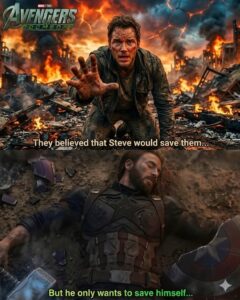
The 10-year time lapse allows the story to explore Steve as both a retired hero and an active father. No longer the young soldier or even the battle-weary leader from the Infinity Saga, this version of Captain America has experienced peace and domestic life. That makes the return to violence and the subsequent loss all the more painful. Reports suggest the film will show glimpses of Steve’s family life before pulling him back into the fight, making the tragedy hit even harder.
James Marsden’s Cyclops and other X-Men characters are also expected to factor into the larger Incursion conflict, creating massive team battles where personal stakes collide with world-ending threats. White Vision’s involvement alongside a possible Iron Man variant adds even more chaos to the battlefield. Yet amid all the spectacle, Steve Rogers’ storyline stands out as the emotional core. His failure to save his son humanizes the super soldier in a way few previous MCU stories have attempted.
This development raises fascinating questions about legacy and sacrifice in the MCU. Steve Rogers has always been willing to lay down his life for others, but losing a child represents a different kind of devastation — one that challenges his core belief that good always triumphs. How the surviving Avengers respond to Captain America’s fall could define the path toward Avengers: Secret Wars. Some reports hint that Steve may survive Doomsday in some capacity to appear in the next film, but the damage inflicted here could leave him forever changed.
For Chris Evans, returning to the role after stepping away carries special significance. He has spoken in the past about the importance of Steve Rogers as a symbol of hope and decency. Portraying such a profound personal tragedy will test the actor’s range and likely deliver one of his most powerful performances yet. The father-son relationship also opens doors for future stories, even in the wake of loss — perhaps inspiring new heroes or influencing how the next generation of Avengers carries forward the shield.
Director duo Anthony and Joe Russo, who guided the Infinity Saga to its climax, are back to steer this massive ensemble. Their ability to balance intimate character moments with epic action makes them well-suited to handle this blend of heartfelt family drama and multiversal war. Early indications suggest Doomsday will not shy away from consequences, delivering permanent losses that raise the stakes for the entire saga.
Fan reactions to these spoilers have been intense and divided. Many appreciate the bold emotional direction and the chance to see Captain America face something more personal than global threats. Others worry about diminishing the character’s heroic legacy. Regardless, the storyline guarantees that audiences will be talking about this film long after the credits roll.
As Avengers: Doomsday continues filming, the anticipation keeps building. The combination of legacy characters like Steve Rogers, fresh multiversal threats, and the introduction of mutant heroes creates a perfect storm for one of Marvel’s most ambitious projects. Robert Downey Jr. as Doctor Doom versus Chris Evans as a battle-scarred Captain America fighting for what remains of his family promises cinema history in the making.
The death of Steve and Peggy’s son is poised to become one of the most discussed moments in the MCU — a tragic reminder that even the greatest heroes cannot always protect those they love most. In a franchise known for spectacular action and crowd-pleasing moments, this deeply human loss may redefine what it means to be a hero in the face of overwhelming doom.
Avengers: Doomsday is scheduled to hit theaters in December 2026, with Secret Wars following in 2027. For fans who have followed Steve Rogers since The First Avenger, this chapter may deliver the most emotionally charged farewell — or transformation — yet. Prepare yourself: the man who stood for truth, justice, and the American way is about to face his darkest hour, and the MCU may never be the same.