In a recent update shared on the social media platform X, Elon Musk, CEO of SpaceX, provided critical insights into the ambitious plan to send humans to Mars aboard the Starship spacecraft. While SpaceX has long aimed to pioneer interplanetary travel, Musk’s latest statements indicate that significant technical hurdles make a manned mission to Mars by 2026 highly improbable. Instead, a more feasible timeline points to an uncrewed mission in 2028, with the first crewed mission likely delayed until 2030. This revised schedule represents a step back from earlier optimistic projections, underscoring the complexity of deep-space exploration.
A Shift in Timeline
Musk’s comments came in response to a direct question from an X user inquiring about the specific timeline for Starship’s Mars mission. He explained that while there is a “small chance” of a crewed mission launching as early as November or December 2026, the likelihood remains low due to the extensive technical refinements still required. A more realistic scenario, according to Musk, involves an uncrewed Starship mission to Mars in approximately 3.5 years, around mid-2028. This mission would serve as a critical precursor to human exploration, testing the spacecraft’s systems and gathering essential data about the Martian environment. A crewed mission, Musk noted, would likely follow about two years later, targeting 2030 as the earliest feasible window.

This adjustment marks a significant departure from SpaceX’s earlier, more ambitious projections, which had suggested crewed missions could occur as early as the mid-2020s. The delay stems from a series of engineering challenges that have proven more formidable than anticipated. Among these are issues related to developing reliable orbital refueling technology, ensuring the durability of the spacecraft’s heat shield, and resolving problems with landing and recovering the Starship’s upper stage.
Technical Challenges Facing Starship
The Starship program, designed to create a fully reusable spacecraft capable of carrying large payloads and crews to Mars, has encountered several setbacks in recent test flights. Notably, the Flight 9 test earlier this year, while successful in achieving stage separation, ended in failure when the upper stage lost control during atmospheric reentry. This incident highlighted critical issues with the spacecraft’s design, particularly its heat shield and reentry systems, which must withstand the extreme conditions of returning from orbit or interplanetary travel.
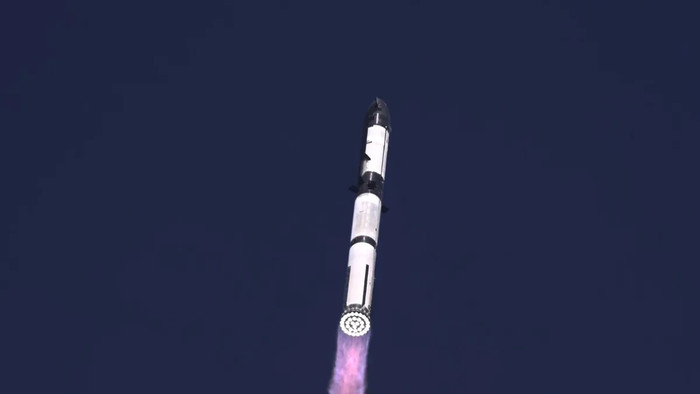
Another major hurdle is the development of orbital refueling, a cornerstone technology for long-duration missions like those to Mars. Unlike shorter missions within Earth’s orbit, a trip to Mars requires Starship to carry significantly more fuel, which cannot be launched in a single payload due to weight constraints. SpaceX is working on a system to transfer propellant between Starships in orbit, a process that has never been executed at scale. Musk emphasized that mastering this capability is a top priority, as it is essential for enabling the spacecraft to reach Mars and return safely.
Additional challenges include improving the reliability of Starship’s upper stage landing systems and enhancing the rocket’s recovery mechanisms. Each of these elements is critical to ensuring the spacecraft can perform multiple missions, a key factor in making interplanetary travel economically viable. The complexity of these technical issues has forced SpaceX to adopt a more cautious timeline, prioritizing safety and reliability over speed.
The Role of Optimus Robots
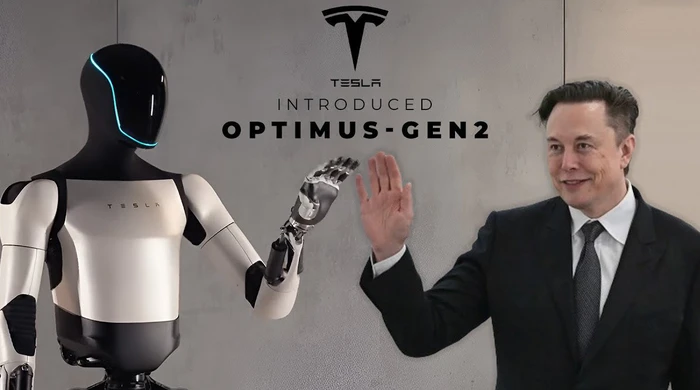
In an intriguing development, Musk revealed that the first Starship mission to Mars will not carry humans but rather Tesla’s humanoid robots, known as Optimus. These robots will serve as scouts, tasked with assessing the Martian surface, testing environmental conditions, and collecting data to inform future human missions. The use of Optimus underscores SpaceX’s integrated approach to leveraging technologies from Musk’s other ventures, such as Tesla, to support its space exploration goals. By deploying robots first, SpaceX aims to minimize risks and ensure that the Martian terrain is adequately studied before humans set foot on the planet.
A Vision for a Martian City
Musk’s ultimate goal for the Starship program extends far beyond a single mission. He envisions the establishment of a self-sustaining city on Mars within 20 to 30 years, a timeline he acknowledges is ambitious but achievable with sustained effort. This city would serve as a permanent human outpost, capable of supporting life independently of Earth. Musk views this as a critical step in making humanity a multiplanetary species, a goal he believes is essential for the long-term survival of civilization.
“Visiting Mars isn’t enough,” Musk stated. “The objective is to make humanity a true spacefaring species, to deepen our understanding of the universe, and to ensure the enduring survival of our civilization.” This vision reflects Musk’s broader mission to expand humanity’s reach beyond Earth, safeguarding it against existential risks such as planetary disasters or resource depletion.
The Road Ahead
The revised timeline for SpaceX’s Mars missions highlights the immense challenges of interplanetary travel, even for a company as innovative as SpaceX. The technical hurdles—ranging from orbital refueling to heat shield durability—require meticulous engineering and rigorous testing. While the delay to 2030 for a crewed mission may disappoint those eager for rapid progress, it reflects a pragmatic approach to ensuring the safety and success of these groundbreaking missions.
As SpaceX continues to refine Starship’s design and capabilities, the company remains committed to its long-term vision of colonizing Mars. The uncrewed mission in 2028, carrying Optimus robots, will be a pivotal milestone, laying the groundwork for human exploration. If successful, it will mark a significant step toward Musk’s dream of a Martian city and a new chapter in humanity’s cosmic journey.
In the meantime, SpaceX’s focus on overcoming technical challenges and conducting further test flights will be crucial. Each test brings the company closer to achieving the reliability needed for interplanetary travel. For now, the world watches as SpaceX pushes the boundaries of what is possible, inching closer to the day when humans will walk on the red sands of Mars.