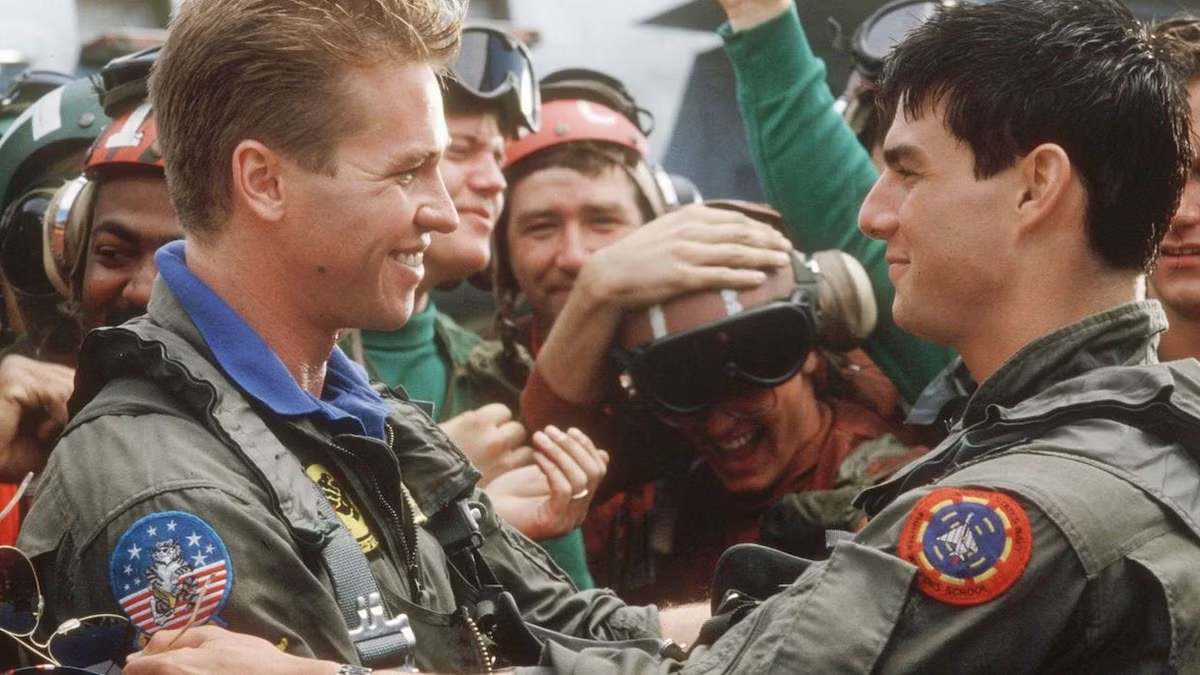
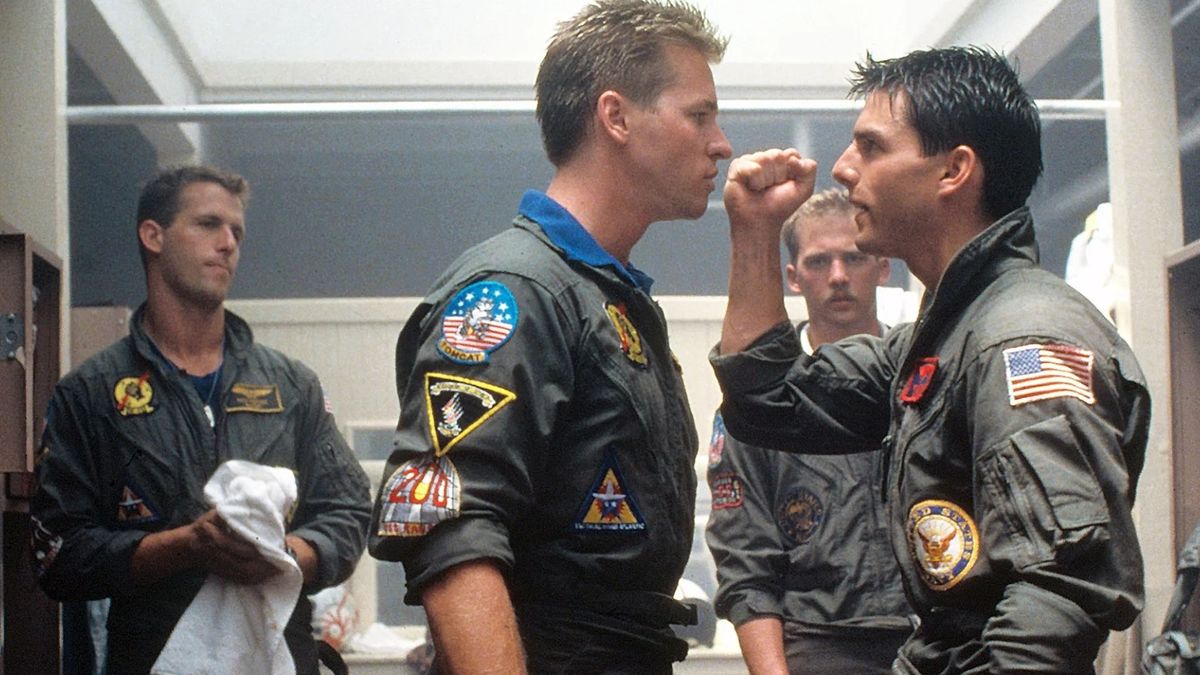
In the high-flying world of Top Gun: Maverick, one scene stands out not for its adrenaline-pumping action, but for its raw emotional depth – the poignant reunion between Pete “Maverick” Mitchell (Tom Cruise) and his old rival-turned-friend, Admiral Tom “Iceman” Kazansky (Val Kilmer). This moment, widely regarded as the film’s heartfelt core, almost never happened due to Kilmer’s real-life health struggles, but Cruise’s unwavering determination ensured Iceman’s return.
Val Kilmer, who skyrocketed to fame alongside Cruise in the 1986 original Top Gun, faced a devastating battle with throat cancer diagnosed in 2015. The disease and subsequent treatments, including a tracheostomy, severely impaired his voice, leaving him with a raspy whisper and relying on a feeding tube at times. By the time Top Gun: Maverick entered production, Kilmer’s condition raised serious concerns about his ability to reprise the iconic role. Hollywood executives reportedly considered cutting Iceman entirely or recreating him digitally, but Cruise refused to move forward without his co-star.
Producer Jerry Bruckheimer has shared that Cruise was adamant: no sequel without Kilmer. This insistence stemmed from a decades-long friendship forged on the original film’s set, where their characters’ rivalry mirrored initial on-screen tensions that evolved into mutual respect. Cruise’s loyalty preserved not just a character, but a piece of cinematic history, allowing the story to authentically reflect Kilmer’s journey.
In the film, Iceman is portrayed as terminally ill with a similar throat condition, communicating mostly by typing on a computer screen. The scene unfolds intimately: Maverick seeks advice amid career doubts and guilt over past losses. Iceman types encouraging words, culminating in a powerful spoken line – “The Navy needs Maverick” – enhanced with AI technology to blend Kilmer’s restored voice for clarity. Their exchange addresses themes of forgiveness, legacy, and letting go, ending in a heartfelt embrace that moved audiences worldwide.
Director Joseph Kosinski described filming as profoundly moving, noting the genuine bond between the actors after 36 years. Cruise himself admitted to tearing up during shoots, praising Kilmer’s brilliance despite challenges. The result was a tribute to resilience, turning personal adversity into narrative strength.
Top Gun: Maverick became a blockbuster phenomenon, grossing nearly $1.5 billion and revitalizing theater-going post-pandemic. Much of its emotional resonance traces back to this scene, which honored Kilmer’s legacy while highlighting Cruise’s fierce protectiveness of his friend’s dignity. In an industry often criticized for sidelining aging or ill stars, this act of solidarity stood out, reminding viewers that true wingmen never leave each other behind.
Kilmer, who passed away in 2025, left this as one of his final performances – a fitting, triumphant return that underscored unbreakable bonds both on and off screen.