In a heart-shattering tale that’s leaving Netflix subscribers in floods of tears and sleepless nights, the true story of a 13-year-old Jewish girl’s unimaginable fight for survival during the Holocaust has exploded onto screens – and it’s more harrowing than any fiction could dare to be. “My Name Is Sara,” the gripping drama that’s rocketing up the streaming charts in 2025, recounts the real-life nightmare of Sara Góralnik, who witnessed the brutal murder of her entire family at the hands of Nazis before vanishing into the shadows as a Christian orphan. For three grueling years, she navigated betrayal, abuse, and constant terror, all while clinging to a fragile alias. Viewers are calling it “the most emotional watch ever,” with social media overflowing with raw reactions: “I ugly-cried for hours – how did she survive that?” But what exactly happened to young Sara, and why is this forgotten chapter of history hitting so hard now? As whispers of awards buzz grow, dive into the soul-crushing details that are breaking hearts worldwide. Could this be the Holocaust story that changes how we remember the horrors forever?
The story plunges us back to 1941, in the quaint town of Korets, then part of eastern Poland (now Ukraine), where 11-year-old Sara Góralnik lived a simple life amid a vibrant Jewish community. Jews had thrived there for over a millennium, forming the backbone of local trade while coexisting with Polish Catholics and Ukrainian Orthodox Christians. But the winds of war shattered that fragile peace. First came the Soviet occupation in 1939, imposing harsh restrictions. Then, in June 1941, the Nazis invaded, unleashing hell on the Jewish population. Sara’s family – her parents, siblings, and extended relatives – were herded into a ghetto, where starvation, disease, and fear became daily companions. By September 1942, as Sara turned 12 (though the film portrays her as 13 at the pivotal moment), the Nazis escalated their genocide. In a mass execution that claimed thousands of lives in Korets, Sara watched in frozen horror as her loved ones were lined up and gunned down in cold blood. The screams, the gunfire, the blood-soaked earth – it’s a scene etched into her memory, one that the film recreates with unflinching realism, leaving audiences gasping.
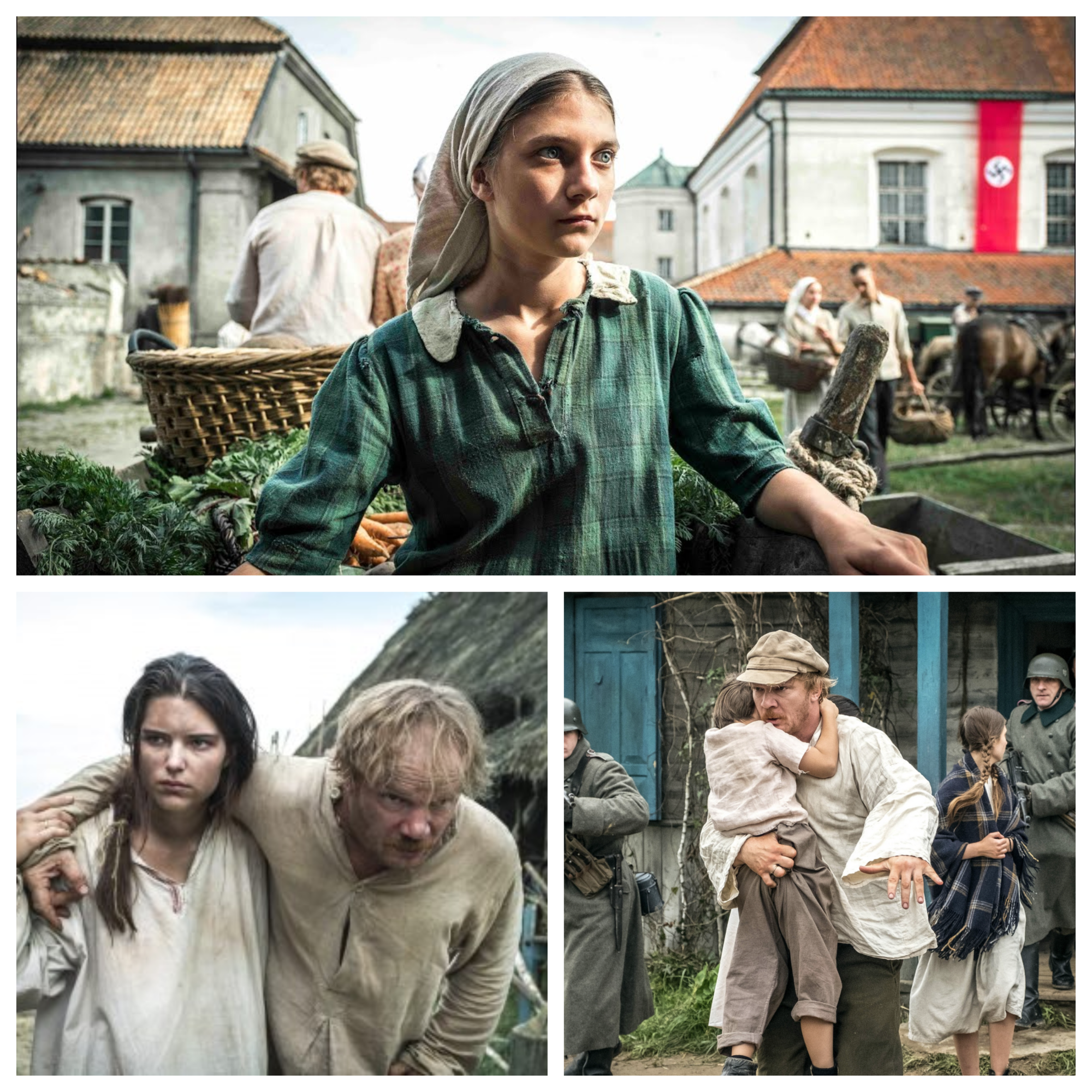
Miraculously, Sara escaped the massacre, slipping away into the night with nothing but the clothes on her back. Alone, terrified, and hunted, she knew revealing her Jewish identity meant certain death. In a desperate bid for survival, she reinvented herself as Manya Romanov, an orphaned Christian girl from a distant village. Wandering the Ukrainian countryside, she knocked on doors, begging for work and shelter. Fate – or sheer luck – led her to the farm of Pavlo and Nadya, a young Ukrainian couple who took her in as a nanny for their two small children and a helper with chores like herding cows. To the outside world, she was just another war orphan, devoutly crossing herself in church and reciting Christian prayers. But inside, Sara lived in perpetual dread, her true self buried under layers of deception. One slip – a Hebrew word, a forgotten ritual – could unravel everything. For three agonizing years, from 1942 to 1945, she toiled on that farm, enduring the harsh winters, meager rations, and the constant threat of discovery by nosy neighbors or patrolling Nazis.
What makes Sara’s story even more gut-wrenching are the intimate betrayals she uncovered within her adoptive home. The film delves deep into the toxic dynamics of Pavlo and Nadya’s marriage – Pavlo, a brutish man with a drinking problem, often abused his wife, creating a volatile environment where Sara had to tiptoe around secrets. Nadya, sensing something off about the girl, grew suspicious, probing her with questions that could expose her. Sara witnessed domestic violence, hidden affairs, and the couple’s opportunistic collaboration with local authorities to avoid scrutiny. In one chilling moment, Pavlo drunkenly boasted about turning in Jews for rewards, forcing Sara to swallow her rage and fear. She became a silent observer, using her wits to deflect suspicion – pretending to be illiterate to avoid writing in Hebrew script, feigning enthusiasm for anti-Semitic gossip. The psychological toll was immense; Sara later recalled in her testimony feeling like a ghost, detached from her own identity. “I was no longer Sara,” she would say. “I was nothing but survival.”
As the war raged on, Sara’s isolation deepened. The Ukrainian countryside, rife with anti-Semitism fueled by years of resentment toward Jewish merchants, was no safe haven. Neighbors whispered about “hidden Jews,” and roundups were frequent. Sara herded cows through fields dotted with mass graves, the earth still fresh from executions. She endured beatings from Pavlo, malnutrition that stunted her growth, and the ache of lost childhood. Yet, glimmers of humanity shone through – Nadya’s occasional kindness, like sharing extra bread, or the children’s innocent affection, which reminded Sara of her slain siblings. These bonds, fragile as they were, kept her going. By 1944, as the Red Army advanced, hope flickered. But liberation brought its own perils: Soviet soldiers, suspicious of collaborators, interrogated villagers, and Sara feared her alias would crumble under scrutiny.
Finally, in early 1945, the Red Army liberated the area, ending Sara’s three-year ordeal. At 15, she emerged from hiding, reclaiming her name and Jewish heritage. The war had claimed over 6 million Jewish lives, including nearly all of Korets’ community. Sara was one of the rare survivors, her story a testament to resilience amid unspeakable evil. Post-war, she navigated displaced persons camps, eventually emigrating to the United States. There, she married, took the surname Shapiro, and built a new life, raising a family while grappling with trauma. In 1995, she gave a powerful testimony to the USC Shoah Foundation, detailing the horrors she witnessed – the mass shootings, the ghetto liquidations, and her lonely fight. Sara passed away in 2013 at age 83, but not before sharing her story with filmmakers, ensuring her legacy endured.
“My Name Is Sara,” directed by Steven Oritt in his feature debut, brings this epic to life with raw authenticity. Shot in Poland with a mostly local cast, it stars newcomer Zuzanna Surowy as Sara, whose wide-eyed vulnerability captures the girl’s inner turmoil. Eryk Lubos and Michalina Olszańska deliver chilling performances as Pavlo and Nadya, humanizing the complexities of wartime morality. Released in theaters in 2019 and hitting Netflix in 2025, the film has surged in popularity, especially amid rising global anti-Semitism. Viewers are floored: “This isn’t just a movie; it’s a punch to the soul,” one Reddit user posted. Social media is ablaze with #MyNameIsSara, fans sharing tissues-strewn selfies and vowing to educate others. “I paused it multiple times to sob – Sara’s strength is superhuman,” tweeted another. Critics praise its restraint, avoiding melodrama for quiet tension that builds to devastating crescendos.
Why the breakout now? In a world grappling with division and hatred, Sara’s story resonates as a stark warning. It highlights the “hidden children” of the Holocaust – over 1.5 million Jewish kids perished, but a few thousand survived in disguise. The film doesn’t shy from the complicity of ordinary people, like Pavlo’s opportunism, mirroring modern debates on bystander apathy. Netflix’s algorithm has propelled it, recommending it alongside hits like “The Tattooist of Auschwitz.” Emotional reactions dominate: forums overflow with discussions on trauma, identity, and forgiveness. “It broke me, then rebuilt me,” one viewer confessed. Sara’s son, who consulted on the film, hopes it inspires empathy: “My mother’s courage shows what one child can endure – and overcome.”
As “My Name Is Sara” climbs Netflix’s top 10, it’s more than entertainment; it’s a call to remember. Sara Góralnik’s three-year masquerade wasn’t just survival – it was defiance. In her words from testimony: “I lived because I had to tell the world.” Viewers agree: this gut-wrenching true story isn’t breaking them; it’s awakening them. If you haven’t watched yet, brace yourself – and keep the tissues close. The horrors of the past feel eerily present, and Sara’s whisper echoes: Never forget.