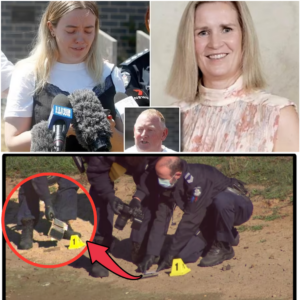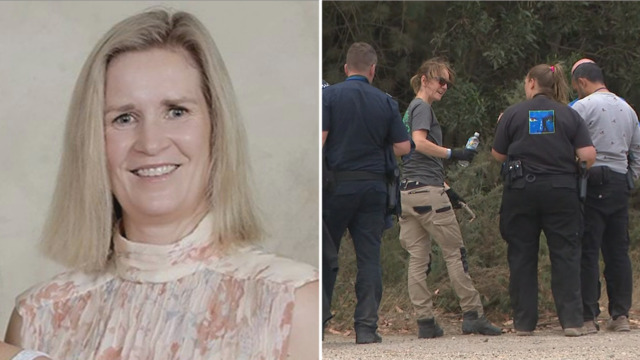
Victoria Police have issued a renewed commitment to locating the remains of missing Ballarat mother Samantha Murphy, nearly two years after her unexplained disappearance gripped the nation. In a statement released on December 3, 2025, Detective Inspector Dave Dunstan of the Missing Persons Squad declared, “We can locate her,” emphasizing that ongoing investigations, bolstered by intelligence from multiple sources, continue to guide targeted efforts in the Ballarat region. The update, light on specifics but heavy with implication, has reignited public interest in the case, leaving family, friends, and the community pondering the mysteries still shrouding Samantha’s fate.
Samantha Leigh Murphy, 51 at the time of her vanishing, was last seen leaving her Eureka Street home in Ballarat East on the morning of February 4, 2024. A devoted mother of three and small business owner, she stepped out for her routine 14-kilometer run through the nearby Canadian State Forest, dressed in black leggings and a neon running vest. Her husband, Mick Murphy, expected her back by 8:15 a.m. for their traditional Sunday coffee. When she didn’t return, he launched a frantic search of the surrounding bushland before dialing emergency services at 9:42 a.m. What followed was an outpouring of community support and a sprawling police operation that would evolve into one of Victoria’s most enduring missing persons probes.
The initial response was immediate and intensive. Within hours, over 100 officers from Victoria Police, supplemented by State Emergency Service volunteers and Country Fire Authority crews, blanketed the Woowookarung Regional Park and adjacent areas. Drones scanned the canopy, mounted units traversed rocky trails, and ground teams called her name through megaphones. Media presence swelled, with helicopters circling overhead and reporters staking out the family home. “It was chaos, but hopeful chaos,” recalls Lisa Hargreaves, Samantha’s longtime friend and a school aide who joined the early sweeps. “We thought she’d wandered off path, maybe twisted an ankle. Sammy was tough—she’d pop up with a story and a laugh.”
Days turned to a week with no sign: no discarded water bottle, no phone signal, no footprint in the damp soil. By February 9, the large-scale search scaled back, transitioning to the Missing Persons Squad’s methodical oversight. Public volunteers persisted, forming groups like “Sammy’s Searchers” on social media, which ballooned to 45,000 members coordinating weekend forays. Tips poured in—over 500 leads, including 12,000 hours of CCTV footage scrutinized for glimpses of her silver Toyota parked nearby. Mick Murphy emerged as the steadfast public voice, his appeals measured yet poignant: “If you’ve seen Sammy, or know anything, come forward. Her girls need their mum.”
As weeks passed, the tone shifted. On February 23, police classified the case as suspicious, suggesting “one or more parties” might be involved. Ballarat, a historic gold-rush town of 110,000 nestled in Victoria’s central highlands, was already reeling from a string of unrelated incidents dubbed the “Black Spring” in 2023, where three local women met untimely ends. Samantha’s absence amplified community anxieties, sparking discussions on women’s safety during routine outings. Local runners like Pauline O’Shannessy-Dowling altered habits, opting for group jogs or well-lit paths. “Sammy’s story made us all look twice at the bush we love,” O’Shannessy-Dowling shared in a February 2025 anniversary reflection.
The pivotal development arrived on March 6, 2024, shattering the stalemate. At dawn, detectives raided a residence in Mount Clear, a suburb 10 kilometers from the Murphy home, arresting 23-year-old Patrick Orren Stephenson. The son of a former Australian Football League player, Stephenson had no apparent prior ties to the family but quickly became the focal point. Forensic evidence mounted: traces of soil from his boots matching the forest floor, tire treads from his vehicle aligning with muddy tracks near the run route. A suppression order on his name lifted in April, unleashing a media storm. Charged with her alleged murder, Stephenson entered a not guilty plea in November 2024. His trial, slated for April 2026 in the Victorian Supreme Court, hinges on circumstantial links, as no direct physical evidence of confrontation has surfaced.
Stephenson’s background, once shielded, now informs the narrative. Raised in the rural Scotsburn area, he worked as a laborer and kept a low profile, with records showing minor prior infractions but nothing violent. Sources close to the investigation describe the arrest as stemming from a tip corroborated by digital forensics, including geofence data placing his phone near the forest that morning. “It was a eureka moment,” one anonymous officer noted. Yet, without Samantha’s remains, the prosecution faces steep challenges under Victoria’s legal framework, where “no body” cases demand airtight inference.
Subsequent searches have been a rollercoaster of anticipation and letdown. In May 2024, divers dredged a dam near Durham Lead, unearthing Samantha’s wallet, driver’s license, and iPhone—water-damaged but potentially holding recoverable location data. Experts at the Victorian Forensic Services Centre worked to extract signals from the device, revealing her last synced steps deviated slightly from her usual trail around 7:18 a.m. June brought another sweep of the Canadian Forest, recovering a cap that tested negative for hers. September targeted Enfield State Park based on a “reliable informant,” yielding “items of interest” like fabric scraps—ultimately unrelated.
November 2025 saw renewed vigor. On November 26, police launched a multi-day operation in bushland south of Ballarat, deploying ground teams, K9 units, and drones across Enfield and adjacent reserves. Reports surfaced of detectives escorting Stephenson to the sites in April 2025, hoping to elicit details, though he remained uncooperative. “We’re methodically eliminating possibilities,” Acting Detective Superintendent Mark Hatt stated then. That search wrapped without breakthroughs, but whispers of “promising leads” persisted.
The December 3 update arrives against this backdrop, shrouded in operational secrecy that has both frustrated and fueled speculation. Dunstan’s vow—”We can locate her”—came during a routine media briefing, paired with assurances of “intelligence derived from a number of sources.” Details remain classified: Was it fresh analysis of the iPhone’s ghost data? A prison-sourced tip from Stephenson’s circle? Cross-referenced CCTV anomalies? Police emphasize the fluid nature of such probes, citing risks to evidence integrity. “Every lead is pursued rigorously,” Dunstan added. “Returning Samantha to her family is paramount, though nothing erases their enduring loss.”

For the Murphy family, the words land as a double-edged sword. Mick, now 56, has shouldered the void with quiet resilience, his frame leaner, his days filled with odd jobs and volunteer searches. “Hope’s a tricky beast,” he told reporters post-briefing, standing amid the family’s Eureka Street garden, where Samantha’s vegetable patch still yields tomatoes. “It keeps you going, but each empty day chips away.” Daughters Jessica, 26, and Olivia, 24—both new mothers—have paused life milestones; Jessica delayed her Melbourne wedding, Olivia navigates postpartum anxiety amplified by the unresolved. Son Thaddeus, 20, withdrew from mechanics studies in Geelong, haunted by unanswered “what ifs.”
The family home remains a time capsule: Samantha’s running shoes aligned by the door, her bookkeeping ledgers stacked neatly, a half-finished crossword on the kitchen table. “We talk to her every night,” Mick shares. “About the grandkids, the footy scores. It’s what keeps her close.” They’ve channeled sorrow into “Sammy’s Steps,” a foundation funding tech for rural missing persons cases—drones, GPS trackers, apps for real-time family alerts. “If it spares one family this limbo, it’s something,” Jessica says.
Ballarat’s response evolves from shock to solidarity. The city’s psyche, forged in 1850s gold fever and now laced with modern unease, manifests in pink-ribboned lampposts along Sturt Street and self-defense workshops by “Mums on the Move.” Mayor Des Hudson, who led 2024 vigils, reflects: “Samantha’s case isn’t isolated—it’s a mirror to vulnerabilities in our trails and trust.” Community runs honor her: the annual “Sammy’s Stride” 14K draws 2,000, proceeds aiding women’s safety initiatives. Yet, fatigue creeps in; some locals decry the media cycle as “grief tourism,” while others demand transparency. Social media buzzes with #JusticeForSammy, blending support posts with armchair sleuthing—though police urge restraint to avoid contaminating leads.
Broader implications ripple through Victoria’s justice system. “No body” convictions, like Bradley Murdoch’s in the 2001 Falconio case, succeed on 80% circumstantial grounds, per legal experts, but they strain families emotionally. The Murphy saga underscores gaps: underfunded rural forensics, the psychological toll of prolonged uncertainty. Advocates like the Australian Centre for Rural and Remote Mental Health push for expanded counseling for affected kin. “Closure isn’t just legal—it’s human,” director Dr. Timothy Carey notes.
As 2025 closes, the trial looms like a storm cloud. Stephenson, held at Barwon Prison, faces life if convicted; his defense eyes diminished capacity angles, citing youth and lack of priors. Prosecutors, led by Director of Public Prosecutions Kerri Judd, prepare a timeline weaving phone pings, witness sightings, and forensic threads. “The evidence speaks volumes,” Judd previewed in court filings.
Dunstan’s pledge injects cautious optimism. “This year, we’ve intensified efforts—intelligence pipelines are stronger,” he said, hinting at collaborations with federal agencies for advanced geolocation tech. Whether the “mystery” update yields fruit remains unseen, but for now, it sustains the flicker. Mick Murphy, surveying the bushland horizon from his porch, echoes the sentiment: “Sammy’s out there, waiting for us to bring her home. We’ll keep going till we do.”
In Ballarat’s whispering winds, where eucalypts guard ancient secrets, Samantha Murphy’s story endures—a testament to love’s persistence and a community’s unyielding quest for answers. As searches resume in the new year, the vow stands: They can, and they will, locate her.